





February 2020 "Light and Darkness of the Olympics"
February forum was held on February 15th, inviting Mr. Shuichi Nakamura, who is Standing Executive Committee Member of Tokyo Construction Workers’ General Union Headquarters. The forum took place in the form of a dialogue with Keisuke Matsuo, an alumni member who is a reporter of Japan Broadcasting Corporation. Mr. Nakamura talked about the structural problems of the construction industry, which is gathering attention when the Olympics is coming soon, and how to tackle the issues.
Speech summary
In 2017, a site foreman of the New National Stadium Japan committed suicide due to overwork. This news got around all over the country, and the labor problems behind the Olympics came to light. In the lecture, Mr. Nakamura explained in detail the structural problems of the building industry that were the cause of this incident. Construction costs enormous money, and it is difficult to secure stable employment because it is build-to-order industry. One company can’t afford such cost and employees, thus in order to share them, corporate spin-off and subcontract became common. The relationship between prime contractors and subcontractors forms complete top-down hierarchy, and subcontractors are under the harsh working environment called YKKKY (the initials of Japanese words which mean cheap, hard, dangerous, dirty, and no holiday) while their request is very difficult to be accepted. Besides, he taught us terrible situation of technical intern trainees from foreign countries despite the fact that they are more important in this aging industry. Many of them suffer from physical violence by employer and can’t communicate well because adequate Japanese language education isn’t provided.
With these dark aspects of construction industry in mind, discussions were held on the theme of “should the Olympics be raised by a nation? If not, should it be quitted or who should raise instead?”. Many groups agreed that a whole country hosts the Olympics because of the advantages, such as promoting their own culture, stimulating demand in the economy, and raising peaceful interaction of people. The only opposing group said that the concentration of the burden on one host city could create a severe construction period and a harsh working environment. The group argued that we should hold the Olympics as a wider regional (like Asia, Europe etc.) event, which is similar to going on world championships of each sports at the same time. However, Mr. Nakamura commented that it is difficult to hold the Olympics in multiple cities at the same time because it deeply relates to political issues. For example, when The Tokyo Olympics comes, politicians carried out redevelopment of the coastal area, including relocation of Toyosu Market and maintenance of Yokohama. At first I thought that it brings us many advantages that multiple cities host the Olympic Games, such as revitalizing regional areas and solving labor shortage, yet I learned that it is still difficult to make decisions in the political context.
In this discussion we dealt with the Olympics, but through this forum, I realized that the problem is not only a matter of the Olympics but also of the entire construction industry.The reason why this issue started to be spotlighted is just to get the chance to draw nationwide and global attention thanks to the Olympics. Mr. Nakamura also talked about measures that can correct problems through laws and regulations. For example, they should pursue the responsibility of orderers not to let them set an impossible construction period, close the gap between regulated unit labor cost and actual wages paid to workers, and create a united price table to guarantee fair payment. As a voter, we should pay more attention to these bills so that we can participate in solving the negative aspects of the construction industry.
(Alumni Maho Noritomi)
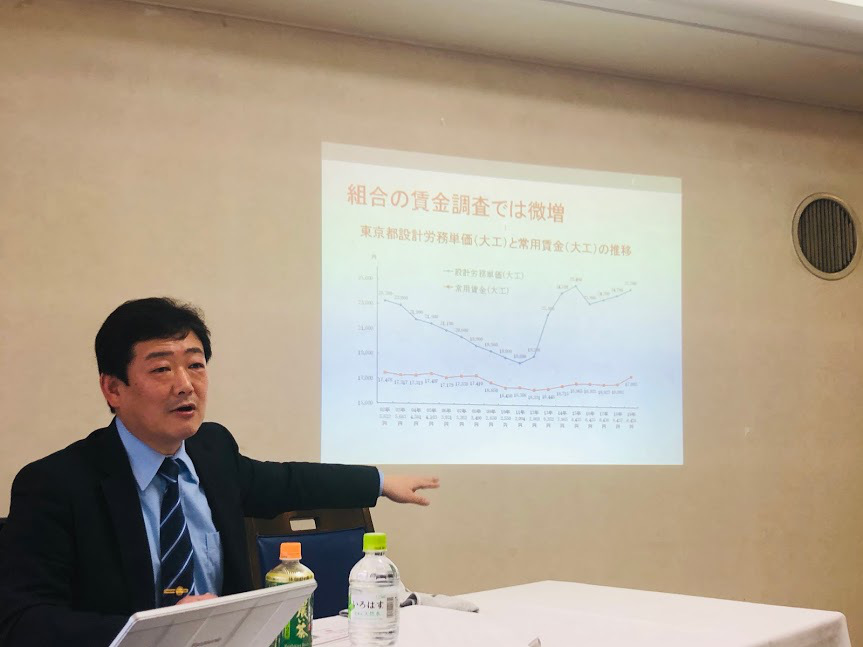
Mr. Shuichi Nakamura
Born in 1967. Graduated from the Faculty of Law, Toyo University and qualified as an administrative scrivener.
In 1993, he joined the Tokyo Doken General Construction Workers’ Union.
He served as a member of the Adachi Ward Labor Remuneration Review Committee from 2014 to 2016.
He has been a full-time Executive Committee Member since April 2017, and currently serves as Director of the Wage Policy Department at the Tokyo Federation of the National Federation of Construction Workers’ Unions (Zenkensoren).
He has authored numerous articles and is currently writing a twice-monthly column titled “Construction News Briefs” for the National Commercial and Industrial Newspaper.
January 2020 "How the U.S. and Japan can work together on China issues?" (cont.)
The January Forum took place on Tuesday, January 14. We invited Mr. Michael F Cavanaugh, from the US Embassy (title above). He talked to us about how Japan and the U.S. are dealing with China, which is rapidly gaining power in terms of its economy and profile strength. Following the talk, the students discussed the question “In which country would you like to work: China or the U.S.?”
Speech summary
At the Forum, first he focused on China. Over the last 30 years, China has grown its economy very quickly in various aspects. China’s economy, level of development, population, and standard of living have risen dramatically. Other developed countries, such as Japan and the US, have to faced slower growth. Japan, in particular, is dealing with declining birthrates and an aging population. Many in the developed world see China’s rise as an alternative growth model to the free market, capitalist model of Japan and the U.S.
Mr. Cavanaugh talked about the importance of finding a way to understand, work with, and cooperate with China. This is not easy and we need also to defend our interests and our values. Most importantly, to compete with China, we must make sure that our own societies are strong. This means we need young people and to encourage a younger society even as we take care of our older people. Older people tend to want to preserve, conserve and protect. Younger people tend to want to create, produce and innovate. That thinking is important in any society. Japan needs more families and children. That is the best way to protect and create a strong future for Japan.
(Rei Fujimoto, Freshman, Faculty of Liberal Arts, University of Tokyo)
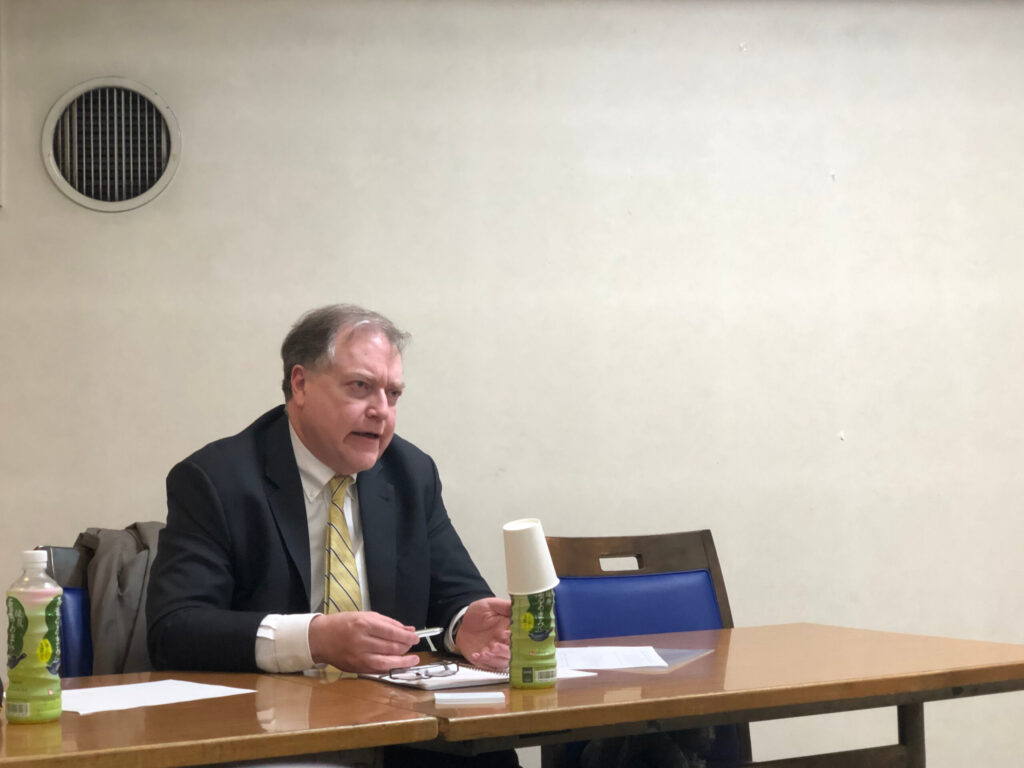
Mr. Michael F Cavanaugh
Before his assignment in Tokyo, he served in Taiwan, Thailand, Vietnam, Washington D.C., and Egypt.
November 2019 "The truly important things about Working" (cont.)
November forum was held on December 6, inviting Mr. Yoichi Furuno, who is engaged in career development business at Recruit Management Solutions Co., Ltd. This forum is a continuation of the previous one, and this time he talked about ways to find a calling, methods for making work environment more comfortable and what the ideal job is. Our discussion covered various different topics based on his lecture such as how to find an ideal marriage partner, purposes of working under different types of occupation and the relationship between career and education.
Speech summary
First, Mr. Furuno summarized his previous lecture, and showed three different ways to view work: “job”, “career” and “calling”. In this context, “job” means selling own time and getting money, which is a negative approach to work, “career” means a way to gain fame, and “calling” means the best work. According to Mr. Furuno, about half of people can find their calling and the ratio of people finding it increases with age. He asked us how many boyfirends/girlfriends we should be dating in order to find the best marriage partner, and based on this discussion he suggested that we should do three different fascinating jobs in our twenties.
Second, he pointed out that the workplace should be cozy, such as a place where we play an important role in our work and we are accepted by other colleagues. In addition, he suggested us to make our mind toward work active. In particular, we have to take the initiative at work with changing our task itself, reviewing the relationship with colleagues and adding another meaning to work. He insisted that it was important to enhance our skills through work rather than just doing assigned tasks. We learn many things from our experience through work, and we reflect on ourselves through the experience. He said that indeed such reflection was important because it enabled us to review our past and to get some suggestions for next time, that but we should not be fixated on the negative aspects. In his conclusion, if we enjoy the job, which is significant for us and our society, we can call it the best job, calling. Furthermore he proposed that we should become a worker with whom colleagues want to work, and that we should sympathize with situation of others.
In our discussion, first we talked about the best way to find the best marriage partner. Some said the number was not important if we could find a good partner but others said it was impossible to judge whether he/she was best without comparison of boyfriends/girlfrieds. Second discussion was carried out based on the first part of lecture of Mr. Furuno, and a participant raised a question whether we should experience different types of occupations while we are young or we should move to other workplaces with having the same specialty. Some members argued that it was important to have a specialty in order to win against foreign rivals, but Mr. Furuno pointed out that the number of workers who experienced several types of occupations increased even in the U.S., and other members said that we should have time to find a specialty suitable for us. Our discussion was developed to the topic regarding the relationship between career and education. Children have to decide their career even if they are young in some European countries though students can obtain broad knowledge via liberal arts education in the U.S. The Japanese system of education is the middle of these types of education and there were various opinions about what the relationship should be in our discussion.
(Ryo Taguchi, second-year master’s student, Graduate School of Engineering, University of Tokyo)
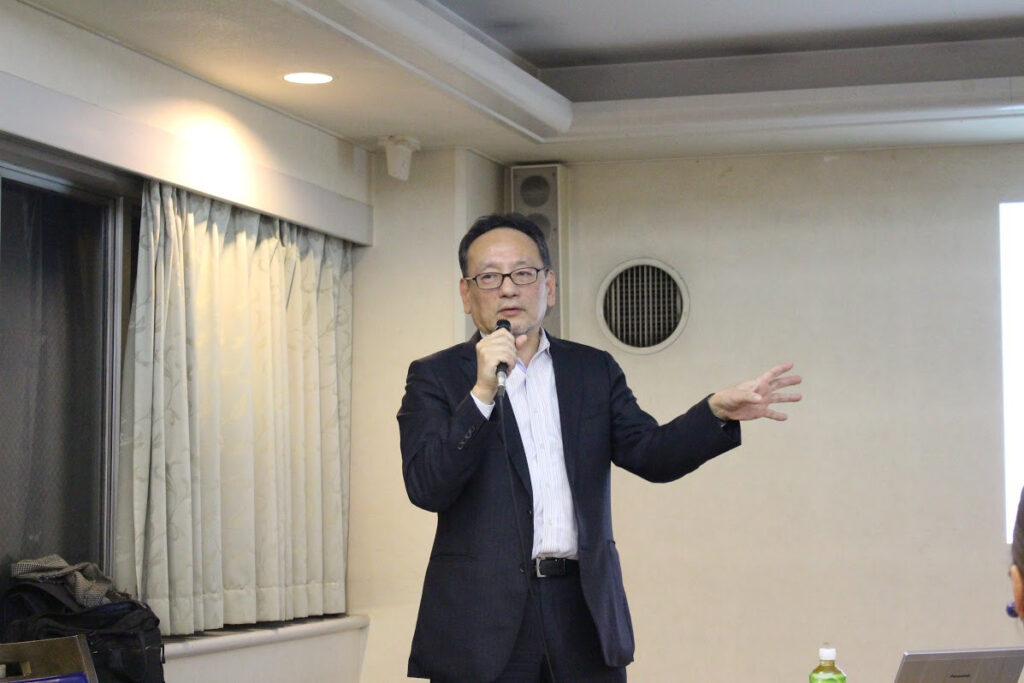
Mr.Yoichi Furuno
He joined Recruit Co., Ltd. in 1987 after graduation from the Faculty of Engineering, the University of Tokyo. He obtained an MBA at University of Southern California Marshall School of Business. Mr. Furuno assumed his present post as Chief Director, Institute for Organizational Behavior Research, Recruit Management Solutions Co., Ltd in 2009.
October 2019 "The truly important things about Working"
October forum was held on October 26, inviting Mr. Yoichi Furuno, Chief Director of Institute for Organizational Behavior Research, Recruit Management Solutions Co., Ltd. We discussed under the theme of “The truly important things about Working”. The topics ranged from “ideal working style” to “happiness theory”, and the discussion heated up.
Speech summary
At the beginning, we had a discussion on the ideal way of working based on the allegory of “Mexican fishermen and businessmen”.
When we were asked whether we agreed with the fisherman or businessmen, the answer was divided almost evenly.
As a reason to support the fishermen, there were opinions that the current happiness of the person should be prioritized, and the time with family and friends would be reduced when starting a business. On the other hand, from the businessmen’s point of view, some students pointed out that it is possible to prepare for economic risks by starting a new business and increasing income, and one can broaden one’s horizon by gaining various experiences in the process of expanding business.
In response to the question of how we should work in the era of diversified working styles, Mr. Furuno said “To survive, and then be Happy”. “Happy” means being satisfied with positive emotions such as satisfaction in looking back, enrichment to the present, hope for the future. In contrast, “survival” means adapting to the external environment. To survive in the cooperate world, you need to endure your current pleasures and prepare for future risks. Since we can’t ignore either of them, it is important to integrate the two stances that often conflict to work successfully.
In the second half, we learnt the relationship between “working” and “happiness” based on various data and philosopher’s comments. Among them, the idea that approval from others is important to work happily was introduced, which brought us into a discussion on the impact of reduced interaction at a workplace due to the spread of teleworking to our happiness.
We also discussed about various other topics related to “working” in modern society, such as how to cope with the prolongation of life after retirement and automation due to technological development.
Lastly, we would like to thank Mr. Yoichi Furuno, who gave us great opportunity to enrich our understanding of Working with highly suggestive stories.
(Risa Hiruta, 3rd year, Faculty of Law, Keio University)
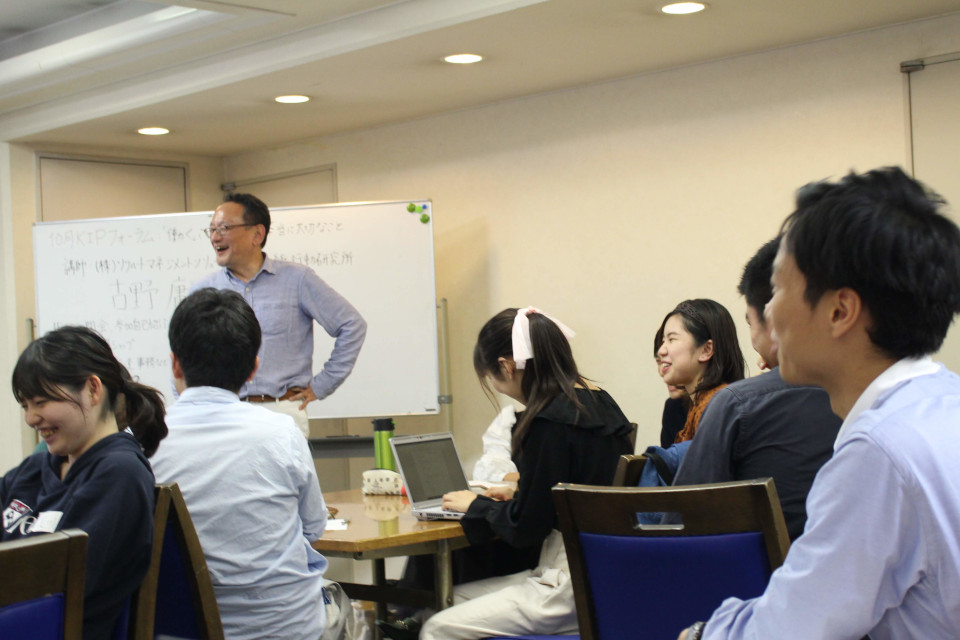
Mr. Yoichi Furuno
He joined Recruit Co., Ltd. In 1987 after graduation from the Faculty of Engineering, the University of Tokyo. He obtained an MBA at University of Southern California Marshall School of Business. Yoichi Furuno assumed his present post as Chief Director, Institute for Organizational Behavior Research, Recruit Management Solutions Co., Ltd. in 2009.
September 2019 "Democracy from the views of political public relations and online election"
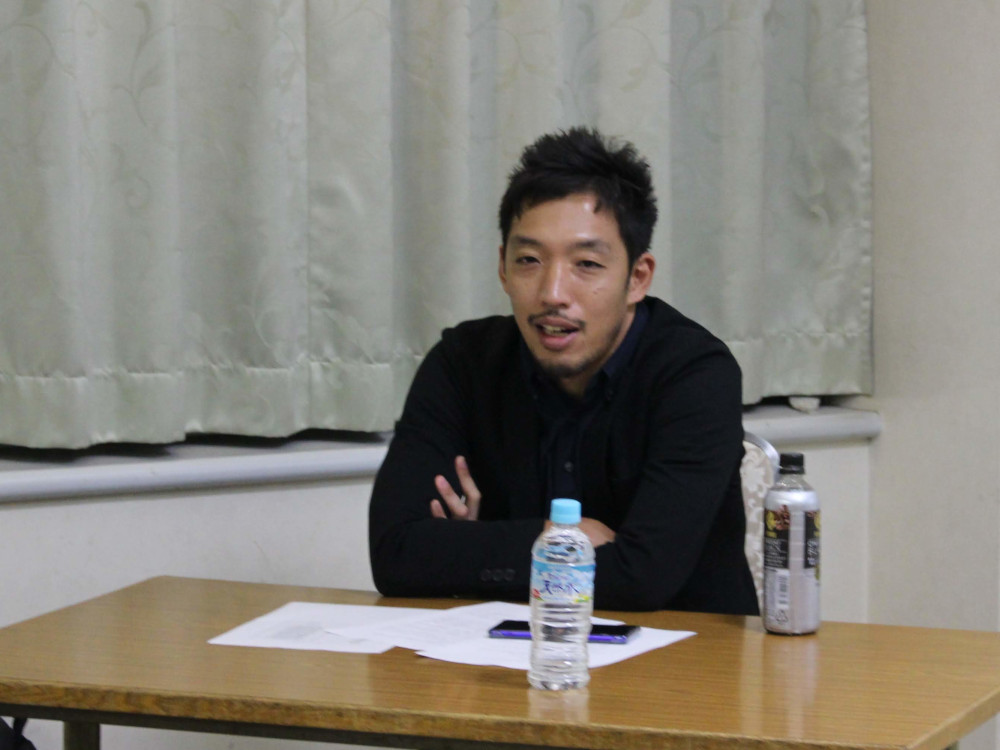
Mr. Ryosuke Nishida
He is a sociologist and an associate professor of the institute for liberal arts of Tokyo Institute of Technology who specializes public policy and information society. He finished his master’s degree in Graduate School of Media and Governance of Keio University
September Forum was held on October 1st, inviting Mr. Ryosuke Nishida and a senior member, who deals with public relations of administration. They discussed election campaigns and political activities using medias, the legal system, and image-building strategies of them. Next, we had a discussion about “Should the cost of political advertisement regulated?”
Speech summary
At first, Mr. Nishida and an alumnus discussed the topic. The recent trend of media is that the number of television viewers in twenties is decreasing, but as a whole all generations mainly get information on TV and the Internet. Especially, Internet users are increasing. It is characteristic that information is widely spread by medias’ interaction, as evidenced by that what television has reported are seen on the Internet and that news programs and newspapers feature what has gone viral on social media.
Regarding the connection among politics, medias, and advertisements, political parties and politicians apply online advertising to information strategy, which deliver political advertisements to voters on social media and the Internet. In Britain and America, there is a strong recognition that the regulation on expression in political activities and election campaigns should be minimum. On the contrast, Japan attaches importance to offering fare environment as a poor politician can even take part in politics actively. It is uncertain that which is better, but Mr. Nishida problematizes the inconsistency between the regulation and its purpose. For example, there is a regulation on the number of distributable handbill, but not on the times of posting advertising videos on the Internet. Also, the Broadcast Act bans election campaigns on TV and radio, but not on the Internet. As for the election campaigns and political activities in ways as used in a commercial market, which appeals to voters’ images and impression, he argues that it is effective to get votes from those who are not always interested in politics, however, it does not deepen substantial understanding of measures.
Discussion
The theme of the discussion was “Should the cost of political advertisement regulated?” In my group, our stance was “no” because it is difficult to set a fare standard of the regulation and it might diminish the freedom of speech. In floor discussion, many students stated the opinion that small political parties will get more opportunity to grow up if the regulation of the cost of political advertisement is imposed on a bigger political party, which has more funds and members.
In the last part, Mr. Nishida made a comment on our discussion as following. On the premise that there is currently a certain regulation on the cost of political advertisement, political parties will find a way to adapt to it, such as entrusting advertising activities to volunteers if the regulation is tightened. It is important to think about whether the regulation is effective, and the effectiveness relies on the terms of regulations.
Finally, we really appreciate Mr. Ryosuke Nishida to give us a very interesting lecture, and the senior member to promote the discussion and provide an additional explanation.
(Misaki Kayasuga, Sophomore, Faculty of Law, Keio University)
June 2019 "A Work Style Reform Law and acceptance of foreign workers"
Speech summary
At first Mr.natsume and the alumnus discussed the present situation and problems on working environment of foreign workers. Now Japan accepts many foreign workers who want to work in the industries which face serious lack of people. However, according to Mr.Natsume’s speech, their working environment is often terrible. For example, they are forced to work overtime at extremely low salary, and they even cannot take family along to Japan. The government takes some measures, but it’s still insufficient because of the lack of budget and people who relate to the measure, so he said we have to prepare the efficient system, such as counselors who are foreign people living in Japan, rapidly.
Secondly, he told us about the outline of a work style reform law and its issue. This law is composed from mainly 4 part: the overtime cap, taking a paid holiday, equal pay for equal work, and advanced professional system. However, the overtime cap is just same as the line of karoshi, so this can lead to the situation that companies justify overtime work within that line. Also, small to medium-sized companies are not so willing to change their working styles, so it seems that we need to revise this law with many loopholes. In addition to this, Mr.Natsume questioned the Japanese government’s stance that they are trying to expand the gap among different-workstyle-people, while many countries are making it goal to eliminate the gap.
Discussion
The theme of the discussion was ‘The work style reform law really leads to economic promotion of Japan?’ In my group, our stance was ‘yes’ and discussed a lot about problems which may arise because of this law and how to solve those problems.
In floor discussion, there were mainly two groups: one agreed with this idea, because they thought employees could improve their skills during their free time or the work efficiency would improve, while the another one disagreed, because they thought this law made no difference in women and elderly people’s participation. Especially we had different opinion on the topic, ‘The overtime cap truly bring about improvement in work efficiency?’ and discussed actively asking a lot of questions each other.
In the last part, Mr.Natsume commented on our discussion and said like this: the present law has a lot of loopholes, so it may be difficult to improve Japanese economy. However, we can expect the improvement in companies all over the country if we revise the law and make the better one. He hopes that fair competition based on fair rules will realize in the future.
Lastly, we want to thank Mr.Ichiro Natsume, who talked us a lot based on his experience during his busy time and the senior member, who interviewed Mr.Natsume and promoted the discussion with great sincerity.
(Yuna Watanabe, College of Arts and Sciences, The University of Tokyo)
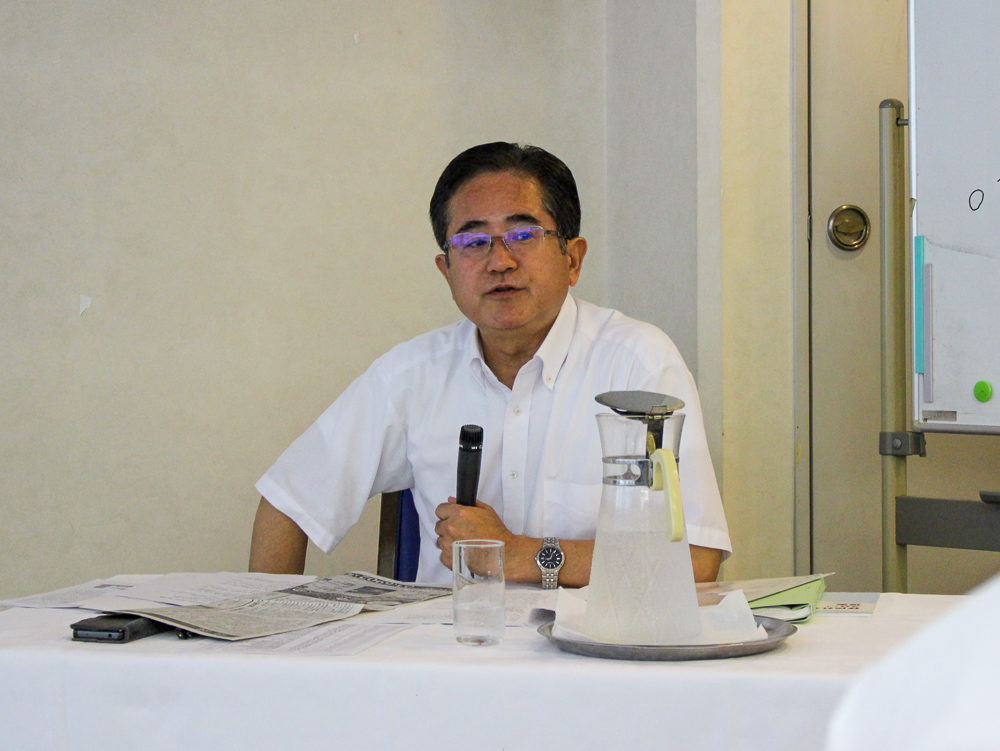
Mr. Ichiro Natsume
He belongs to Junpo law office and Daini Tokyo Bar Association. Also he is a secretary-general of labor lawyers association of Japan and a Deputy Director-General of labor law committee which belongs to Japan Federation of Bar Associations. He graduated from Chuo University and he majored in law there. He mainly handles labor accidents, such as overtime work, disguised contracting, and illegal dispatching and so on.
May 2019 "How to see the international situation"
Speech summary
This time, he went ahead with this forum in a different way from usual.
Speech: How to see the international situation
Disuccusion: “How should Japan behave in view of the current US-China relationship?”
Speech: Feedback and Speech: The relationship between China, the US, North Korea and Japan
Q&A
First, Mr.Fujisaki said that there seems to be three misunderstandings of globalization many Japanese people could have. As Mr.Fujisaki talked, the first one was that borderless age will come; but he said it won’t come because all countries seek to defend the national interest. The second one was that Japanese people tend not to be good at saying opinions; but Mr.Fujisaki thinks, as fact, Japanese people tend not to be good at input rather than output. The process of asking questions and getting answers makes us good at input and enables to build a good relationship. The third one was that we need to study not English but other languages; but Mr.Fujisaki said firmly that English is necessary to study prior to other languages because English is a global language, even if globalization would advance more in the future.
Next, we had a discussion as detailed below.
Finally, Mr.Fujisaki talked about the relationship between China, the US, North Korea and Japan. US-China trade war could make Japanese economy decline, on the other hand, it is not necessarily bad for Japan in terms of retaliation against intellectual property rights infringement in China. Including this issue, it is important for Japanese economy and security to keep good relationship with the two big countries: US and China. Through this talk, Mr. Fujisaki emphasized two things he considered important in diplomacy. One is not to accept speech or statement without questioning but to read a background and psychology. The other is to do the best, assuming the worst case. When I heard this talk, I realized that I had only seen the surface of diplomacy. I believe that it is necessary for us students to understand social issues essentially
Discussion
We had a discussion on the theme “How should Japan behave in view of the current US-China relationship?”. In terms of the gurantee of security, one group said that Japan should follow the US. On the other hand, in terms of Japanse economy, another group has an opinion that Japan should export products like cars to the outside of the US and China to prevent the decline of the Japanese economy. Mr.Fujisaki gave students high praise for shrewd discussion but then he pointed out that they were optimistic about foreign diplomacy. It is necessary to assume the worst case in diplomacy, because the current international relations will not always continue.
(Riho Ishii, Faculty of Creative Science and Engineering, Waseda University)
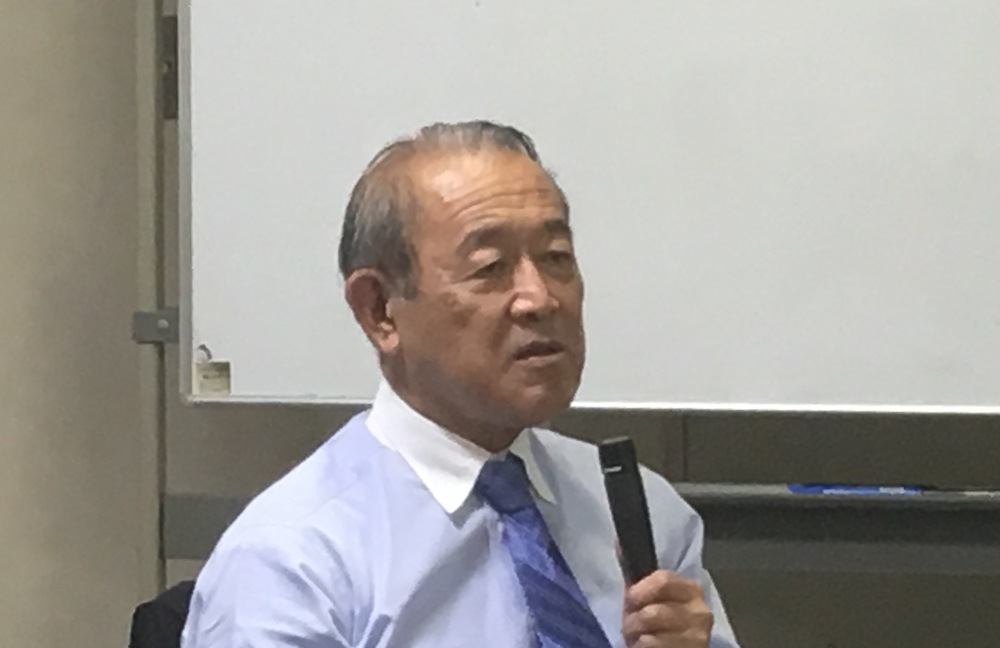
Mr. Ichiro Fujisaki
Mr. Ichiro Fujisaki served as Ambassador to the US. Now he holds positions such as President of The America-Japan Society and Visiting Professor Sophia University.
April 2019 ""Will art and culture develop in Japan?""
Mr. Kano gave us a speech about the policy and scheme to support culture and art in Japan with international comparisons. Here is a summary of his talk.
The Japanese government regarded the support of culture and art as a strategic investment based on social needs and established the Japan Arts Council to give them financial support. The concept of the arts council, which was imported from England, is a system in which a third-party organization with professionals should examine and evaluate the support for culture and art groups.
While the new scheme has been working for seven years, the national budget for culture promotion is only 0.015% of the total budget in 2017, much smaller than in other countries. Besides, a small number of people make a donation in Japan. Therefore, they have fewer chances to have support from nongovernmental organization such as private companies.
It is necessary to not only build art facilities but also develop human resources so they can propose and carry out plans. The Japan Art Council aims to invest for human resources training, enhance cooperation among cultural facilities, and association with universities.
At the Q&A session, many students asked about the culture support system in foreign countries. Singapore and Australia are motivated to support culture because of the effect of the UK and the US. Some groups in the US give donor companies the reserved concert seats and sometimes allow them to make a request for the number. Besides, the NHK Symphony Orchestra offers discount tickets for students, and it has a good effect on encouraging the younger generation to join their concerts.
After the Q&A session, we had a group discussion. Today’s agenda was “Which is better to support culture and art, tax or donation?” Tax supporters insisted that art is a sort of education which grows the sense of culture. Also, public support is more stable than that of private sectors. On the other hand, donation supporters stated that it depended on people’s tastes if they enjoy art or culture; therefore, it is unfair to collect money from everyone. Also, it is rather an investment for inbound tourists than a help.
At the end of the discussion, we talked about the risk that rural cultural organizations would decline if official support reduces because the private donation will centralize in larger cities, where companies place their headquarters.
Some said it would have a good effect thanks to “selection and concentration.” Others insisted it would have a terrible impact because it makes it harder for rural younger people to experience the art and grow their hidden talent
Throughout the discussion, everyone was very motivated, and Mr. Kano seemed satisfied with the eager opinion exchange.
(Takuma Akaki, The University of Tokyo, Faculty of Engineering)
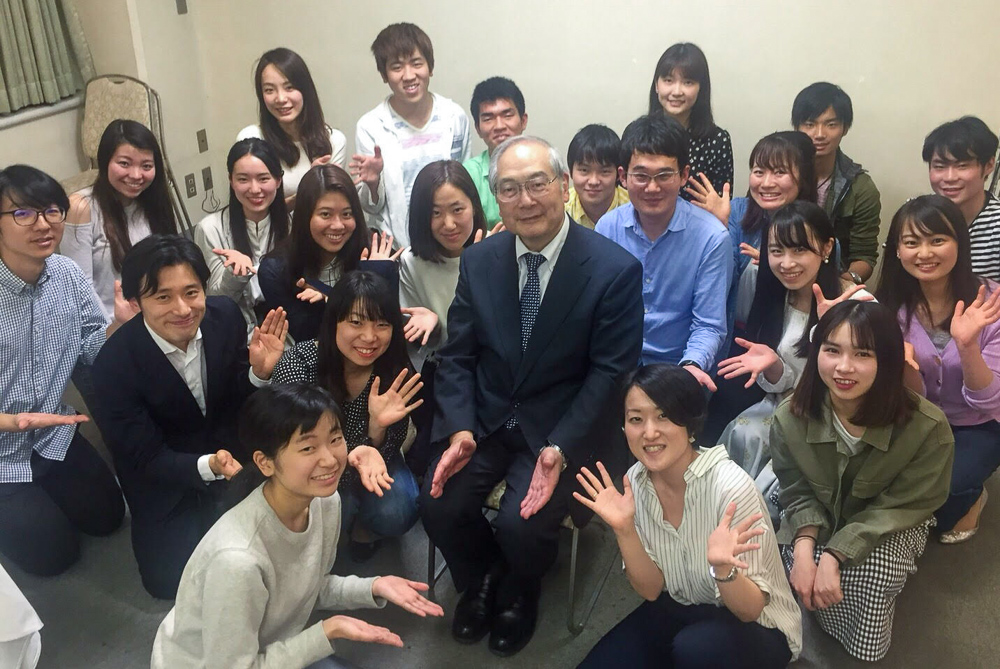
Mr. Tamio Kano
Mr. Kano graduated from Tokyo University of Arts. After joining NHK (Nippon Hoso Kyokai), he was seconded to NHK Symphony Orchestra, where he organized the concert programs. Later, he became an executive director. Now he works for Japan Arts Council and dedicates himself to create public subsidy systems for culture and art organizations.