


February 2021 "Dawn of Digital Currency"
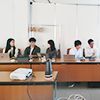
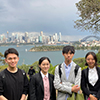
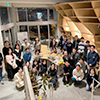
For the February Online Forum, we invited Mr. Tada, a member of KIP Alumni. He explained us about basic knowledge of the digital currency which included the definition, international consideration, and future outlook. Following the talk, we discussed the theme of “Should the government allow Libra (Diem) to launch its service? Do you want to use it if it is available?”
Speech Summary
This time, Mr. Tada proceeded with discussions so that this forum would be a place to provide a perspective to consider digital currencies deeply. First, he talked about what “digital currency” is, and what “currency” itself is. Then, he mentioned features, mechanisms, and problems of digital currencies, which are Crypto-assets, stablecoins, and CBDCs (Central Bank Digital Currency). Speaking of crypto-assets, they are mainly regarded as speculative assets, not as currencies. Stablecoins would be more stable than Crypto-assets because their value are supported by fiat currencies. But there is a risk that they might be used as a tool for money laundering or terrorist financing, and it seems difficult for a private company to manage it while considering those risks by themselves. CBDCs are totally different from others in the respect that they are issued by sovereign nations. But there is a possibility that a CBDC originated in a country would unpredictably affect the other countries’ economies.
In Q&A session, he also taught us about the cases of Cambodia and the Bahamas, where their own CBDCs are already issued. One of the reasons why some developing countries already started to use CBDC earlier than advanced economies is that there are relatively urgent needs for these countries to promote their own currencies on the back of their economic weakness and unfavorable features.
After that, we moved to the discussion. The theme of the discussion was “Should the government allow Libra (Diem) to launch its service? Do you want to use it if it is available?” Libra is a kind of Stablecoins that Facebook announced in 2019 and was renamed Diem in 2020. Each group gave pros and cons of Libra. The advantage to accept its service was that it would spend less money and time to send money overseas. The disadvantages were the decline of effectiveness of economic policies, concern that private companies could manage some risks, and another concern that Libra won’t penetrate in the society where there are already many kinds of digital currency. Based on these pros and cons, some groups disagreed with the idea, while others agreed because of the advantage of international money transfer. At last, Mr. Tada brought up the point that it is important to focus not only on the theoretical content, but also on the composition of society and differences in opinions among people in each country.
He gave us a new perspective that we should hold both perspectives that what the government should do and what I would like to do when we face some information on this matter. We would like to appreciate Mr. Tada’s kindness for taking time out of his busy schedule to give a presentation to KIP members.
(Saki Terabayashi, Waseda University, Faculty of Advanced Science and Engineering, 2nd year)
Mr. Tetsuro Tada
Mr. Tada is currently engaging in international affairs as a public servant. He graduated from the faculty of law, University of Tokyo in 2019. Before his graduation, he served KIP committee and participated in many study trips. He is still involved in KIP activities as a KIP Alumni.
November 2020 "Working at the OECD & What Mental Health Research is"
For the November Forum we invited Mr. Shunta Takino, who has been training for two years as a trainee of the Young Associates Programme at the Organization for Economic Co-operation and Development (OECD), to talk about “What is the experience of working at the OECD as a young person?” and his work at the OECD, “Mental Health Research”.
Speech Summary
In the first half of the forum, Mr. Takino talked about the work of OECD and “Mental health research”. To begin with, he introduced the history of the OECD’s reorganization from its inception to its current organizational structure, and that there are various paths to work at an international organization, including the Young Associates Programme of which Mr. Takino is a member, in addition to government-sponsored and university-specific programs. He dreamed to work at an international organization because of his experience of traveling back and forth between Japan and the UK when he was a student. The OECD’s work is similar to that of a think tank, with a variety of data from each country and reports, and while Japan is consistently one of the top contributors to the budget, it has only about 5% of the total number of clerks, making it difficult for them to be influential in the field due to the English language barrier.
Next, Mr. Takino explained his work at the OECD, which is “mental health research”. Mental health is defined by the WHO as ‘ a state of well-being in which every individual realizes his or her own potential, can cope with the normal stresses of life, can work productively and fruitfully, and is able to make a contribution to her or his community.’ Mr. Takino emphasized that mental health is for everyone, regardless of whether they have a mental disorder or not, that any person can make it better, and that the words we use when talking about mental health are important. When you look at “mental illness/non-mental illness” and “well-being/non-well-being” in terms of coordinates, it is difficult to put policies in place to help people who are “not mentally ill” and “not well-being” to be “well-being”. It was also pointed out that we are lagging behind in terms of data collection and measures compared to physical health, and the OECD’s collection of data is also a topic that involves a variety of issues such as the lack of standards for data available from countries, the handling of personal information, and psychological barriers to responding to questionnaires.
In the Q&A session he mentioned the fact that the younger generation is particularly susceptible to mental health in the covid-19 disaster, as they need to prepare for various aspects of independence in their lives, the potential impact of social networking on mental health, and the use of IT to improve mental health.
In the latter half of the forum, we had a group discussion on “Utilization of IT Tools for Mental Health Care Problem Solving”. There were many opinions in favor of the use of apps, and specific suggestions included such as those that divide all people, whether they are aware of their mental health or not, into stages and collect health data on a daily basis to help explain the reasons for changes in their own mental health, teaching soft techniques such as meditation and yoga, and bulletin boards, diary functions useful for sharing information, and a help line to medical institutions. Mr. Takino suggested that the apps should focus on encouraging self-help rather than making absolute judgments and the function to deepen understanding of mental health would be desirable.
Overall, Mr. Takino encouraged us to continue talking and thinking about mental health. For those of us who are suffering from the covid-19 crisis, the fact that the younger generation is more susceptible to mental health problems is our own business. It was a valuable opportunity to learn that anyone can improve their mental health through objective analysis, and to realize that the activities of international organizations are connected to the issues we face and our lives. I would like to sincerely appreciate Mr. Takino’s kindness for taking time out of his busy schedule to give a presentation to KIP members from France.
(Itaru Ota, Keio University, Economics, 4th year)
Mr. Shunta Takino
Born in Tokyo, he attended middle and high school in the UK and graduated from Oxford University (Philosophy, Politics and Economics) in 2018. While at the university, he served as President of the Oxford University United Nations Association (2016-17), and has been active in strengthening Japan–United Kingdom relations by connecting Oxford University and Kyushu University through discussions on international relations. He then worked at the Asia Pacific Initiative (2018-19), a Japanese think tank, for about a year, and from September 2019 he worked as a member of the Young Associate and Policy Research and Advice Directorate of Employment, Labour and Social Affairs.
October 2020 "What we can see from the Great East Japan Earthquake"
The October forum was held. In the project of this year which theme is “The role of conveying and responsibility of telling”, we are researching about prevention of damage caused by rumors and reduction of mental damage of the victims. Therefore, in this forum, we invited Mr. Toshiro Sato who is playing an active part as a storyteller about Okawa Elementary School as speaker, and we were able to hear about the facts that occurred in the Great East Japan Earthquake and important factors of disaster prevention.
Speech summary
In Mr. Sato’s talk, the facts that a lot of precious lives in the Great East Japan Earthquake touched me well, and I thought that it is important for all the people to enhance the consciousness of disaster prevention. What he said that disaster prevention means “telling the day when the earthquake occurred”, “telling the future”, and “saying I’m home” is left in my heart. I noticed that great disaster robs many lives occurs in our quiet days.
In Okawa Elementary School, a lot of children including Mr. Sato’s daughter were sacrificed. The school was near Kitakami river and its branch, Fuji river, so tsunami flowed back the revers hit the children and teachers evacuating. Then, they were to evacuate to a bridge, and they did not evacuate to the mountain in the back of the school. However, there were three requirements, “time, information, means”, are important to save lives there. Actually, Mr. Sato said that “decision” and “actions” are important to save lives in the situations without the range of assumptions. Furthermore, these are like a “gear” we should put when there is emergency, and thinking about our shining lives can move the “gear”, Mr. Sato said. I understood deeply that treasuring our lives leads to better methods of disaster prevention.
When Mr. Sato told the facts that occurred in Okawa Elementary School, he regards “giving significance to the lives” as important. We must not forget the facts, and it is important to give significance to the lost precious lives for the future, he said. I think that “role of conveying and responsibility of telling” is important to tell the facts of great disasters.
When we were hearing the talk by Mr. Sato, there was a gloomy atmosphere although the event was held using Zoom. However, we were able to discuss the importance of disaster prevention and recovery. The phrase “When we assume that great disasters may occur in the future, we should include ourselves and own important people in the assumed damage and lead them to succeed” which Mr. Sato said is left a strong impression to me. When the Great East Japan Earthquake was occurred, I was an elementary school child, and I noticed that the children who went to Okawa Elementary School were same as me, so my consciousness for disaster prevention became sharper. This lecture by Mr. Sato was precious and gave inspiration to the “role of conveying and responsibility of telling”. We will take advantage of this forum for the project.
(Momoka Suzuki, Keio University, Faculty of Science and Technology, 2nd year)
Mr. Toshiro Sato
Mr. Toshiro Sato is from Ishinomaki city in Miyagi prefecture. He worked at a junior high school in Miyagi as a Japanese teacher. His second daughter died because of the Great East Japan Earthquake when she was 6th grade schoolchild in Okawa Elementary School. In the end of 2013, he developed “Chiisanainochinoimiwokangaeru-kai”, and he holds talks in schools of the whole country, local governments, companies and organizations in the present.
September 2020 "Emerging U.S. Trade Policy Approaches to China and their implications for the International Trading System"
For the September Forum, we invited Mr. Shikata who is a KIP board member and has been appointed to the position of Director-General of Economic Affairs Bureau of the Ministry of Foreign Affairs since this July. Based on the theme he has researched during his stay at Harvard University during the last academic year as well his experiences during the prior two year assignment at the Embassy of Japan in China, he delivered the cutting-edge insights regarding the ongoing US-China trade friction. At the end of the Forum, we discussed the role of Japan in the deepening US-China confrontation, including policy recommendations.
Speech summary
The September Forum was held in a new format at FCCJ, due to the impact of the COVID-19, in conjunction with the On-line participants. This time, Mr. Shikata, also a KIP Board member, gave a lecture in English under the title above, based on the research he has conducted at Harvard University. Introduced by Mr. Shikata, Ms. Tangtang Yang, a third-year student at the University of Chicago, also joined the Forum as a discussant.
Firstly, Mr. Shikata gave an overview of the chronology of the US policy and trade strategy towards China since the normalization of diplomatic relations in the 1970s. In so doing, he concisely described the context in which the current trade policy under the Trump administration was constructed. He shared his research focus, comparing the Clinton administration that decided to support China’s accession to the World Trade Organization (WTO) to the Obama administration that led a high-level of trade liberalization through the Trans-Pacific Partnership (TPP), highlighting how the trade policy towards China under the Trump administration has shifted from the conventional policy paths. Mr. Shikata noted that many of China’s unique business practices, or so-called ‘China Inc.,’ such as a large role of state-owned enterprises (SOEs) in the economy and the influence of the Chinese Communist Party on the market, which President Trump sees as problematic, have already been pointed out during the Obama administration. A series of US policy measures, in such fields as currency, intellectual property rights, and WTO dispute settlement, were implemented prior to the Trump administration. Nevertheless, with China’s economic rise, the current US government recognized that China had not become a “market economy” as it had originally aimed to be. Thus, a number of measures have been taken to address various unresolved issues and barriers for U.S. companies to enter the Chinese market. He covered in detail about the situation up to now, analyzing that the first phase of the trade agreement between the United States and China that was reached in January 2020 may not be seen with optimism given the status of its implementation as well as the current situation that additional tough measures could be taken against China by the US government.
With almost 50 days to go before the U.S. presidential election, Mr. Shikata also talked about the candidates’ perspectives on China, the current landscape of international trade governance, the China-led ‘Belt and Road Initiative’ and developments in economic diplomacy in the Indo-Pacific, including the Japan-UK Economic Partnership Agreement (EPA), which reached Agreement in Principle on the eve of the Forum. He also explained the roles of Japan and the United States in reviving the global economy in the wake of the current COVID-19 pandemic.
In the Asia-Pacific region, there are several regional trade agreements such as Regional Comprehensive Economic Partnership (RCEP), which are expected to be concluded within this year despite India’s drop-out from negotiations, and the China-Japan-ROK(Republic of Korea) Free Trade Agreement (FTA) that are currently under negotiation, to ultimately realize the Free Trade Area of Asia-Pacific (FTAAP) which is a APEC-wide vision for a future free trade area. In addition to the importance of WTO reform, Mr. Shikata highly evaluated the significance of concluding the TPP, from which the United States withdrew shortly after the inauguration of the Trump administration. It came into effect as the Comprehensive and Progressive TPP (CPTPP) thanks to the endeavors of Japan and other member countries, and achieved a high-level rule-making over trade and investment issues. He also touched on the importance of the Free and Open Indo-Pacific (FOIP) vision as well as the strategic potential of CPTPP as an economic pillar under the FOIP, and the prospects for the future return of the United States to the TPP.
Ms. Yang of the University of Chicago pointed out the Chinese views that “China’s violation of the rules”, which the United States accuses of, is not necessarily based on the internationally accepted WTO rules, but is the U.S. measures based on its domestic laws. Besides, she made the case that none of the Chinese senior officials mentioned the possibility of ‘de-coupling’ of the two countries. She also argued that the TPP, which has been dominantly promoted by the United States and nearly concluded in the Obama administration, is viewed with caution in China as a policy tool that could force various challenging domestic reforms.
In the Q&A session after the presentation, a wide range of topics was discussed, including signs of further domestic institutional change due to China’s rapid economic rise under US-China frictions, differences in perceptions and definitions of ‘Market Economy,’ the aims of the Trump administration’s China policy, and the role of countries other than the superpowers like the United States and China in stabilizing the international economic order. While touching on the possibility of further tough US policies in the future to secure domestic job and national security in the United States, Mr. Shikata noted that within the Trump administration, there are various perspectives on trade and monetary policy. In the context of WTO reform, he also highlighted some important issues that Japan can possibly collaborate with others such as the treatment of developing country status and differences in the views between the United States and Europe in terms of reform of the dispute settlement system.
In the latter half of the Forum, we had a group discussion on ‘Japan’s Role in the U.S.-China Conflict’ including policy recommendations. A group of participants at the FCCJ suggested that Japan should not act as a single country but should work with other like-minded countries that share key values to reach out to the United States and China, respectively. In order to achieve this policy aim, they proposed enlargement of the geographical scope of the FOIP concept as a concrete measure. A group of on-line participants suggested that although China currently seems to be isolated from the international society due to such issues as human rights and Hong Kong, since the size of Chinese economy cannot be ignored, Japan should continue to engage Chinese side through various channels to help China steer domestic reform particularly from the business perspective, while separately addressing these problematic issues surrounding China.
In response to these discussions, Mr. Shikata kindly gave his comments on each group. For instance, he agreed that Japan’s diplomatic vision of the FOIP should continue to be widely conveyed to the world. As the United Kingdom, which decided to leave the EU, and Japan reached agreement in principle on the bilateral EPA, the UK’s future participation in the CPTPP would broaden the scope of FOIP, and it is desirable to strengthen the linkages among countries with common universal values. He also noted the importance of engaging the United States and China in the ‘Data Free Flow with Trust (DFFT)’ initiative that was proposed by Japan on the sideline of the G20 Osaka Summit in 2019. Regarding the long history of business ties between Japan and China, Mr. Shikata showed a sympathetic view on the possibility of Japan’s unique role in tapping into the deepening confrontation between the United States and China, referring to the historically deep-rooted relations between Japan and China which was highlighted in a recent book by Professor Ezra Vogel of Harvard University. Overall, Mr. Shikata shared many insightful points of view based on the discussion of each group.
Coincidentally, a few days after the Forum, WTO panel issued its first-ever report regarding US tariffs on Chinese goods, finding that high tariffs on China imposed by the United States are inconsistent with international trade rules. Although the future development will be even more uncertain, as the Trump administration immediately responded criticizing the decision, it was an excellent opportunity for us listening to a comprehensive and concise explanation of the very timely and complex international trade system. I would like to sincerely appreciate Mr. Shikata’s kindness for taking time out of his busy schedule to give a presentation to the KIP members.
(Yuma Osaki, Crawford School of Public Policy, The Australian National University (PhD candidate))
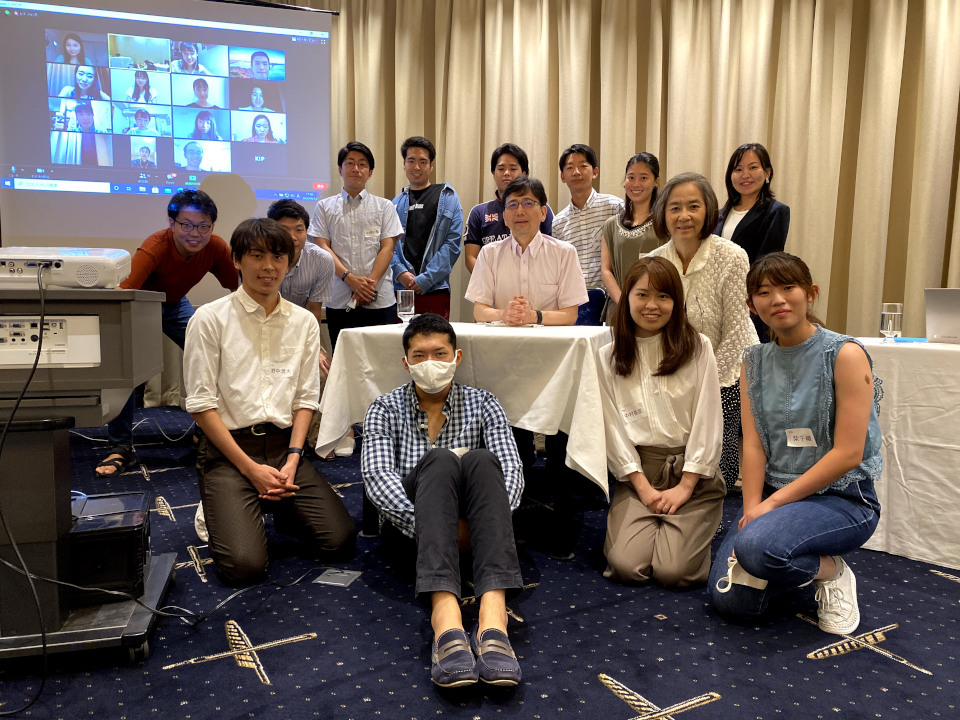
Mr. Noriyuki Shikata
Mr. Noriyuki Shikata holds a B.A. in Law from Kyoto University and Master in Public Policy (MPP) from Harvard Kennedy School of Government. Most recently, he was at Harvard conducting research on an emerging U.S. policy toward China and the Indo-Pacific. His other prior positions include: Deputy Director General, Asian and Oceanian Affairs Bureau; Director, Economic Treaties Division, International Legal Affairs Bureau; and Director, Second North America Division, North America Bureau; Envoy Extraordinary and Minister Plenipotentiary, Deputy Chief of Mission, Embassy of Japan in China. Mr. Shikata has also been a Visiting Professor at Kyoto University’s Graduate School of Law/Public Policy. He is currently Assistant Minister / Director-General of Economic Affairs Bureau, The Ministry of Foreign Affairs.
August 2020 Reflecting on the phrase "I understand that I don’t understand. But I stand with you"
Ms.Yuko Yokoi
She was born in Kyoto, Japan. Moved to the Unite States when she was 4 years old, and went back to Japan in 2003. After graduating Keio University, she studied abroad at New York University. During her study in abroad, she studied sociology, anthropology, politics, and pacifism. She got a master’s degree in 2020. Currently, she interns international NGO.
For the August forum, we invited Ms. Yokoi who is currently living in New York. She started her lecture with racial discrimination issue related to BLM activities, and the awful tragedies that black men being killed by white police in the United States. This forum was held in 8 o’clock pm in Japan, and in 7 o’clock am in New York. Even though there is a time difference, we were able to hold this forum thanks to online technology. In the end of the forum, we discuss in groups about “Whether posting through SNS should be restricted or not.
Speech summary
First of all, she talked about discrimination. According to her, everyone has unconscious bias, in other words, everyone has possibility to discriminate somebody. Thus, in her opinion, when someone who suffer from discrimination disagreed with your opinion on racial issue, we have to apologized to them immediately and accept their indication. In addition, “Word” itself may sometimes promote discrimination. For example, “disabled people” gives us impression that they are different from other people, so “People with disability” is better expression to use. Ms. Yokoi insists that we can change discrimination by language we use.
Secondly, Ms. Yokoi explained there are so many things black men need to care in their normal life. Since Ms. Yokoi has close friend who is black, her story is truly real. For instance, her black friend tries not to walk behind one person on street at night, try not to bring umbrella, try not to put his hands in his pocket. Otherwise he can be doubted as a criminal. Also, he does not like to see police, because he is afraid of them after series of tragedies that white policemen killed black men. People like him are afraid of being arrested or killed even in this era.
Shamefully enough, I thought discrimination in the United States was improving recently, but I found it not true at all. I was shocked when the killing of George Floyd happened and this time when I heard Ms. Yokoi’s story. I realized that discrimination is still a huge problem, which have not been solved yet. You can review why this discrimination exists solidly in the United States from “13th”, a movie Ms. Yokoi introduced.
Finally Ms. Yokoi mentioned what Asian people can do. Ms. Yokoi herself joined protests and signature-collecting campaign. After joining these activities, she realized society has slightly changed. In her perspective, Asian people in the United States also claim their opinion towards killing of black men by white police. This time, Ms. Yokoi talked about race discrimination between white and black, but she gave us strong message that we, Japanese, also have to face other discrimination that exist in Japanese society.
In discussion, topic was “Whether posting on SNS should be restricted or not.” Most of the groups supported the idea that posting should be restricted. Objects for restriction can be fake news, racism, and slander. In the grand discussion, one group insisted people who posted fake news should be punished legally. However, other group argued that freedom of speech should be protected and society needs to rely on the view that human are born good, and people should have literacy. We had opinions on both two sides, which made the discussion lively in a good way.
In the end, Ms. Yokoi said that people can change the society only after we act independently. Also admitting misunderstandings about racial issue is important to live together in this diversified society. In this forum, we could get to know current discriminated situation in the United States from Ms. Yokoi, and it is absolutely precious opportunity for students who live in Japan. Even though there was time difference, I would like to thank Ms. Yokoi for spearing time for us.
(Asuka Akazawa, Meiji University; Business, 4th year)
July 2020 "Impact of COVID-19 on Australia-Japan tourism"
July forum (Reading English Articles) was held online on July 18, inviting Ms. Sarah Strugnell, a Master student at The Australian National University and The University of Tokyo. Based on two articles which focus on the impact of COVID-19 on Australia-Japan tourism, she briefly explained the tourism industry in those two countries and compared the different tone of articles. Afterward, participants discussed how COVID-19 changes the images of Australia and Japan by using the concept of “soft power.”
Speech summary
July forum was held as a kick-off of a new KIP program, which is Reading English Articles. REA is a program where participants read an English magazine with a native speaker and discuss issues related to the guest speaker’s country and the world. This time, we invited Ms. Sarah Strugnell and discussed the impact of COVID-19 on Australia-Japan tourism based on two articles: “Japan’s Campaign to Revive Virus-Hit Tourism Sector Postponed Amid Cost Controversy,” in “The Diplomat” and “Tour de force cancellations,” in “The Monthly,” an Australian publication.
First of all, Ms. Strugnell gave us a short presentation about the issues discussed in the two articles and the features of Australia-Japan tourism. The first article in “The Diplomat” argues how easily misinformation can be spread out through social media and impact people’s perceptions and views. In light of the COVID-19 pandemic, the misinformation caused many people to believe that the Japanese government would cover 50 percent of inbound travel costs to Japan. The second article in “The Monthly” sheds light on Australia’s major tourist spots focusing on local livelihoods of people working in tourism. Ms. Strugnell explained that due to the difference of targets and focuses, the tone of voice that these two articles adopt is very different – the first article uses formal written form, whereas the second one uses Australian slang. She also emphasized that there are frequent coming and goings between Australia and Japan, such as travel during cherry blossom and sport events seasons, working holiday, school trips, business trips, and noted that the low-cost carriers played vital roles in enabling them. In the second half of her presentation, Ms. Stregnell insisted on the importance of offering consistent messages by the government in the case of emergency, taking how the leaders of New Zealand and Australia coped with the COVID-19 crisis as an example. Finally, she proposed to support SMEs and purchase local items to minimize the negative impacts of COVID-19 on the tourism industry.
After the presentation, we moved on to the Q&A session. It covered various topics such as traveling in the Olympics year, the role of low-cost carriers, and the impression of online classes during the exchange in Japan. Ms. Strugnell talked that one of the reasons she decided to stay in Japan amid the COVID-19 pandemic was the inclusive healthcare system of Japan. She pointed out that living environments such as health security and food security play an important role in deciding when to stay or study. Besides, although she could receive Japanese news in English thanks to the great effort of her university, many foreign residents in Japan found difficulty in getting accurate information in English and sometimes have a misunderstanding due to incorrect translation, according to Ms. Strugnell.
In the latter half of REM, we discussed how COVID-19 changes images of Australia and Japan by being split into two groups. One group presented that safety is the top priority for travelers amid the pandemic; therefore, contact confirming application should be promoted, and the mainstream target will shift from group tour to personal tour. Another group insisted that even though safety should be prioritized, human-to-human interaction remains to be a key element of traveling. Although we cannot promote it during the epidemic, offering messages such as “we are welcoming you” is important because we, as human beings, always seek attachment and look for opportunities to immerse ourselves in different stories and cultures.
As a conclusion, Ms. Strugnell recommended to read not only the major magazine such as NewYorker but also national or local magazine to expand our horizons. The first REA was a fantastic opportunity to consider about the impact of COVID-19 on tourism and the bilateral relationship between Australia and Japan. We would like to express our sincere gratitude to Ms. Strugnell for sharing a valuable story with KIP members.
(Luka Ishino, The University of Tokyo, Graduate School of Public Policy, Master 1st year)
Ms. Sarah Strugnell
Bachelor of Arts (Honours) in Japanese Studies, Monash University Bachelor of Science in Microbiology, Monash University Master of Public Policy – Double Masters Degree Program (The Australian National University and the University of Tokyo)
June 2020 "Attraction and Suffering of International Cooperation: Volunteer Activities at the Botanical Garden in Jordan"
June forum was held online on June 23, inviting Mr. Ryota Fujiwara, a KIP Alumni. He gave us a talk about his experiences in the Japan Overseas Cooperation Volunteers (JOCV) program. The forum proceeded in a question-and-answer format. Afterward, students discussed whether the country should increase or decrease its budget for international cooperation.
Speech summary
First of all, we asked Mr. Fujiwara about how he came to participate in the Japan Overseas Cooperation Volunteers (JOCV). Mr. Fujiwara has been interested in agriculture since before he entered university. At graduate school, he studied the nutritional deficiency mechanisms of plants. Besides, he has been interested in international cooperation for a long time. He collected information about JOCV for some time, which led him to apply for the position this time. He said he had confusion to quit a socially stable job to become a JOCV member. However, he perused himself by preparing a career plan and cash flow chart. One of the attractions of JOCV is that members get an allowance so they can work without cutting their own money unless you live with the life standard as the locals. He wanted to go to the garden in Jordan for his work place because he majored in wild plants at graduate school, and he was interested in the activities. Also, learning Arabic was another reason to choose Jordan. He saids some team members could not bear the stress of the change in their environment or human relationships and returned home. Although, Mr. Fujiwara built some good relations with others by making good use of his experience in his former job where he experienced sales and negotiations with foreign companies.
When he visited and lived in Jordan, he was surprised at the reaction of Jordanian people to East Asians. In Jordan, there are far more Chinese people than Japanese people, and it was not uncommon for them to think that Mr. Fujiwara is Chinese at a first impression. Through his activities in Jordan, he felt the joy of overcoming differences in religions and values. Also, he realized that international cooperation and cross-cultural understanding are tasks that require much energy.
Mr. Fujiwara’s views on international cooperation changed due to his activities as a member of JOCV. He pointed out that not only specializing in international cooperation itself directly, but also polishing the expertise in other fields before going into international cooperation is another career path. Mr. Fujiwara’s one of the jobs at the garden was to research and collection of Jordan’s wild plants. Mr. Fujiwara and other staffs with master’s or doctoral degrees were performing professional work with the same objective. However, due to the spread of COVID-19 in the region and rising cases in Jordan, the JOCV members had to return home unexpectedly before the staff, and he felt impatience and a sense of helplessness. The good thing about JOCV is that it is a two-year program that allows you to know the field of international cooperation. Mr. Fujiwara also pointed out that the jobs one takes on will differ depending on their skills and expertise. Although, since JOCV acts as grassroot level closely together with local people, it is neccedary to have communication with the locals to realize support effectively.
In light of the above, we were divided into groups and discussed whether Japan should increase or decrease its budget for international cooperation in the time of national particularism caused by the pandemic of COVID-19. Many groups suggested that we should review the use of the budget to reduce waste and increase or maintain the amount of money. On the other hand, there was also a strong consensus that it is appropriate to reduce the budget for international cooperation, given Japan’s lack of domestic economic resources. Some also pointed out the difficulty of maintaining the face value in light of the current economic stagnation caused by COVID-19, and raised the idea like defining the budget as a percentage of GDP by the size of the economy or a brand new technical cooperation in the post-corona era. Mr. Fujiwara summarized the discussion by saying that it is important to international cooperation should continue in the perspective of sustainability for government and also individuals who engage in international cooperation. He also raised the possibilities of a new type of international cooperation with the development of technology, such as web digital transformation or Fintech.
Mr. Fujiwara explained to us the current state of international cooperation and essential issues based on his own experience. The forum was a valuable opportunity for us to think about how we can get involved in international cooperation. We would like to express our gratitude to Mr. Fujiwara for sharing a valuable story with KIP members.
(Riki Bando, Graduate School of Interdisciplinary Information Studies, Master 1st year)
Mr. Ryota Fujiwara
He majored in life science at the Tokyo Institute of Technology. After receiving a master’s degree, he joined a general trading company. He engaged in the purchasing and procurement of raw materials for fertilizer in the agriculture-related department. In 2019, he decided to join the Japan Overseas Cooperation Volunteers (JOCV). He has engaged in wildflower research and education activities at a botanical garden in northern Jordan. Due to the global spread of COVID-19, he has been back in Japan temporarily since March 2020.
May 2020 "Changes in the movement of people through the spread of on-line systems"
Firstly, Mr. Imai pointed out that, in the with-/post-corona world, there were three important aspects in thinking about the domestic movement of people -the symbiosis with the virus, the shift in our mindset, the changes in our travel forms. – Here is the summary of his explanation. Due to the higher risk of infection, the war with the Covid-19 is said to last long. We are about to live in an age when living “with corona” will be inevitable. Under this circumstance, measures are taken to reduce human contacts in everyday life. The online systems are spreading rapidly in services, businesses and studies. Meanwhile, this kind of change makes us aware again of the significance of living in the “real” world. Actually, during the stay-at-home period, many people fully recognized the true meanings of the time spent privately and face-to-face communication. This leads to the shift in the form of our movement, from daily outgoing to more purposeful travel. As a result, the movement in sum will decline. However, since we will be able to gain necessary information for our lives even if we do not live in cities, working and living environments will be varied. Therefore, many people will choose to move to subrubs or remote regions, especially after the corona is over.
After Mr. Imai’s presentation, we discussed mainly about whether on-line systematization would facilitate the movement to remote districts. Those in favor claimed that the separation of one’s life and work would invoke I-tern phemomenon, such as having a weekend house there. Those opposed said that without the development of mobile infrastructure, medical systems and travel costs, it would be difficult to promote this movement. Besides, some participants insisted that we consider the international affaris in cosidering the flow of people in this country.
Based on this debate, we worked in groups to plan how encourage more people to visit highly romote prefetures (Akita, Fukushima, Mie and Yamaguchi). A workshop was the first attempt in the KIP Forum. Although the discussion time was demanding, each group made a nobel proposal to increase the number of repreat travelers by firms, students as well as tourists, on the basis of geographical and industrial features of each prefecture.
At the end of this event, we talked about the ways of bringing in timely approaches while preserving the tradition of the districts. We came to the conclusion that we should need to create trust within the community, organized by cooperations, admininstrations and local citizens. In this way, we will be able to strike a balance between the old and the new, making remote areas more attractive to many.
Ortega once brought up a concept, “All and Together” in The Revolt of the Masses. This suggests that we must remember who we are in the general public. Through this forum, I thought it would be essential for us to have an idea, “Together and Alone.” Each person takes some time to think about themselves, the present and the future seriously. At the same time, we need to work together with others to handle social alternations and issues. In my opinion, we need to take such attitude at this moment.
(Haruki Kawakami, Junior, Faculty of Law, the University of Tokyo)
The May Online Forum took place on Saturday, May 30. This time, Mr. Tetsu Imai, a member of KIP Almuni, explained us about the movement of people after the lifting of the state of emergency. Then we discussed how this movement in Japan will change in the prosess of online businesses and courses are being introduced. In addition, we engaged in a workshop from this viewpoint,“How can we encourage more people to visit four remote prefectures continually?”
April 2020 "Think About COVID-19 and Its Relevant Issues"
April forum constituted of following three parts.
・First: Voices from overseas
・Second: Group discussion (A: distance education, B: risk communication, C: public health and policy)
・Third: Grand discussion
In this paper, we will introduce the summery our opinion from group discussion of second part, which was held by each facilitator in their way.
Group A: “Can traditional courses be replaced with online classes?”
Conclusion
Yes, it could be. However, it is impossible to completely replace the conventional courses by online education. This is because with replacing offline classes for online classes, some negative aspects would arise, and those points were so critical that we should not ignore them. Therefore, it is essential that universities apply the attractive features of online and face-to-face classes and compensate their flip sides.
Group B: “What ideal risk communication is like?”
Transmission of information from leaders
Stirring up a sense of crisis
By sharing opinions from medical practitioners, leaders will be able to convey a sense of impression. Leaders should execute this process immediately to make people realize the critical situation and see the reality the society has, which leads to creating a sense of safety afterwards.
Giving a sense of safety
A Leader should sometimes rely on a person admired by the nation.
Operating the methods of A and B correctly according to stress and mental situation of citizens is required. In addition to this point, in an extraordinary situation, leaders must show a similar experience in the past and indicate proper behavior to their citizens. Coupled with the points above, leaders should succeed in making people realize that the problem is up to them.
Roles of citizens in risk communication
It is important for all of us to think ourselves as we are potentially one of the originators of information.
When it comes to a sensitive problem, we always have to make sure where the source of information is and have to develop media literacy to choose correct information from all we gain.
What we can try, for instance, to gain correct information is to discuss certain news with people surrounding us. The “discussion” does not have to be high level, but it can be just an easy chat. This action will be likely to eliminate fake news at least from you and the person you talked with. After the discussion process, we can use our social network services to share and notify the true information.
Another important thing to remember is that the foresight of people towards problems like COVID-19 must be long-termed. Keeping this in mind, we all have to decide our behavior and action.
Group C
“What do we request for local politician as a young group?”
Group C1
Who: Those who have some troubles.
Owner and employee of restaurant
Those who work and at the same time raise their children
Those who are anxious about discard due to their age and COVID-19
Those who have job related to arts
Social worker like care givers
Those who try to get or change job
What:
Short term: Sharing the situation and future policy clearly, listening to raw opinions and getting empathy. (∵Mayor of the City of New York)
Long term: Active action toward some problems which unravel due to COVID-19 such as DV, racial discrimination and online work. Young people can tackle with those things like thinking how to prevent DV and using pre-paying system.
Group C2
Recheck the medical system
Online medical treatment is expensive, because the government don’t pay anything for hospital.
To educational institutions
a. Don’t take up chance from young people. For example, universities shouldn’t cancel study abroad program and students can continue to get scholarship there.
b. Keep international cooperation in order to accept Japanese students
Rethink the timing of entrance and graduation
(KIP Committee)