





February 2017 “Recent changes in European and British Politics”
On the evening of February 20th we had a lecture and Q&A session about some issues which Great Britain and European Union has been facing in recent times. The speaker was Mr. Simon King, former advisor of British Prime Ministers Gordon Brown and David Cameron, as well as Mrs. Theresa May. Mr. King started his career at one of the London’s auction houses because he has interest in arts. Then he worked for a long time in British government. He lives with his wife in countryside near London. Mr. King often visits Japan and owns a small business in Tokyo.
The main question we discussed with Mr. King was Brexit. Mr. King gave us a complete explanation about the reasons which brought the British society to vote for Brexit. As a matter of fact, different areas of UK voted differently. But the result itself was sensational because, as Mr. King noticed, after 20 years of stability people now want changes. Why are they so unhappy about the current situation? The answer can be found after considering two important issues: globalization and immigration.
Globalization always was a good thing for every economics in the world as it can efficiently distribute resources and attract talents. What’s wrong with it nowadays? First of all, inequality has grown dramatically: rich people become richer, poor people poorer. If you are less skilled, you lose the game, says Mr. King. Second, global companies became enormously rich and they avoid paying local taxes. Third, because of globalization many countries which were not well-developed 10-20 years ago, now become locomotives of the World’s economics. According to Mr. King, this also brings a psychological effect as people cannot feel so proud of being citizens of UK, as they did before. Additionally, they lost an alternative way of development by looking at which they could say “yes, we are doing very well”, like it was during the competition between communist and capitalist economical models before the Soviet Union disintegration.
Immigration is another issue which should be handled carefully. One of the basic principles of EU is free movement of people. But every single year around 100000 people from east Europe enter UK, and it seems to be out of control. The main problem which immigration causes is the loosing sense of identity by local people. As example, Mr. King says about some British towns where the ratio between local people and arrivals is about 50%. The problem is that people who arrive to Britain often do not want to adapt to local culture and traditions, they start introducing their culture and traditions. Recently local people has become less patient, as the problem is being very poor managed. After recent splash of immigration from Middle East countries, we saw that EU could not control it well, we can see it by looking at several acts of terrorism in European cities. All these factors proved for UK population the necessity of leaving EU. Mr. King also mentioned that US President D. Trump used the similar moods in society in his election campaign. He meant to build a wall on the US boundary with Mexico in order to decrease illegal immigration to US.
After politicians demonstrate some degree of inefficiency in the issues mentioned above, people started claiming for changes, and we can see it in very unpredictable voting results like accepting Brexit or election Mr. Trump as a President of USA. It is not easy times for politicians, Mr. King marked, as they lost trust from majority of people. Social surveys proved their inability to show the people’s real opinion. Mr. Kings links it to using old technology and inefficient structure of questions. Alternatively, social media has got a real power among people nowadays. But Mr. King emphasizes the risk of social instability if people rely on the information received from social media too much, because usually people communicate in their own circles of interest (groups), and their opinion very often cannot face the opposite argument but only support.
Among questions to Mr. King were those about identity of British people, the positions of Scotland and Northern Ireland, the inconsistency of social surveys and many others. Mr. King thinks that for Scotland it is now more difficult to leave Britain, as crude oil prices show significant drop, which means trouble for Scottish economics after becoming independent. We also touched the question of projection these problems onto Japanese society – can Japan accept more immigrants? We decided that government should control the acceptance limits in close collaboration with local communities while analyzing possible impacts of such actions.
During the discussion we proposed several measures to control immigration. Briefly, we agreed on the following mechanisms: selection criteria, adaptation or training, supporting institutions in both sides (sending and accepting).
I am very grateful to KIP and Mr. King for this evening and interesting discussion of most important European problems.
(Igor Zavialov)
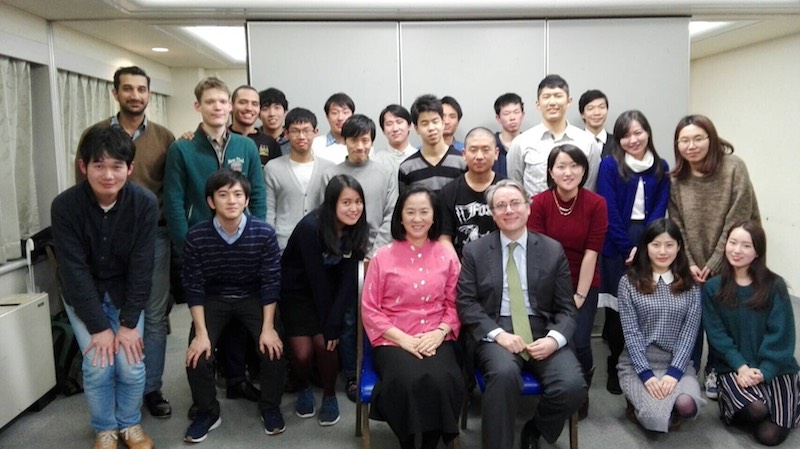
Mr. Simon King
Mr. Simon King has a keen interest in politics and international affairs, and has provided advice to senior politicians from the three major political parties in the United Kingdom on a wide range of issues.
In the 1990s, Mr. King served in the British government as a policy adviser specializing in national security and domestic policy.
From 2008 for a period of four years, he was appointed as Principal Private Secretary to the Prime Minister, working closely with two prime ministers, Gordon Brown and David Cameron.
In 2012, he was appointed Strategic Director to then Home Secretary Theresa May, who is now Prime Minister of the United Kingdom.
January 2017 “Japan in the Asia and the world seeing through ODA(Official Development of Asia, ODA)”
Shunsuke Nagano: Profile
After graduating from university, Mr. Nagano joined the Ministry of Foreign Affairs of Japan. He studied American history at the Graduate School of Yale University, and after serving in India, he was seconded to the Financial Services Agency, where he witnessed the moment Japan entered the TPP negotiations. He is currently engaged in the promotion of Official Development Assistance (ODA) as Assistant Director of the Development Assistance Policy Division, International Cooperation Bureau, Ministry of Foreign Affairs.
In January, we held our monthly forum. This time, we invited Mr. Shunsuke Nagano, Assistant Director of the Development Assistance Policy Division in the International Cooperation Bureau of the Ministry of Foreign Affairs, to give a lecture on Japan’s development cooperation policy, namely Official Development Assistance (ODA). Through his lecture, we were able to learn a great deal about ODA. Below, we would like to present excerpts from Mr. Nagano’s lecture, the Q&A session, and the discussion that followed.
Having been interested in national security and defense, Mr. Nagano joined the Ministry of Foreign Affairs after university motivated by a desire to contribute to Japan’s development made possible through the efforts of those who came before, and by a pride in being Japanese. In diplomacy, the “nation” is the most important unit, and diplomats are expected to shape an international environment favorable to Japan—in other words, to maximize the national interest. Concretely, this includes ensuring the safety of Japanese citizens, improving Japan’s cultural image, and strengthening Japan’s political and economic standing. At the same time, Japan must not act unilaterally or self-righteously; rather, it must pursue win-win outcomes by leveraging the strengths of different countries to compensate for one another’s weaknesses. Japan’s strengths include not only its position as the world’s third-largest economy, but also its advanced technological capabilities, long history, and appealing culture. For example, the special respect paid by the King of Saudi Arabia toward the Emperor of Japan, or the many Michelin stars awarded to Japanese cuisine, are examples of these historical and cultural strengths.
ODA is an important tool of international cooperation that allows Japan to make full use of these strengths. Its purpose is to contribute to global peace, stability, and prosperity by promoting the economic and social development of developing countries and regions, grounded in the belief that doing so ultimately secures Japan’s national interests. As the proverb “Kindness is not only for others, but ultimately for oneself” suggests, ODA is not charity; it aims to build mutually beneficial relationships. ODA includes not only grant aid, but also concessional loans and technical cooperation, which are selected based on the conditions of each recipient country. As a member of the Development Assistance Policy Division, Mr. Nagano considers how best to use ODA strategically and helps determine overall directions. A representative example of concessional loans is yen loans, which are provided at low interest rates and with long repayment periods. While yen loans may appear to impose an economic burden on Japan, the long repayment period can foster long-term friendly relations between Japan and the recipient country. Concerns may also be raised about technical cooperation as a possible outflow of Japan’s technology. However, the technologies transferred are basic, and by training engineers, it actually becomes possible for local workers to support the establishment and operations of Japanese companies in their own countries.
Sometimes there are issues for which there is “no clear solution.” When there is no definitive answer, how should limited resources be allocated? How should such decisions be explained to the public? These are the challenges the International Cooperation Bureau faces on a daily basis.
<Q&A Session>
Q. “Is there a risk of mismatch between local needs and what Japan provides?”
A. “Japan’s ODA is characterized by the provision of high-quality infrastructure that is durable and long-lasting, rather than cheap and fast. However, the most important element is accurately identifying what is truly needed.”
Q. “Is it difficult to evaluate the outcomes of ODA?”
A. “It is difficult to quantify short-term results beyond indicators such as the number of contracts awarded to Japanese companies or public opinion surveys. However, because ODA is funded by taxpayers, we must fulfill our responsibility to provide accountability.”
<Discussion>
We exchanged opinions on the question: “Should Japan increase its ODA budget?”
All groups supported either maintaining or increasing the current level. Reasons included the stabilizing effect on international relations through continuous assistance and the economic benefits ODA brings to Japanese companies that win related contracts. However, regarding current allocation, some argued that resources should be shifted from economic infrastructure (transportation, communications, energy) toward social infrastructure that directly affects citizens (education, healthcare, water and sewage). A Chinese exchange student commented that Japan’s ODA cooperation toward China is not widely recognized, and that ODA should be made more visible to the public.
The January forum offered an opportunity to reconsider Japan’s efforts to attain an “honorable place” in the international community after World War II from the perspective of ODA. Finally, we would like to express our deepest gratitude to Mr. Shunsuke Nagano for his lecture, which offered profound insights into the essence of Japan’s foreign policy. Thank you very much.
(Ayako Morihara)
November 2016 “Leadership(based on a case study used in Harvard Business School)”
We, KIP, invited Mr. Ninami- the president of Suntory Holdings Limited- to November forum as a lecturer, and ask him to have a lecture about leadership based on a case study about a distress accident occurred in Everest in 1996 which was used in Harvard Business School.
At first, Mr. Ninami asked us “Reading this textbook, is there anyone who think ‘I want to go to Everest?”
This textbook is about an accident occurred in Everest, so there was no one who wanted to go there. During the lecture, he asked us many questions. Especially, we were divided over a question that “In the mountaineering parties in this textbook, they let the leader decide everything, then was it right or not?” Some people said that a leader should declare his opinion as a right choice, while some people said a leader should listen to other people’s opinion. When Mr. Ninami asked “Why didn’t Hall and Fischer (leaders in the mountaineering parties in the textbook) decide to give up climbing Everest?”, there were opinions like “They wanted to show their decision was right.” “They couldn’t make a right decision in a harsh environment.” “They couldn’t give up because of their client’s enthusiasm.” Then Mr. Ninami told us that there weren’t right decisions. Though it seems to be easy to find a right decision for a third party , it is very difficult to make a right decision in a harsh environment. Also, he said to us “There are two types of leader. One is a person who decides everything on their own and the other is a human who let other people talk about their opinion. There isn’t right answer, so I want everyone to think which is a good leader for ourselves.” In addition to that, there isn’t perfect structure, and what a leader should do is to make a structure close to perfect. Then he started to talk about his opinion. In his opinion, a leader should make final decision but he should listen to other people’s opinion and let them discuss. He also said human resource and courage was important in listening to other people’s opinions. Based on his opinion, he told us two examples. One is about a basketball team he belonged to when he was in high school. His team was defeated by a team which he thought was much weaker than his. He said “We were defeated because we didn’t listen to opinions of players in bench though they had different perspective from players.” The other is about Nobunaga Oda. He was a great military commander but he failed to unite Japan because he relaxed his guard. It is very difficult to keep modesty and not to be arrogant. In addition, based on the textbook, he said that though there were a lot of accidents in Everest, they couldn’t stop the accident happened. According to this, he emphasized how difficult to learn from failures is. Humans don’t learn from failures which were made in history. What is more, we don’t want to admit our failures and learn from them. However, what we can learn from failures is more important than what we can learn from success. Also, whether we can learn something from failures depends on ourselves and the environment we are in. In other words, what we can learn depends on whether we can face our failures and accept other people’s opinion and other people will accept your failures. One more thing he told us strongly was that charm was necessary for a leader. He quoted the president election of the U.S. as an example.
Next, we went into question time. Mr. Ninami emphasized the importance of listening to other people’s opinion and he also said he wanted young people to go outside and not to be too defensive in his answers to questions. After that, we had discussion, and the topic was “If you were Hall or Fischer, what would you do?” Many groups stated, “It was not clever to take care of all sick clients by himself” “They should give up when the schedule was late.” “They should make other clients obey the rule” On the other hand, some groups could not make consensus about whether they should take in sub-leaders’ opinion more. Through this discussion, we could realize that each person’s opinion about ideal leader is different.
At last, I would like to appreciate Mr. Ninami, who understands various opinion about leader and gave us a good opportunity to think about leader. It was not only a good opportunity for us to learn, but also to rethink about ideal leadership. Thank you so much, Mr. Ninami.
(Tokuyu Ko)
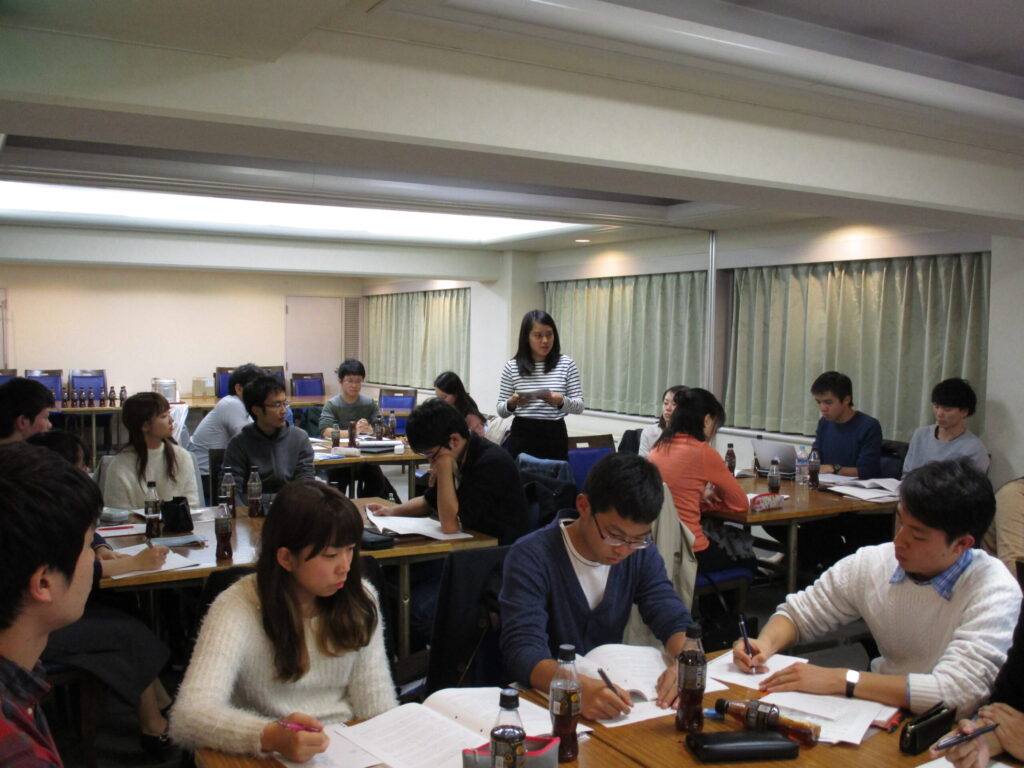
Mr. Takeshi Ninami
He graduated from Keio University in 1981. And after he entered Mitsubishi Crop, he got MBA in Harvard Business School in 1991. After he got back to Japan, he became an advisor of Lawsone. In 2005, he became a president and CEO of Lawsone. In 2014, he entered Suntory Holdings Limited as a president till now.
October 2016 “The management thought and philosophy in the era of the IoT (Internet of Things)”
For our October forum, we invited Mr. Semmoto who has founded KDDI and Y!mobile and now a managing director of Renova, Inc. The title of his talk was “The management thought and philosophy in the era of the IoT (Internet of Things)”. He talked about how to become an entrepreneur from his own experience such as the values he held to face the society and what was necessary to start a company.
In the first part of the forum, Mr. Semmonto talked mostly about how he made decisions throughout his career. Specifically, he focused on the reasons why he had decided to enter the stable big company “Nippon Telegraph and Telephone Public Corporation”, after graduating from university, and to found a company throwing away the position he had (at “Nippon Telegraph and Telephone Public Corporation”) as a manager of 300 employees working under him when he was forty years old. The story he told us that affected his decision on launching his own company was especially interesting. He studied at Florida University as a Fulbright scholar after few years into his career at Nippon Telegraph and Telephone Public Corporation. He told us about his roommate at that time eagerly. His roommate was normally a gentle person, however, he got angry when he heard about the company Mr. Semmoto belonged to. The reason was that he believed monopolistic companies would interfere economic development, while fair competition would improve the economy. When Nippon Telegraph and Telephone Public Corporation was privatized years after Mr. Semmoto came back to Japan, he recalled that conversation he had with his roommate which encouraged him to start his own telecommunication company, KDDI so that he would stimulate competition in the industry. According to him, the keys to success were venture sprit, effective strategies which suppressed costs and risks, and a partner who had vital elements he did not have. After succeeding with KDDI, Mr. Semmoto kept challenging businesses such as founding au, Y!mobile and so on. Even now, he challenges business as a managing director of Renova. His powerful character, strong passion and youthfulness struck us and we noticed how important to challenge new things is. After succeeding with KDDI, Mr. Semmoto kept pursuing his passion by consecutively founding several other telecommunication companies such as au and Y!mobile. As now a managing director of Renova, he inspired us with his fascinating characteristics, strong passion and vitality still existing in his core nature.
Second, we discussed “the necessity of college education for entrepreneurs” with reference to the lecture of Mr. Semmoto. After discussing actively, half of the groups concluded that college education was vain, while others concluded it was effective through active discussion. The main reason for the former groups was although college education could be beneficial for entrepreneurs, it was not necessarily required since other means such as going to cram schools for future entrepreneurs or for qualifications were much more effective. Meanwhile, the main reason of the other groups was the acquisition of wide views, a great network and social credibility, which were all necessary for entrepreneurs, would only come with a college student life. In addition to that, there was another opinion that science course would be helpful because of high degree of professionalism. The discussion let us to think about how to proceed our character formations even though it had started from how important college education was.The discussion became a precious opportunity for us to consider how to choose our ways in our lives. Lastly, we are truly grateful for having this opportunity to receive a lecture from Mr. Semmoto. We really appreciate his kindness.
(Tetsuya Fujiwara)
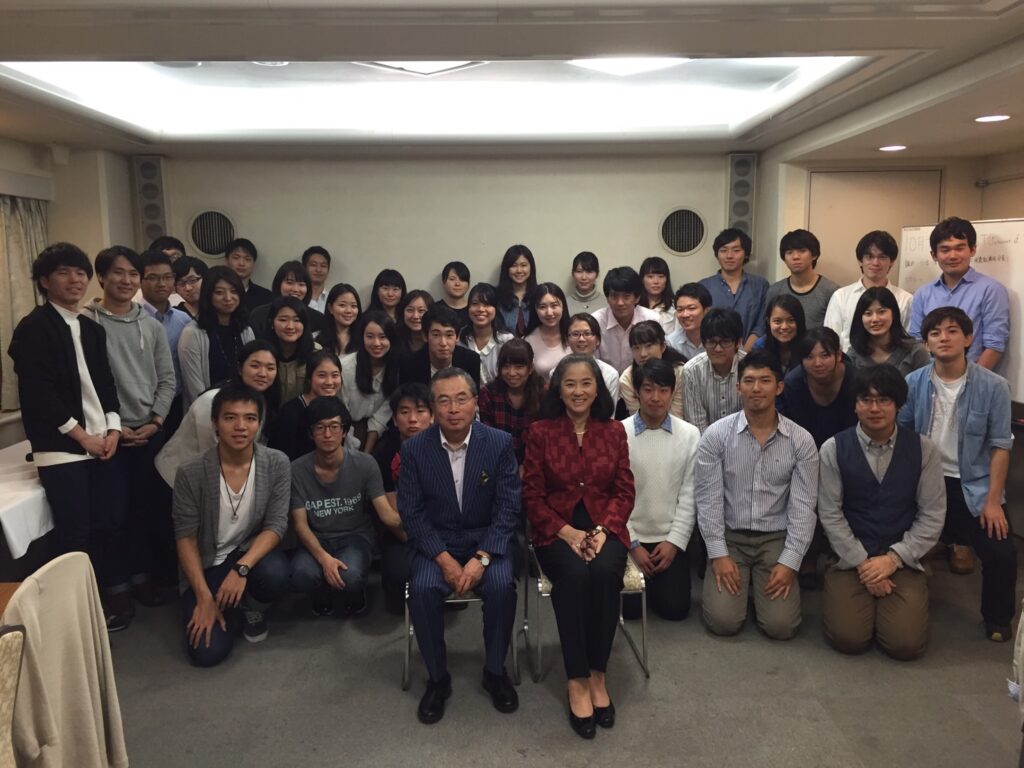
Mr. Sachio Semmoto
After graduating from Kyoto University, Mr. Semmoto began his career with Nippon Telegraph & Telphone (NTT). He earned his doctorate in electrical engineering from Universty of Florida as a Fulbright scholar. After resining from NTT, he founded DDI Corporation (KDDI), mobile business( au), PHS business (Y!Mobile, which is now under Softbank Corp.), and in 1999 eAccess Ltd. In 2014, he assumed the post of outside director of Renova, Inc. and from the next August, the management director.
September 2016 “Language, evolution and globalization”
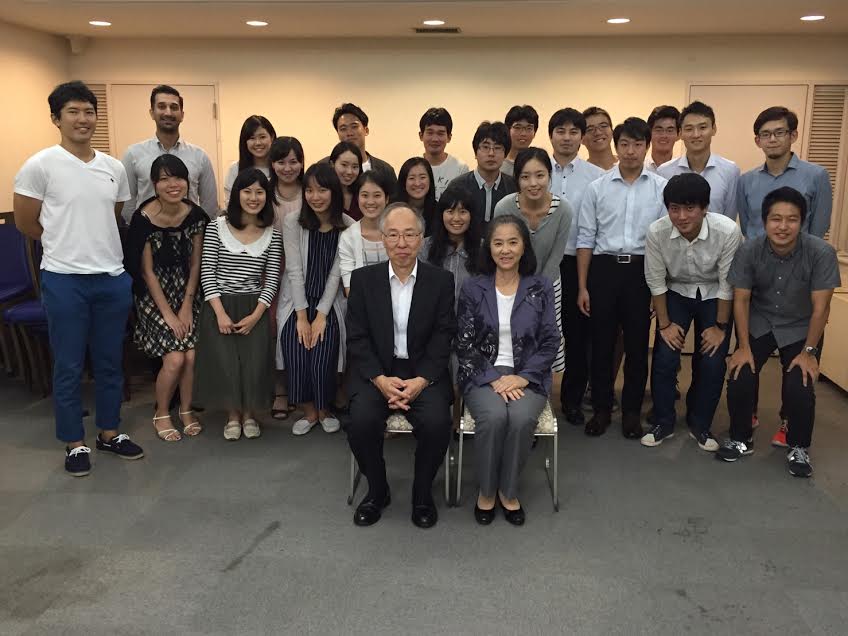
Mr. Yuji Yamashita
Mr. Yuji Yamashita was born in Kyoto. He worked at a trading company which is now called Sojitsu Corporation. After he retired, he started to work as the Executive Director of the Institute for International of Business Communication, which runs TOEIC test.
For our September forum, we invited Mr. Yuji Yamashita as our speaker. He is the Executive Director of the Institute for International Business Communication (IIBC). The title of the lecture was “Language, evolution and globalization”. He talked about TOEIC and globalization.
First, Mr. Yamashita talked about TOEIC, mentioning its history and its purpose. During the lecture, he compared TOEIC with TOEFL and explained the differences between them. For example, while the TOEFL scores are primarily used as a measure of the ability of international students to use English in an academic environment, the TOEIC scores are primarily used as a measure of the ability of business persons in a business environment. To make it easy for busy people to take the exam, the fee of TOEIC is lower and the testing time is shorter than that of TOEFL. In addition, he gave us some advice to maintain motivation for studying English and to master it.
Second, Mr. Yamashita lectured about globalization, its history and some features. In the lecture, the most impressive opinion he had was that globalization today meant just Americanization around the world.
After Mr. Yamashita’s lecture, we had a discussion. The theme was “If we belonged to an engineering firm and decided to employ foreigners which held 20% of all employees, should we learn English for working with them or should we get them to learn Japanese?” Every group had heated discussions, and most of the groups reached the same conclusion: Japanese should learn English in order to keep up with the globalization. On the other hand, the group on the opposite side stated that it was costly for all Japanese employees to learn English only for 20% foreigners.
Finally, Mr. Yamashita gave us some comments about our discussion. He also stated his opinion about globalization and the condition of Japan today. In this forum, we learned a lot of important knowledge about globalization and acquisition of foreign language. I would like to express my gratitude and appreciation to Mr. Yamashita for giving us a great lecture and a good chance to think about language and globalization.
(Kinuko Takeno)
July 2016 “Preserving tradition and clans”
Mr. Katsuyuki Mizuno
May 2016 “US presidential election and US-Japan relations”
In May, we held our monthly forum. This time, we invited Mr. Takayuki Shikata, Director of the Personnel Division, Minister’s Secretariat, Ministry of Foreign Affairs of Japan. Together with American STEM students, we discussed contemporary American society and the future of Japan–U.S. relations through the lens of the U.S. presidential election. Mr. Shikata participated as a facilitator, offering guidance based on his professional experience.
In this forum, our discussion focused on three topics: (1) the current situation of the presidential candidates, (2) the Trans-Pacific Partnership (TPP), and (3) the Japan–U.S. security alliance, including how relations might change depending on whether Mr. Donald Trump or Secretary Hillary Clinton became president.
Regarding (1) the status of the candidates, some participants pointed out that Mr. Trump’s unexpectedly strong influence reflects the extent of public frustration within American society. With respect to Secretary Clinton, opinions were raised that her frequent shifts in stance and perceived contradictions between her political persona and the activities of the organizations with which she is associated create issues of trust.
During the discussion on (2) the TPP, American students generally viewed the expansion of free trade as part of an irresistible global trend, accepting it as something the world is already progressing toward. While the issue remains divisive in Japan, American participants appeared to regard it as a debate largely settled in the past and seemed less aware of the drawbacks of free trade.
On the subject of (3) the Japan–U.S. security alliance, Mr. Trump has argued for withdrawing U.S. forces from Japan and having Japan defend itself. In response, American students expressed the view that U.S. forces should not be withdrawn, as doing so would diminish American influence in the Asia region, including Japan, ultimately harming U.S. interests. Many also felt that if Mr. Trump—who has shown a hardline stance toward China and has proposed building a wall on the Mexican border at Mexico’s expense—were to become president, it would negatively affect not only relations with Japan but also foreign relations as a whole.
This led to further questions about whether Mr. Trump, who lacks political experience, possesses the qualifications and aptitude necessary to serve as president. Students debated whether his provocative statements were deliberate tactics to attract attention or simply impulsive remarks. Opinions varied, with some expressing skepticism about his character and others interpreting his rhetoric as strategic.
Through these discussions, we recognized that the rise of a polarizing candidate such as Mr. Trump stems partly from widening economic disparities driven by initiatives like the TPP and NAFTA, which promote free trade. This has increased public frustration to a greater degree than before. We realized that Japan, too, must consider these issues seriously.
(Yuko Yokoi)
April 2016 “The Global World and The Leadership”
For our April forum, we invited Mr. Shigeo Ohyagi, the Representative Director of Teijin Ltd from 2014. He also has served successively as the chairman of the Japan Chemical Fibers Association, Nippon Bio-plastics Association chairman, and “project to consider the vision for social, economic and market” of the Japan Association of Corporate Executives. He gave us a lecture on a title of “the global world and the leadership”. As one of the top of the business world, Mr. Ohyagi mentioned his view to the modern world that is increasing its uncertainty of the future, and in such an environment, what kind of posture the leader should be.
In the first half, Mr. Ohyagi talked about diversification and complication of modern society with mentioning four points, globalization, digitalization, ICT and low birthrate and aging as the elements surrounding modern Japan. Of these four points, ICT that enable information to connect service was the most interesting for me. He told us that Teijin Corporation is also working on this technology. For example, it is used for management of the respiratory medical equipment which is necessary for the life of the person. Then Mr. Ohyagi talked what the leaders should be in such a modern age. I was particularly inspired with the indication that a leader is completely different from a manager managing the accomplishment of duties. A leader has responsibility to state a vision clearly and realize it and bring up a follower becoming the future leader. In addition to these, leaders are expected to have strategies and a severe sense of duty to realize his vision. After that, he introduced a parable of Momotaro to consider the viewpoint of a follower. Momotaro is with three followers of the monkey a dog, a pheasant. And the dog indicates action, the pheasant is information collection, and the monkey is planning. And when it was asked which was the most important among these three types of followers, Mr. Ohyagi’s answer was the action of the dog. That is because when you put some plans into an action, you can notice an insufficient point for the first time. So we should consider at the perspective of action. As I expected information or planning is essential in the current world that huge information is flying busily and a novel planning became an innovation, I was surprised at his story and had a new discovery.
In the latter half, we had a group discussion based on his lecture on the theme that “Should leaders consider the opinion of followers?” Even though the discussion theme was the same, each group devised discussion points and tried to push forward the arguments. For example, one group clarified the role of an ideal leader based on their own experience that acted as a leader or a follower. Another group set a particular situation not to keep the discussion an argument on the matter of the degree. The majority of the groups concluded that the decision should be made by a leader because it is a leader who recognizes the goal beat and would take the responsibility. On the other hand, some people pointed out some merits to take consideration into the opinion of the follower such as the new discovery from various opinions or the motivation improvement of the follower. Since we are living in groups and act leaders or followers in everyday life, I think that it was a significant opportunity to think about ideal form of organization. I would like to take this opportunity and thank Mr. Oyagi for giving us a great lecture. Thank you very much.
(Oneda Hiromi)