



March 2023 "The Challenge of Biotechnology and Genome Editing in the Medical Field"
【Presentation by the Members of Project】
In the first part, 2022 project members gave a research presentation, whose title was “Sustainable Communities from the Perspective of Food,”
According to two questionnaires conducted by KIP, they explained that although food plays significant roles in community building, many young Japanese are unaware of the importance of food and that in Southeast Asia, as in Japan, it is food that counts for making relationships. The questionnaires, regional studies, and Southeast Asia studies implied that low cost, time-sharing, and openness are three crucial factors for establishing a community, and that food is the one that satisfies all of these factors. Hence, in the action phase, a reception was held after the symposium to build community through food.
【Speech and Q&A】
In the second part, Mr. Ken Yasaka, a doctor at Tohoku University, delivered a lecture on genome editing, followed by a discussion on “Should genome editing technology be developed and used widely, or is there a line that humans should not cross? “
In the 21st century, owing to next-generation sequencers, the technology to read genomes has advanced dramatically, making it easier to determine genetic mutations. Most diseases are multifactorial diseases caused by multiple genetic and environmental factors. On the other hand, there are also single gene disorders caused by one particular gene mutation. CRISPR Cas9 has facilitated genome editing, but there are technical bottlenecks. Editing the genome of human embryos could potentially eradicate such single-gene disorders. On the contrary, now that, the application of genome editing technology to human embryonic cells is controversial because it may also allow for the arbitrary execution of enhancement as well as the prediction of diseases that individuals might suffer from in the future. In the Q&A session, we learned that genome editing of embryonic cells is more controversial than that of somatic cells in terms of genetic inheritance, that there are no regulations forgenome editing of human embryos in Japan at present, and that genome editing can be done at a low cost.
【Group discussion and Ground discussion】
In the group discussion, each group selected a topic from the following three themes: “How should we manage the regulation of genetic editing of human embryos? ” “Will genetic editing of human embryos in the medical field deny the dignity of people with disabilities and genetic disorders?” “What concerns do you have if genetic editing of human embryos as a medical treatment is allowed in the future?” Many groups agreed that genome editing technology needs regulations. While the application of genome editing technology in human embryos to single- gene disorders is acceptable, its use for enhancement should be limited. In the ground discussion, the responsibility for genome editing, especially the issue of parent-child responsibility was discussed.
【Personal Opinion】
Through the lectures and discussions, I had an opportunity to think that, as medical technology advances, it has become possible to treat diseases that were previously difficult to cure. However, various ethical issues may arise at the same time. As a matter of fact, the ethical problems go well beyond the genetic editing of human embryos. For instance, it is still fresh in our memory that the ethical issues related to human embryonic stem (ES) cell research were raised in terms of destroying human embryos. In my opinion, for further medical development, we should correctly fear and use advanced technologies, while keeping ethical concerns in mind.
Mai Ogawa, Tokyo Women’s Medical University, Medicine, 4th year
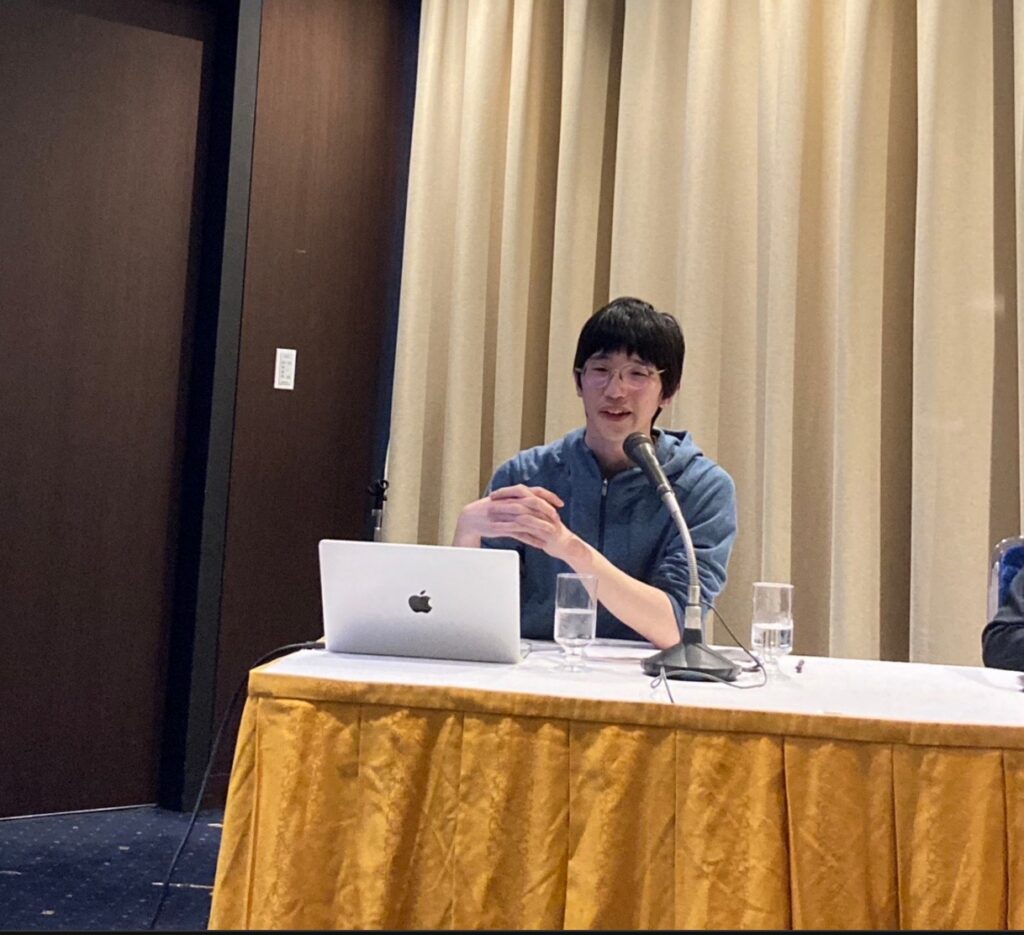
Mr. Ken Yasaka
Doctor at Tohoku University, KIP alumnus
January 2023 "Islam and Civil Society"
【Speech and Q&A】
In the first forum of 2023, we heard a talk on the Islam in Indonesia from Mr. Mitsuo Nakamura, a leading scholar of Islam in Southeast Asia, taking into consideration the upcoming study trip there. After the lecture, a discussion followed on the theme of “Which is more important, religion or human rights?” based on the relationship between religion and society in Indonesia.
Mr. Mitsuo Nakamura:Brief Personal Record After graduating from the University of Tokyo in 1960 with a B.A. in Philosophy from the Faculty of Letters, he switched his major to Cultural Anthropology and received his M.A. from the University of Tokyo in 1965. He studied at Cornell University in the U.S. as a Fulbright Scholar and in 1976, he received his Ph.D. In 2017, he was awarded the “Cultural Merit Award” by the Minister of Education and Culture of the Government of Indonesia.
What struck me in the lecture was that Islam in Indonesia is quite different from what we expected generally in Japan. I had an impression that Islam had strict precepts, so I was surprised to learn that in Indonesian Islam is friendly.
It was also very interesting to hear that the history of the gradual and peaceful spread of Islam in Indonesia, as Muslim traders and missionaries came to Indonesia, married locally, and settled down. The beliefs of local groups are not only influenced by relatively recent conditions, but also by the history of several hundred years ago, which may not be directly related to the people living today.
In addition, Mr. Nakamura told us that Islam is based on the notion that “human beings are imperfect”. Therefore, Muslims in Indonesia engage in discussions with each other, and understanding the world created by God is an expression of their faith. I am not a Muslim, but I would like to learn from their way of thinking.
After the speech, a question was raised as to how Indonesian Muslims feel about the situation of Islam in other countries. In response, Mr. Nakamura said that Indonesian Muslims are confident in their Islamic culture and they are trying to spread their culture in other regions of Islam, such as the Arabian Peninsula. This was a so interesting topic that new questions occurred to my mind one after another.
【Group discussion and Ground discussion】
We debated on the theme of “Which is more important, religion or human rights?” Our conclusions were clearly divided into three groups: “Religion is more important,” “Human rights are more important,” and “It depends”. The “religion-first” team cited the fact that religion is already deeply embedded in Indonesian life and politics, that the country is united by tolerant religion. On the other hand, the “human rights first” group, while agreeing that Islamic doctrine unites the Indonesian people, said that human rights should be guaranteed from birth and this includes freedom of religion.
Although the discussion seemed to be going in three different directions, through the ground discussion that followed, it became clear that all groups shared the view that religion and human rights should not be seen as a binary opposition, and that it is better to guarantee human rights while making use of religion as the basis of life.
【Personal Opinion】
Before the forum, I had thought that religion and science were fundamentally incompatible. Although Islam is fundamentally incompatible with natural science in that God created the world, the attempt to “understand nature and the origin of the world” is truly natural science itself, which is why astronomy and medicine developed in Islam. The Islamic situation in Indonesia is a good example of how religion permeates daily life and does not hinder the development of science and technology. I would like to continue to consider the relationship between religion and science.
Rina Keboushi, University of Tokyo, Natural Sciences 2, 2nd year
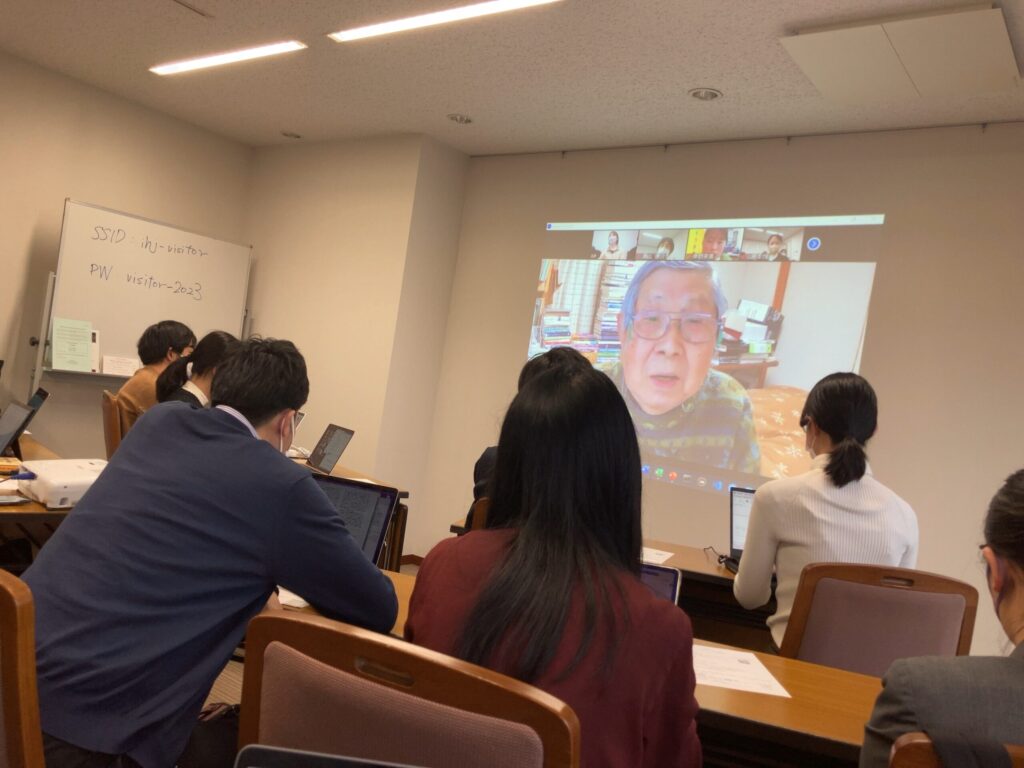
Mr. Mitsuo Nakamura
Professor Emeritus, Chiba University
November 2022 "The U.S. – Japan bilateral relationship in Space: The most important in the world"
Mr. Garvey McIntosh
【Speech and Q&A】
At November’s forum, Mr. Garvey McIntosh, who is NASA Asia representative, presented us with a speech. The speech began with the introduction regarding the National Aeronautics and Space Administration, including NASA’s four major research areas, the relationship between NASA and the US government, NASA’s research centers, the International Relation Office and the expected future cooperation with Japan and other countries. Then, there was detailed introduction from the basic science needed for space exploration and the missions of robots before actually sending humans to space, to the history of sending humans to the moon that took place in the second half of the 20th century, regarding the Space Race between the United States and the Soviet Union. Next, there was the part about the International Space Station (ISS). The construction of the International Space Station, which is extremely large and difficult, was completed by the cooperation of six countries. In recent years, NASA is considering to cooperate not only with governments, but also commercial companies. Mr. McIntosh also talked about topics like SpaceX, the astronauts who went to the ISS, the languages used in the US vehicle and the Russian vehicle. Finally, there was introduction about NASA’s next program, which is Artemis, a program for deeper space exploration. Mr. McIntosh also talked about topics like the diversity of the astronauts, Artemis 1, 2, 3, the Human Landing System (HLS).
During the Q&A session, there were discussions about topics like the influence of US’s politics and the world’s politics to NASA and ISS, the possibilities of the cooperation between Japan and other nations, future energy like nuclear energy, the reasons for not using ISS as an important station in the future, SpaceX, considerations on security, the cooperations with commercial companies, the water on Mars, etc.
【Group discussion and Ground discussion】
The discussion topic is “Should Japan keep trying to develop its own large-scale, domestically developed and built rocket?”. It is specially noted that Japan already owns a rocket and that it’s extremely expensive if continuing the development of the large-scale rocket.
There were six groups in the discussion. The pros and cons to the topic was half and half.
From the groups which were pro, considering things like Japanese international status, Japanese economy and employment, future human welfare, technology development and the necessity to maintain technology for wars, Japan should keep the development on its own large-scale, domestically developed and built rocket. Else, there were also opinions suggesting the partnership between government and commercial companies on the development of rocket.
From the groups which were con, it’s difficult for Japan to continue developing its own large-scale, domestically developed and built rocket due to the consideration on the enormous cost of money and resources. What’s more, there were also opinions showing that the development of rocket is unnecessary since Japan already possesses its own rocket and the partnership with other nations in space exploration is considered to be stable.
Then, the discussion continued with topics like the feasibility of rocket development considering the high price and the enormous energy consumption, the comparation between the cost and the merits of the rocket development, etc. It’s also noted that we should not only think about public organizations like the government but also take private organizations like commercial enterprises into consideration.
【Personal Opinion】
After listening the part about the history of space exploration in Mr. McIntosh’s speech, I came to realize the high difficulty and the considerable meaning to human beings of people’s various attempts for space exploration. For example, sending humans to space, the establishment of ISS. Else, I was impressed that human beings’ accomplishments on space exploration appears to be negligible when comparing with the infinite universe. I also felt the charm of the mysteries of the secrets concealed under the dark veil of the universe.
Space exploration not only has considerable costs in many aspects, but also is expected to have great benefits that are hard to predict for human beings. There’re various discussions on the topic of the details in future space exploration plans and the specific influence of space exploration to future human welfares is hard to determine, but it’s widely acknowledged that people are likely to continue the attempts on space exploration.
Li Mingyi, Tokyo Institute of Technology, Engineering, 3rd year (Undergraduate 3rd year)
October 2022 "The Kishida Administration's Policy Priorities -Centering in on Foreign Policy"
【Speech and Q&A】
As the lecturer of the October forum, KIP welcomed Mr. Noriyuki Shikata, a distinguished member of the KIP Board of Directors, who serves as the cabinet secretary for public affairs under the current Kishida administration. Mr. Shikata accompanies the Prime Minister in every overseas visit, playing a crucial role in conveying the administration’s policies and values to international society. In the speech, he shared with us his knowledge, acquired through interaction with foreign media, on Japan’s role in and further contribution to international society. The following debate addressed the significance and means of expanding the “digital garden city project”, one of Kishida administration’s major policies, outside of Japan.
Mr. Shikata gave a speech titled “The Kishida Administration’s Policy Priorities -Centering in on Foreign Policy”. The Kishida administration’s foreign policy upholds “Realism in a new age”, “The Indo-Pacific strategy” and “A world without nuclear weapons” as its core values. Prime Minister Kishida has shown a strong will to succeed the former prime ministers’ efforts in cooperating closely with the US, the “Quad” and the ASEAN to realize a free and open Indo-Pacific. On the other hand, the administration will cooperate with the ruling party to increase its security expenses given Japan’s extreme and vulnerable environment, especially that exposed by the invasion of Ukraine, rising tensions in Taiwan and North Korea’s nuclear activity. Mr. Shikata emphasized the need for Japan to continue working, however difficult it may be, towards a “world without nuclear weapons” as the only victim nation of nuclear warfare. As Japan hosts the G7 Summit next year in Hiroshima, I would like to look forward to Prime Minister Kishida’s leadership in bringing together nuclear powers and non-nuclear powers in the denuclearization process. Participants raised questions about food and energy security, along with the reform of the UN Security Council, which are all crucial issues brought up especially by the Russian invasion of Ukraine. Mr. Shikata recognized the importance of such issues and stressed the need to cooperate with “like-minded nations”, to balance out the various strategies of the UN superpowers.
The speech also addressed the digital garden city project as originally deriving from the British industrial revolution, which aimed to reform industrial cities by encompassing the aspects of suburban cities. Japan is aiming to transform the British plan by focusing more on rural areas and implementing digital resources to energize local communities rather than to merely rely on Tokyo as the economic nucleus.
【Group discussion and Ground discussion】
The following discussion addressed the question “How can Japan expand its digital garden city project internationally?” While the majority of groups reached the conclusion that Japan should share its experiences and technologies earnt through economic development with currently developing societies. South East Asian nations, which are forecasted to follow Japan’s path in the experience of an aging society, are on the list. On the other hand, one group proposed that the realization of a digital garden city, especially focused on the creation of a comfortable and lenient studying/working space, within Japan could potentially bring in exchange students and international enterprises. This perspective is akin to the original British idea of a garden city, enabling one to fulfill their own way of living. As a whole, the discussion acknowledged the importance of making the best out of Japan’s strengths, represented by warm-hearted hospitality and a rich natural environment. Mr. Shikata commented on the need for various bodies (such as cultural figures) to join the project, so as to incorporate perspectives other than that of the official agencies. The discussion enabled me to understand the basics of diplomacy, especially the demand to discover one’s own strengths and utilize them within international society.
Tomoki Nonaka, University of Tokyo, Arts and Science, Sophomore
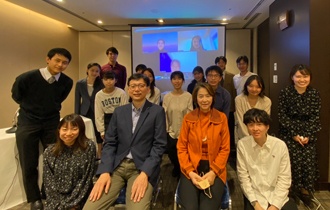
Mr. Noriyuki Shikata
Cabinet Secretary for Public Affairs
August 2022 "PAST, PRESENCE AND FUTURE OF UKRAINE"
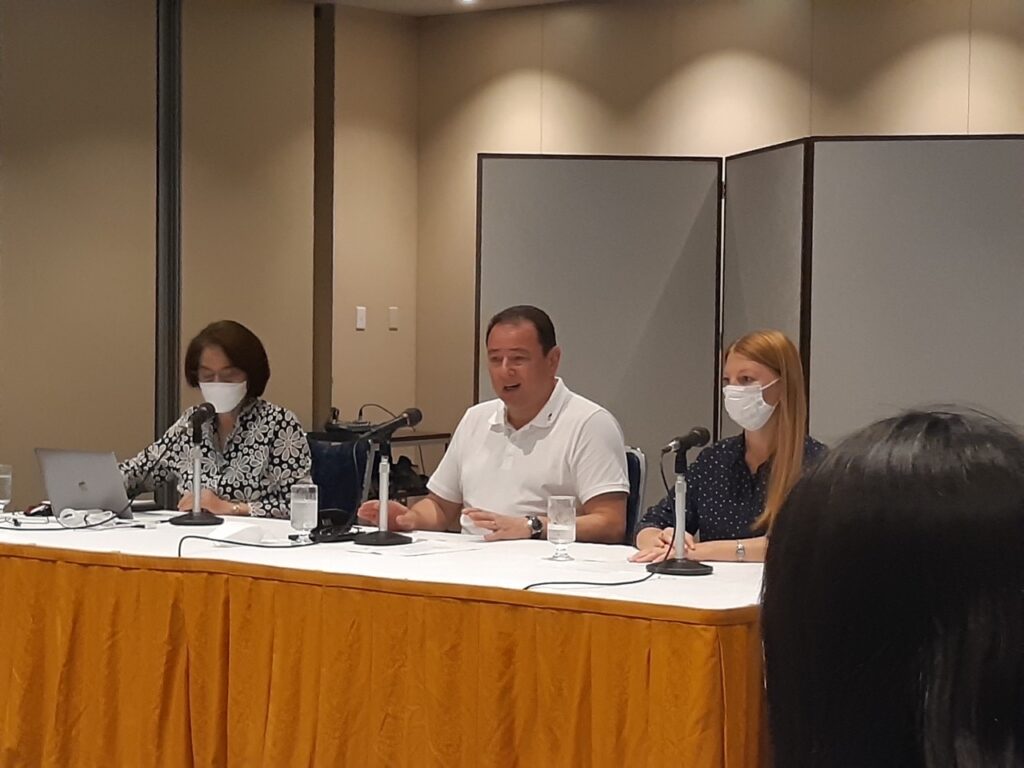
Dr. Sergiy Korsunsky
【We held KIP August Forum !】
Mr. Korsunsky shared with us the current situation and message of Ukraine, which has been in a historically difficult situation since the invasion by Russia on February 24th this year. With students currently living as Ukrainian refugees in Japan, we were able to listen to the explanation of a wide range of questions about Ukraine’s past and future. The history made Ukrainians say “Just leave us alone. We’re so sick.”. As a role of the Japanese people, “You can be proud of what you can do from 8,000 km away.” The audience was united in accepting the voices.
【Speech and Q&A】
The speech began from that the history of Ukraine and Russia is a psychological and spiritual issue. Mr. Korsunsky talked the history from the time of Kievan Rus’ with its capital in Kiev over a thousand years ago, and then when it parted company with the weakly controlled Moscow after the Mongol invasion in the 13th century, to the period of rising of Russia as an empire in the current centuries. The lecture explained how Russia has repeatedly tried to deprive Ukraine of its autonomy and annex it by any means necessary, and how, even in the 20th century, it has tried to exterminate entire cultures and lifestyles. For example, they starved some villages to death and slaughtered intellectuals. He said “We didn’t have an army. Why should we have it?”, and “They must be normal. I doubt they can’t.”
During the Q&A session, he also had a message for Japan. There are countries where we cannot communicate with each other due to ideological reasons, but there are certainly democratic countries with large populations in the world. Also, he showed full appreciation and wishes for Japan to take the lead in Asia and continue imposing sanctions. It will be great if they accept a little loss of life (due to economic sanctions) because this is “the battle between democracy and Russia”, according to him.
In addition, at the invitation of Mr. Wada of alumni, the voluntary participants in this forum wore light blue or yellow clothing/items to show solidarity to the extent possible. From the lectern to the nametags and the clothing of many participants, the beautiful colors were eye-catching from the moment they entered the room.
【Opinion】
I feel that the speaker in this forum put his souls into his words, not knowing when he might not be able to deliver his speeches that day. In addition to taking the current situation seriously, for me this was an opportunity to rethink two things.
The first is about the war. In Japan, the students were sent off to the front during the Pacific War, and many of the female students who saw them off expected to lose the war, and there was some skepticism about going off to war, according to testimony broadcast on TV 75 years later. The history of Ukraine, which has been a war site many times, differs from that of Japan, an island nation, and the strength of Ukraine’s feelings toward its homeland must be considered with all the imagination one Japanese can use. “We didn’t have an army. Why do we need one? It costs money.” These words of Mr. Korsunsky will be chewed over and over in me.
The second thing that I reaffirmed was the opportunity to investigate the history of Ukraine, its surroundings, and the East Slavic peoples. I have limited knowledge of ancient and medieval world history, partly due to my major, but I was made to intuit that to understand what is happening now, I must make assumptions about the more than 1000 years of history of the ethnic groups in the background. I was deeply convinced by what I learned about the relationship between Ukraine and its neighboring countries, not only by the materials shared prior to the forum, but also by researching after the forum. It was a day that reminded me of the need to continue learning about history.
KIP requires a multifaceted viewpoint for discussion. This time, I would like to take the “viewpoints of the people concerned” that I was able to hear in depth, and to adopt the attitude, listen, and act that we can take as Japanese people to protect human life.
Mahiro Ebara, the University of Tokyo, Engineering, 2nd year
July 2022 "Japan-Asia relations"
【Speech and Q&A】
The forum held on July 9 was an important opportunity for all participants to seriously think about the future of Japan as if it were their own, in the context of the upcoming Upper House election and the shooting of the former prime minister that shook the whole country the day before.
The first half of Ms. Kakuchi’s lecture focused on Japan’s relationship with Asia.
The overwhelming rise of China, the war in Russia and Ukraine, and other world developments are affecting every corner of our lives. In this context, Ms. Kakuchi spoke about Japan’s presence, role, and expectations in Asia in particular.
After the forum took place, local media reported that President Rajapaksa had decided to resign on July 13 in Sri Lanka, which is in the midst of an economic crisis. In Colombo, the largest city, tens of thousands of people packed and occupied the official residence of the president demanding his resignation, and Prime Minister Wickramasinghe’s house was torched, prompting him to announce his resignation.
In this rapidly changing environment, Ms. Kakuchi discusses Japan from an Asian perspective. Japan’s major influence on Asia includes investment, technology, products, culture, the history of colonization in Asia, and the acceptance of immigrants, migrant workers, and foreign students. It is being done in a strategic manner. In addition, Asia is looking to Japan for small and medium-sized enterprises and cheap, advanced technology that is relevant to their daily lives.”
I was very impressed by what she said about the importance of Japan forming equal partnerships with ASEAN and South Asian countries by providing soft power, governance, support that gets into the lives of local people, and technology for small and medium-sized enterprises, as Japan’s position in Asia has now declined, especially compared to China.
The subject of the second half of her lecture was Sri Lanka, where Prime Minister Wickramasinghe declared the country “bankrupt” on July 5.
She began with the background story of China’s growing influence on Sri Lanka after the long civil war.
Sri Lanka needed funds for postwar reconstruction in order to completely end the civil war and break through economic stagnation, and economic aid from abroad was essential. China has been increasingly influential in Sri Lanka and is now the leading provider of infrastructure loans. The terms of Chinese loans are stricter than those of other countries and institutions, with interest rates of 2% for some, 6.5% for others, and short deferment periods. The company borrowed $1.4 billion from China to develop port infrastructure, but in 2017, it stalled on repayment and was forced to hand over the right to operate the port of Hambantota, the largest port in South Asia, to a Chinese company for 99 years, which had pledged the port as collateral.
During the Q&A session, questions comparing Japan with China and Sri Lanka were asked. In order for Japan to have a stronger influence on Sri Lanka, Ms. Kakuchi said, it is necessary to seek and clarify Japan’s unique ways, not in a confrontational way with China. The session also included a comparison of Sri Lanka, where women are making progress, and Japan, where women have yet to make inroads in the top echelons of business and politics, and a discussion of Japan’s future and the challenges it faces.
【Group discussion and ground discussion】
A discussion was held on the topic, “Should Japan be or can Japan be a leader in Asia?
The opinion was expressed that to be a leader in Asia, Japan needs to be stable in business, industry, and politics in Asia. However, opinions were divided on what kind of leader should be a leader: “A leader’s role is to have economic power and to assist other countries,” or “A leader’s role is to form business partnerships and to accompany others. Many expressed the opinion that they would enhance long-term assistance while building equal partnerships with Southeast and South Asia. The issue of how to consider the sense of competition, crisis, and relationship with China and South Korea was also raised. Some took the position that in order to compete economically in the future, it is important to take the lead and establish a presence in healthcare, governance, and other systemic aspects that support corporate management.
In the group discussion, the majority of the participants agreed that Japan should become a leader in Asia in the future. Some of the opinions were that the image of the leader that Japan aspires to be is not one of a top-down relationship, but one that leads international cooperation in the conflict of interest of each country while accompanying it economically. Reasons why Japan should be a leader and provide assistance in Asia include: “Because Japan’s continued assistance may return benefits,” “To improve Japan’s external standing and credibility,” and “Because Japan should lead in such foundational areas as democratic principles, healthcare, and governance. A lively discussion ensued from a variety of perspectives.
【Presonal Impression】
The forum highlighted the limited knowledge of Asia among the students and raised the issue of whether the situation in Sri Lanka is regarded as something that is not directly related to their own lives. In addition, the forum made us keenly aware of the need to find Japan’s unique stance on how to improve Japan’s economic status and increase its presence in Southeast and South Asia, as well as what constitutes an equitable partnership, in the ever-changing Asian and global situation.
(Rei Kanazawa, the University of Tokyo, 2nd year)
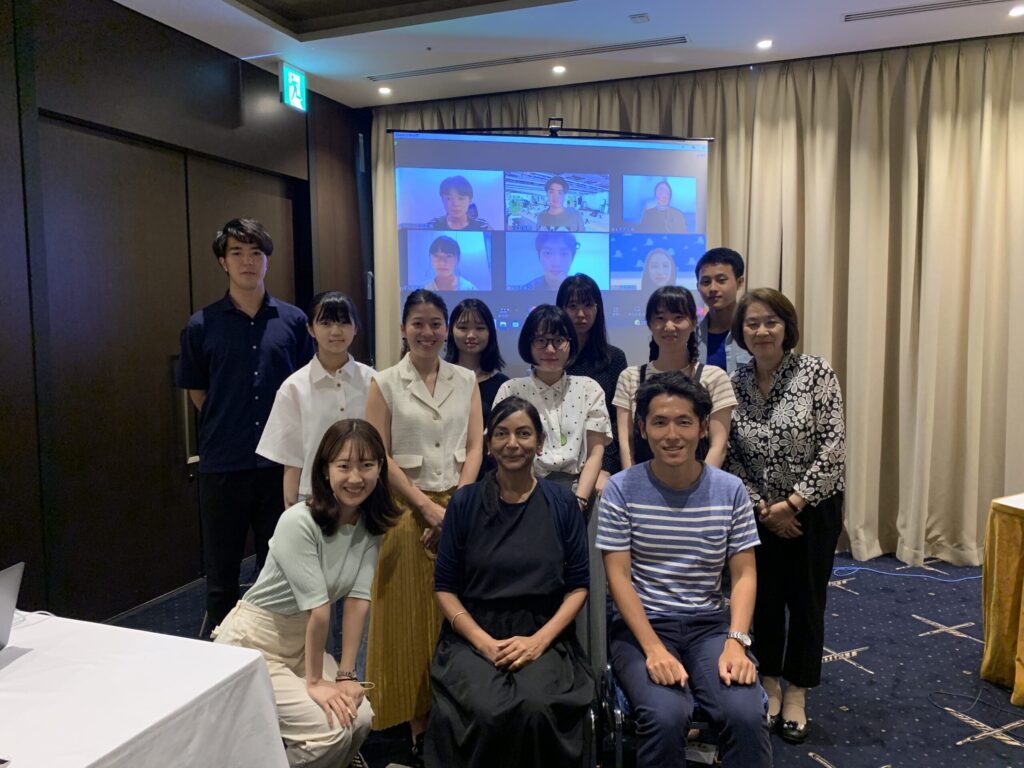
Ms. Suvendrini Kakuchi
Ms. Suvendrini Kakuchi is a Sri Lankan journalist who specializes in Japan-Asia relations and works as a journalist in Japan, Sri Lanka, India and other Asian countries. She graduated from the University of Colombo, Sri Lanka, Sophia University and is a Neiman Fellow of Harvard University. She is currently working as a Tokyo correspondent for the University World News in the UK. She will serve as President of the Foreign Correspondents’ Association until June 2022, she has a Japanese husband and speaks English, Japanese, Sinhala and Tamil.
June 2022 "Supporting Yourself and Society 50 Years from Now -The structure of the public pension system and how to prepare for your future as an individual-"
【Speech and Q&A】
Mr. Suzuki’s lecture began with an explanation of the basic concept of pensions. He emphasized that public pensions is essentially an insurance to guarantee people’s risk that they lead unexpectedly long life. He also insisted, that the public pension should not be seen as income from the state and that the it should not be received as loss of payment or gain of benefits. In this way, pensions are often misunderstood, and there are many other aspects of the pension system that are not accurately understood by the public.
For example, the pension system is often criticized that it will collapse soon. However, annuity is indexed by prices or wages. In addition, the government introduced a system called “macroeconomic indexing” reflecting the increment of life expectancy. These mechanisms help preventing pension payments from exceeding a sustainable level. It is often explained that working-aged people will have to support more elderly people as the birthrate declines and the aging of society makes progress, and that the elderly will not be able to be supported. However, the proportion of people to be supported has not changed much, because the number of women who work and support these people is increasing and the number of children who are supported is decreasing.
He also said that the population pyramid is currently showing a rapid increase in the proportion of elderly people due to the aging of the baby boomers and the rapidly declining birth rate, but the birth rate has stopped declining at some point, and the composition of the population pyramid will not change rapidly. That will be a positive factor for the pension system.
Thus, the pension system is designed by the government to be sustainable. Furthermore, since a part of pension annuity is covered by tax revenue public pension might be seen as a good investment product, despite the essence of the system mentioned above.
He concluded his lecture by emphasizing the importance of economic development, saying that the pension system is closely related to the economic growth and that the economic development is indispensable to make the pension system sustainable.
During the Q&A session, the participants asked whether they could depend on pension after they retire, and what they should do to prepare for future in the aspect of finance. He emphasized if the composition of the population pyramid become stable, burden on the young people will be eased, but it is important to save individual annuity for the future.
【Group discussion and ground discussion】
They debated whether to reduce or maintain the current public pension burden, and if choosing the formerso, how to compensate for the reduction in social security payments. They also asked whether a U.S.-style system that emphasizes individual pensions or a Nordic-style system that allocates pensions according to the state would be preferable.
In the group discussion, the majority of the participants agreed that the pension burden should be maintained. There was concern that it would be difficult to lower pension payments, as many people live solely on pensions. On the other hand, there are several measures that can be taken to reduce the burden, and there was a suggestion that it would be better to support those who need it by reducing the pension payments for the elderly with a certain income or increasing the contributions for those with high incomes.
Similarly, in the general discussion, there were many opinions that the burden should be maintained, and a lively debate were seen.
【Presonal Impression】
This lecture changed our view of pensions significantly. I also felt that there was a noticeable difference in thinking between working people who are responsible for insurance premiums and student members, many of whom are not yet responsible for such premiums.
(Yuyama Kosuke KIP alumni)
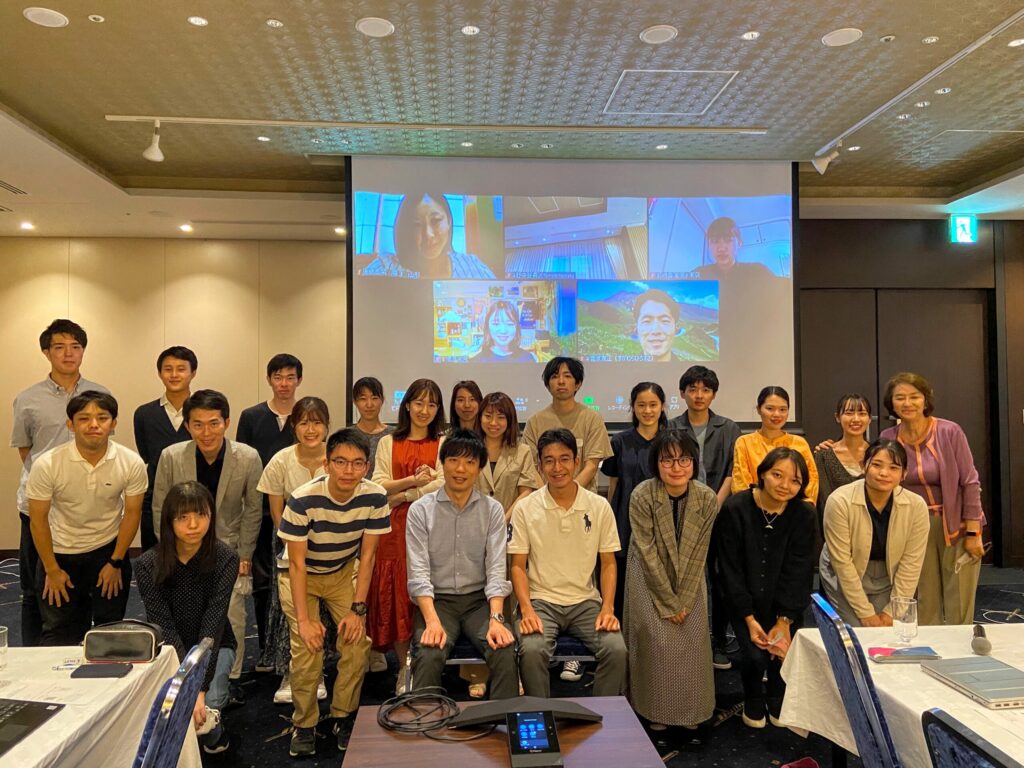
Mr. Ryohei Suzuki
KIP Alumni. After graduating from the University of Tokyo, Faculty of Law, he engaged in international economic analysis and macroeconomic policy management as a public servant. He also studied at Yale School of Management, where he obtained an MBA. After returning to Japan, he worked in the human resources department in charge of organizational management, and is currently, he is in charge of the social security policy.
May 2022 "As a company who supports the further development of Japan (History of Japan National Railways and JR-Central, and The Linear Central Line)"
【Speech and Q&A】
Mr. Kumekawa talked about the transition of JR-Central as a public entity through the process from the era of Japan National Railways (JNR) to the construction of the current Linear Central Shinkansen Line. First, Japan National Railways (JNR) was established in 1949 after World War II. It remained in existence until it was dissolved by privatization in 1987. Although JNR initially contributed to Japan’s postwar reconstruction, it was unable to respond to changes in transportation demand due to a lack of sense of ownership since decisions were made by the Diet, its business fields were more limited than what it is now, and workplace discipline was erratic. And from 1964 onward the company fell into the red and its debt increased since then. The area of which JR-Central has control is a huge economic zone that accounts for about 60% of Japan’s GDP. and with the so-called “dollar box” of the Tokaido Shinkansen, it is often said that the company’s business is secure. However, at the time of the split, the Shinkansen technology had become obsolete, and the company faced various difficulties, such as aging facilities and limited transportation capacity. Therefore, JR-Central solved the problem of lease payments by the Shinkansen holding company, which had been hindering its management, by purchasing railroad tracks and other means, achieved higher Shinkansen speeds and frequencies, and secured profits through the construction of Shinagawa Station and Nagoya Central Towers. The company has also revitalized the economy. JR-Central is now aiming for further development through the construction of the Linear Central Shinkansen Line for two main reasons. The first is to prepare for disasters such as the Nankai Trough earthquake as infrastructure to support the huge economic zone of Tokyo, Nagoya, and Osaka. By building a linear line, the aim is to strengthen the dual system of transportation so that the flow of the economy will not come to a halt. The other is to revitalize the areas along the Tokaido Shinkansen Line. Currently, the Tokaido Shinkansen focuses on transporting people between Tokyo and Osaka, and not many Shinkansen trains can stop at small and medium-sized stations along the line. Its construction will enable them to stop trains at those small stations and therefore expected to increase the number of tourists.
Finally, Mr. Kumekawa explained population concentration and its economic effect. Having a huge metropolitan area such as Tokyo has the effect of increasing productivity, especially in the service industry, and creates an environment that is conducive to innovation due to the many encounters between people. In addition, the large population size creates many niche industries, which leads to higher GDP.
【Group discussion and ground discussion】
The theme of the discussion was ” JR-Central’s Central Japan Shinkansen Line policy has the aspect of encouraging population concentration, but what are the merits and demerits of population concentration when considering the future of Japan?”” My group considered the merits and demerits of population concentration from two perspectives: national and individual. It is true that when considered on a country-wide basis, economies of scale can be applied to increase GDP, and resources can be used more efficiently than if they were dispersed. However, from an individual standpoint, it was concluded that life in large cities is becoming more individualized, and that there is a tendency for more people to feel lonely, which raises questions about mental health and happiness. In the general discussion, there were concerns that the increasing concentration of people in Tokyo would lead to the dominance of metropolitan thinking and loss of diversity, as well as the possibility of reducing the disadvantages of concentration in Tokyo, such as vulnerability to disasters, by concentrating people in multiple cities throughout Japan.
In his comments, Mr. Kumekawa suggested that it would be better to specify whether the concentration of population should be in Tokyo or in cities so that the discussion will not diverge, and that even if the population is dispersed, the population will remain concentrated in Tokyo as it is now, so concrete measures should be discussed and the disadvantages of population dispersion should also be considered. He also pointed out that we need to consider the balance between dispersion and concentration, taking into account the disadvantages of population dispersion.
【Presonal Impression】
I felt that the theme of the concentration of population in Tokyo had been talked about for a long time, but thanks to this specific discussion on the merits of this issue, I was able to gain a more multifaceted perspective on this problem. I also believe that the SCMAGLEV is a dream project, and I am very much looking forward to its completion.
(Asahina Ryunosuke, University of Tokyo , College of Arts and ScienceⅠ, 2nd year)
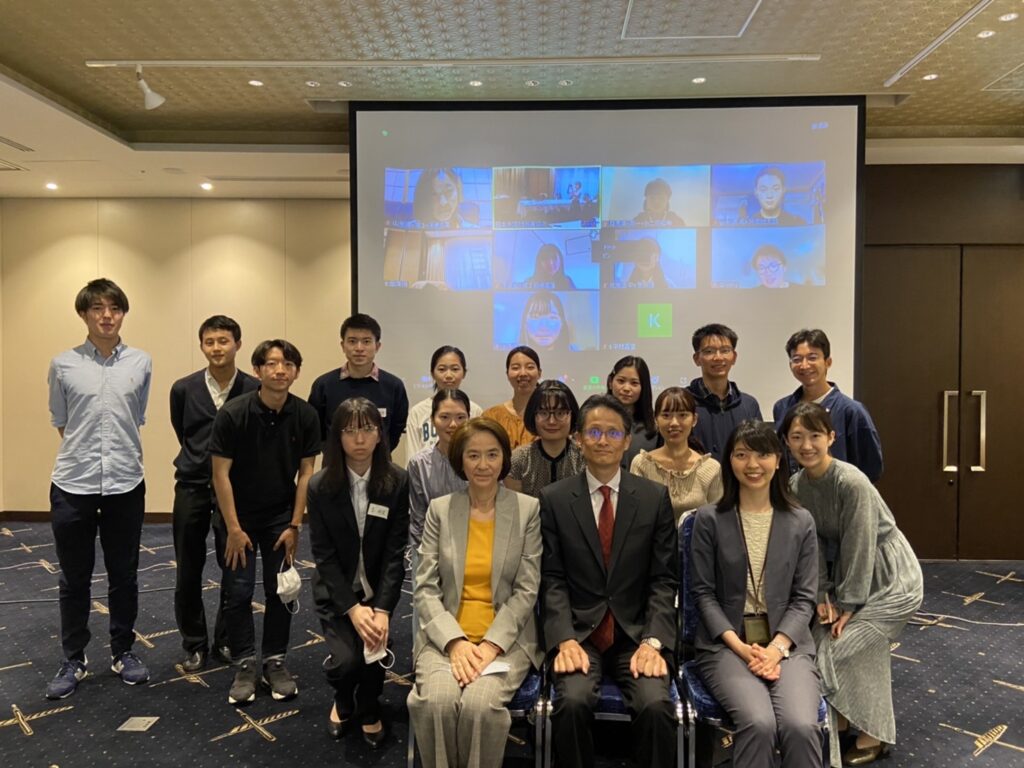
Mr. Koji Kumekawa
Chief of personnel administration, Central Japan Railway Company
After graduating from the Faculty of Economics, Kyoto University, joined Central Japan Railway Company (JR Tokai). He was assigned to the Human Resources Department as a general manager, then became the Chief of the Labor Department of the Human Resources Department after working as the Chief of the Tokyo Public Relations Office of the Public Relations Department, which is also said to be a major role. are doing.
April 2022 "Sustainable living- Sustainable and Decarbonized Communities and Lifestyles"
【Speech and Q&A】
Mr. Hamanaka explained climate change and the sustainable environment, resources, and energy. In 2021, the IPCC AR6 declared that there was no doubt that human activities contributed to global warming. In other words, human prosperity has negative impacts on ecosystems and natural resources. Agriculture which has played a key role in human development has been undermined. Interestingly, representatives in developed and developing countries have different perspectives on environmental problems. At the 1972 United Nations Conference on the Human Environment, or Stockholm Conference, developed countries argued that environmental pollution was getting worse, and that international cooperation was the only way to solve it. On the other hand, developing countries insisted on the necessity of international cooperation to escape poverty for further development. Therefore, instead of choosing between the environment and development, “sustainable development” was introduced in 1987. Considering past environmental pollution in Japan such as Minamata disease, there were polluters and victims. In these cases, polluters take responsibility for the pollution they cause. This structure is simple so that it was easy to build public consensus on environmental pollution. Compared with the past, environmental issues are becoming more complex today. Mr. Hamanaka mentioned we also need to focus on the upstream, or the stage of production, rather than the downstream, or the stage of pollution. Social reform is essential to deal with environmental problems that have become more complicated. He told us that it is necessary for the top managers of companies to change manufacturing processes and meet environmental obligations, for the government to promote the integration of various related fields instead of only focusing on the environment or the development, and for consumers and citizens to actively participate in solving these problems.
Although the programs for reducing Greenhouse Gas(GHG) emissions are currently underway, global GHG emissions are still increasing. Therefore, unfortunately, we are not yet in a position to limit the global average temperature increase to 1.5°C. Considering the declaration of zero emissions at COP26, developed countries must be actively involved in reducing GHG emissions to achieve the goal. To shift toward decarbonized society and economy, Mr. Hamanaka emphasized the importance of consumer choice and behavior as well as the efforts of local governments and companies. During the Q&A session, we discussed the reliability of CO2 emission values of each country and policies aiming at national growth those could lead to environmental destruction, for example.
【Group discussion and ground discussion】
The theme of the discussion was “How to promote 1.5-Degree Lifestyles toward sustainable living.” We discussed the current lifestyle carbon footprint (CFP) and how to reduce the carbon footprint of household consumption. We focused mainly on food, housing, and transportation, and considered what we could do and should do. In my group, we focused on housing, especially on consumer energy choices. To promote the use of renewable energy sources which have a low carbon footprint, we thought it was important to raise public awareness of environmental issues. We discussed education and financial incentives by creating new eco-point systems would be helpful. The focal point of our discussion was government initiatives and consumer energy choices. Mr. Hamanaka also provided new perspectives on consumer behavior, such as purchasing well-insulated houses to reduce energy use. Other groups focused on food and explained what we could do to reduce CFP. They made several suggestions such as visualizing the carbon footprint of food, reducing food loss and making vegan food more accessible. Mr. Hamanaka made incisive comments, including how to change consumer behavior by displaying CFP, and hoped that this would be an opportunity for further discussions.
【Presonal Impression】
In this forum, we chose the theme of carbon footprints from large-scale environmental problems, and had in-depth discussions, considering what we can do in our daily lives. I felt this forum was a precious opportunity to take a closer look at environmental issues.
(Mai Ogawa, Tokyo Women’s Medical University, Medicine, 4th year)
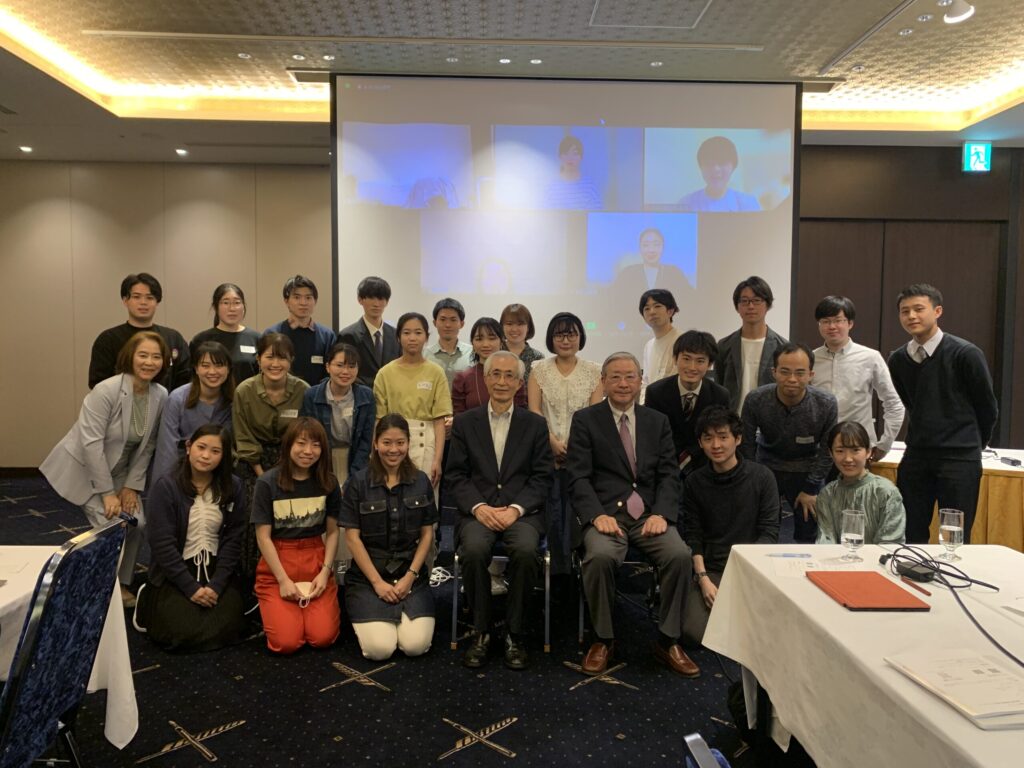
Mr. Hironori Hamanaka
He served as President of the Institute for Global Environmental Strategies (IGES) from 2007 to 2017, and is currently Special Research Advisor to IGES and President of Ikurei Japan, Inc. since 2005.
He graduated from the Department of Urban Engineering, Faculty of Engineering, the University of Tokyo in 1967, and joined the then Ministry of Health and Welfare in 1969, where he was a founding member of the then Environment Agency in 1971, working on environmental policies in the areas of air and water quality conservation and environmental impact assessment. He was also involved in intergovernmental negotiations, including the Kyoto Protocol, and was appointed as a Deputy Director-General for Global Environment in 2001, retiring from the Ministry of the Environment in 2004.