


March 2025 "The burden of medical expenses in an aging society with a declining birthrate"
【Speech and Q&A】
Mr.Shimazu explained Japan’s health insurance system with three main points; first, the current situation of health insurance associations run by large corporations; second, survey results on how different generations perceive the health insurance system; and third, measures taken by the government. Initially, health insurance associations were designed to be self-sustained within companies. However, due to economic downturns and other factors, many have been running deficits, leading to a shift toward the government-supported Kyokai Kenpo (Japan Health Insurance Association). Since 1973, Japan has been moving toward a system of lower medical expenses for individuals, which has further strained the finances of these insurance associations. One major contributing factor to their financial burden is that a portion of the money collected by these associations must be paid to the government. This situation has led to discussions about increasing the medical expenses borne by elderly patients. Data show that elderly people feel the least burdened by medical costs, although it cannot be ignored there is a significant wealth disparity among them. As a government initiative, all health insurance associations are now required to formulate a Data Health Plan to promote health maintenance among their members. Mr. Shimazu also introduced examples from the United States, where medical costs are significantly higher, and the healthcare system is largely privatized. The Q&A session broadened the discussion, incorporating insights from retired physicians and touching on issues such as hospitals being used as social hubs.
【Ground discussion】
The debate question was “To reduce the financial burden on the working-age population, should medical expenses for the elderly be increased?”. In the group discussions, participants agreed that merely raising medical costs for the elderly would not be sufficient. Instead, a long-term approach was needed to ensure sustainability. Some proposed a tiered system for raising medical fees while also addressing the issue of hospitals being used as social hubs by enhancing alternative community spaces for the elderly. Others pointed out that high-cost treatments should be the primary concern. The general discussion was highly active with many creative ideas. One interesting proposal was to adjust corporate tax rates based on how well companies implement health and wellness programs for employees. Another suggestion was to introduce criteria beyond just age when determining healthcare cost burdens. Overall, the discussion centered on how to ensure that medical resources are directed toward those who truly need them. Mr. Shimazu emphasized that this is an ethical problem as a review comment. He encouraged us to be aware of the perspectives we adopt and to consider the issue from multiple viewpoints.
【Personal Opinion】
Through both the discussion and the process of writing this article, I was able to think about how to bring about realistic social change. I initially believed that simply creating spaces where elderly people could connect with others and stay active would naturally lead to better health and reduce unnecessary medical treatments. However, I realized that my perspective was too idealistic—I had not considered which specific stakeholders would need to take action, what measures they could implement, and what level of effectiveness could be expected.This experience made me more aware of the importance of clearly presenting concrete proposals to drive deeper discussions. The perspectives on corporate involvement and the structure for determining their cost burden were eye-opening, as they were ideas I would not have reached on my own. Additionally, I gained new insights into the healthcare cost-sharing system, making this forum a valuable learning opportunity.
Maiko Nakamura, Kyoto University, Integrated Human Studies, 3rd year
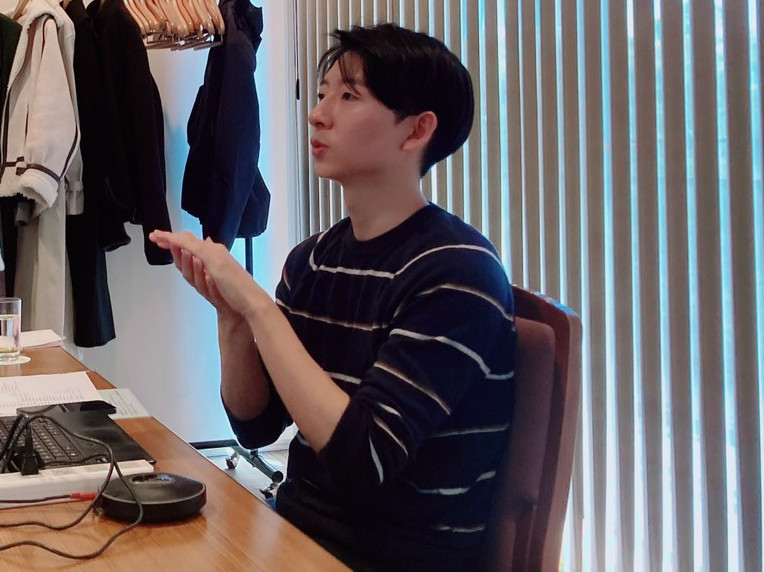
Mr. Hiroyuki Shimazu
Wellness Business Unit, MITSUI & CO., LTD.
After graduating in 2021 with a degree in International Economics and Management (BIEM) from Keio University and Bocconi University, he joined Mitsui & Co. He was seconded to an affiliated company focused on domestic disease prevention and corporate health management, where he spent three years developing and promoting services for health insurance societies and insurance companies. He is currently involved in investment projects related to healthcare at Mitsui & Co. During his student years, he was an active member of KIP, participating in both committee work and the Intergenerational Exchange Project.
February 2025 "Digital Government in Other Countries and Japan's Efforts"
【Speech and Q&A】
In her lecture, Ms. Matsuo explained the differences in digitalization progress between Japan and other countries. For example, Estonia is known as a global leader in digital society. In 2001, it developed an e-government platform called X-Road, which is similar to Japan’s My Number system. Today, Estonia allows all administrative procedures, such as voting, obtaining residence certificates, and submitting marriage or divorce registrations, to be done online. Ukraine also launched digital government services in 2019 with a mobile application called Diia. Other countries, including Finland, Armenia, India, and Saudi Arabia, are also advancing digitalization. Looking at Japan’s digital transformation over the past five years, there have been notable developments such as the spread of cashless payments, the adoption of My Number cards, and the implementation of the GIGA School Initiative. Ms. Matsuo emphasized that, as digitalization progresses rapidly in many countries, it is crucial for Japan to learn from international trends and use this knowledge to make decisions in business and policy-making. During the Q&A session, topics such as how to address Japan’s shortage of digital talent, how to promote digital transformation in an aging society, and the incentives for digitalization were actively discussed. Participants also explored questions like who leads digital transformation in different countries. The discussion was highly engaging and thought-provoking.
【Ground discussion】
The discussion topic was “What kind of digitalization should be promoted in Japan’s education sector today?” Participants exchanged ideas from different perspectives. The main points of discussion were ‘How students and teachers adapt to digitalization’ and ‘The benefits and challenges of using digital technology in education.’ Many participants agreed that both students and teachers need to develop digital literacy to make effective use of digital tools in education. AI-assisted lectures are becoming more common. As a result, students now have more opportunities to learn independently without teachers. However, some participants pointed out that teachers are not just administrators. Their role goes beyond managing classrooms. Teachers bring diverse backgrounds and can create memorable learning experiences for students. They also provide human interaction and emotional support, which cannot be fully replaced by technology.
【Personal Opinion】
When thinking about digitalization in education, I initially believed that using tablets and online courses would help students develop digital literacy and improve their learning efficiency. However, after hearing different perspectives, I realized that the digital environment varies greatly between schools:Some schools successfully use AI in subjects like English and math and implement the GIGA School Initiative effectively, however, others struggle because teachers are not familiar with digital tools, making it difficult for students to benefit from technology. This made me realize that digitalization must be supported by both students and teachers, along with proper infrastructure. In addition, as digital tools cannot replace essential aspects of education, such as teacher-student and student-student interactions, personalized support for students who struggle with digital learning should also be considered. In conclusion, while digitalization is important, human connection in education must not be overlooked. Finding the right balance between technology and personal interaction is key to improving education in Japan.
Mai Ogawa, Tokyo Women’s Medical University, Medicine, 6th year
Ms. Aiko Matsuo
Global Intelligence, Public Policy Supervisory Department at Rakuten
After completing her master’s program in Public Policy at Keio University in 2012, she worked for seven years at Funai Consulting Inc. as a Senior Expert in global business, providing management consulting services to small and medium-sized enterprises across Japan. She then took on a role related to international relations for the Tokyo Olympic and Paralympic Games. Since 2021, she has been working in the Public Affairs Office of Rakuten Group while also serving the Japan Association of New Economy (JANE), focusing primarily on government relations with overseas stakeholders. From 2022 to May 2024, she was seconded to Japan’s Digital Agency, where she supported G7 and G20 meetings, ministerial overseas visits, speech writing for the minister, and liaising with digital-related ministries and agencies in other countries. During her student years, she interned for five years as a parliamentary secretary in the House of Councillors and was deeply involved in the foundation of KIP, serving as a key member of its early leadership.
January 2025 "SNS and Youth: The Merits and Demerits of SNS from the 2024 Elections "
【Background】
In 2024, issues surrounding the relationship between elections and social media were frequently discussed both domestically and internationally. This included the Hyogo gubernatorial election where the specific candidate’s accounts were banned due to fake reports by some users during the election period, the House of Representatives election where the National Democratic Party made significant strides through social media publicity, and the U.S. presidential election where Trump was re-elected. Given the significant presence of social media in each election, should the statements of election candidates and voters be regulated by law?
【Group discussion and Ground discussion】
In the beginning, the committee considered some key issues such as “false information”, “misinformation”, and the current state of the regulation on SNS in Japan. Before starting the discussion, members were divided into pro and con groups based on their opinions, and each side presented some reasons supporting their views. After that, each group split into breakout rooms to further discuss their viewpoints before returning to the grand discussion and sharing what they had learned. In the pro-regulation breakout room, while identifying the biggest problems as the monetization of social media and considering legal measures on them, the discussion expanded into various aspects such as the differences in regulations between candidates and voters, and who to judge false and misinformation. We reached a conclusion that regulations similar to those on television and newspapers are also needed on social media, and although partial regulations already exist, “they are not functioning well now.” During the grand discussion, more complex ideas were heard in support of each position’s claims. For the opposing opinions, various points included ensuring a resilient discussion space where mistakes can be corrected, prioritizing user literacy education, the responsibility of mass media to conduct interviews that cannot be done on social media, and the feasibility of monitoring platform operators. Finally, the group discussed the necessity of considering examples from overseas and thinking about countermeasures tailored to the situation in Japan.
【Personal Opinion】
Regarding the popular use of social media surrounding recent elections, I took the pro-regulation stance. While I initially felt that disinformation was the major issue, I came to realize that legal regulation could damage the freedom of speech and the platforms for small parties to express their concerns. If we value equal opportunities for expression, regulation may not be an effective answer. However, if social media continues to be a place where only the loudest voices hold power, it cannot be considered a healthy space for discourse. While most of the participants were university students, some high school members shared their opinions about the current state of media literacy education in schools. We also heard from alumni about the responsibility of supervising social media in the work setting and their doubts about monetization practices. Additionally, it was very informative to learn about real-life examples of elections and social media use from people with overseas experience. Hearing diverse voices from the people gathered at KIP led to discussions that I found quite significant.
Minami Higuchi, Waseda University, Faculty of Education, 4th year
November 2024 "Behind the Scenes: The Future of Entertainment "
【Speech and Q&A】
Thank you for your insightful and engaging lecture on the film, tv and streaming industry and the role of the MPA. It is no small task for any single company, regardless of its size, to navigate negotiations with government bodies. The MPA, however, serves as a vital advocate for the collective industry, working closely with policymakers and other stakeholders to demonstrate how this sector drives local economies, creates jobs, and enriches cultures across world – ensuring a stronger, more resilient industry for all.
【Group and Ground discussion】
In the discussion part, at first, I thought Japan should have its own penalties for worldwide copyright infringement. With no borders on the Internet, and with AI it became easy for individuals to create digital replicas, so penalties should be stricter, but should not be loosened. In addition, it is impossible for creators and international organizations to monitor all violations around the world in terms of cost and manpower. However, during the discussion, I realized that while international negotiations involving national governments, police agencies, and the judiciary may be difficult, it is possible if the same rules and penalties are set within an international private video platform. Therefore, I finally agreed the idea that punishment of copyright infringement should be united internationally. Also, I believe we should avoid international law becoming a skeleton, so I agree with the opinion, as was raised in the discussion, that we should create strict penalties and gradually spread them from the countries that are creating contents internationally. In addition, as mentioned in the lecture, we are in the midst of industry transformation by AI, and I felt the need to think about how we balance benefit and demerits such as job replacement and deep fake. I suggest following solution against this issue. Since the open-sourcing of intellectual property, such as survey and research data, has been progressing recently, we should review the copyright system based on the premise that visual works cannot be monopolized once they leave the hands of their creators, and create a system that returns profits to creators even if they are imitated by AI through open-sourcing.
Rina Keboushi, The University of Tokyo, Faculty of Agriculture, 4th year
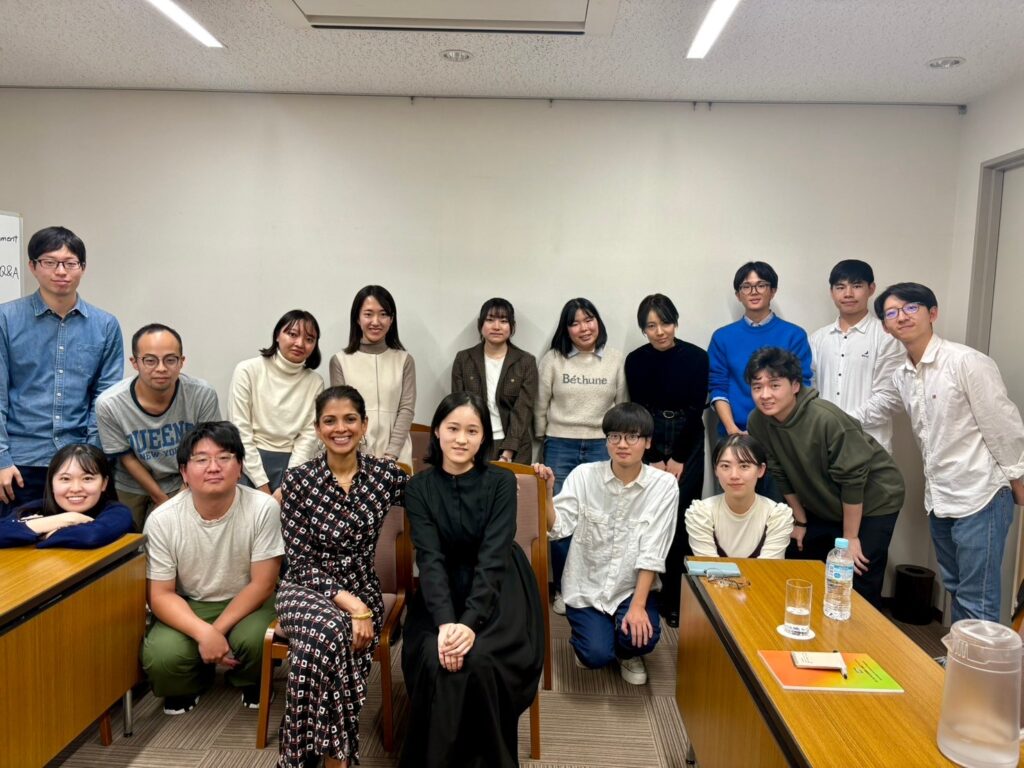
Ms. Urmila Venugopalan
Ms. Venugopalan is currently the Executive Vice President of Strategy & Global Operations of the MPA(Motion Picture Association Inc.). With her diverse background in foreign policy and economic affairs, Urmila oversees key strategic initiatives and business operations. Before joining the MPA in September 2017, Urmila served the Obama Administration as a Senior Advisor and Member of Secretary Kerry’s Policy Planning Staff, leading on all economic and business affairs. Urmila previously worked as a senior consultant at the Albright Stonebridge Group, where she assisted U.S. and multinational companies, and international foundations, on understanding the impact of political and regulatory environments in overseas growth markets mainly in the South Asian and MENA regions.
October 2024 "Future International Situation through the Ukraine-Russia War: What Japan Can Do "
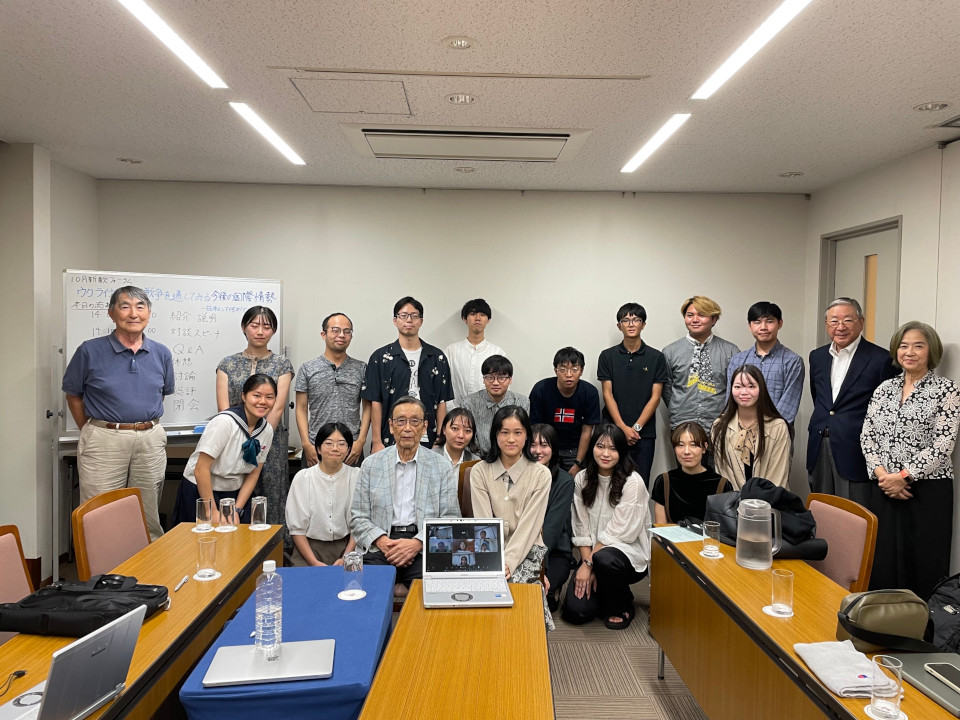
Mr. Hiroshi Hashimoto
After graduating from the Faculty of Law at Hitotsubashi University in 1964, he joined the Ministry of Foreign Affairs of Japan. He served at Japanese embassies in cities such as Moscow, London, and Washington, D.C. In 1998, he was appointed Ambassador to Singapore, followed by roles including the first-ever Ambassador for Okinawa—a position created under the Hashimoto Cabinet—and later served as Ambassador to Austria. Currently, he remains engaged in diplomacy through writing and public speaking. In March 2024, he authored the book “A Former Diplomat Explains the Russia-Ukraine Issue to University Students: The Smart Use of Culture.”
【Speech and Q&A】
In this forum, with the Russia-Ukraine War in mind, we were able to hear about the movements of countries around the world and Japan against Russia and discuss them in the debate. In the first part of his lecture, Mr. Hashimoto talked about the differences in historical perceptions between Russia and Ukraine. I was reminded that the differences in historical perceptions between the Russian Federation, which calls itself the successor to Kievan Rus’, and Ukraine, which achieved independence 700 years after the collapse of the Soviet Union, are still very significant. More relevant to real combat, we also heard about the effectiveness and improvements of the UN and NATO. First, we learned that not much exists in terms of how to deal with the dysfunction of the UN Security Council and that it is more practical to deal with it through General Assembly resolutions. The UN is a collective security regime that deters and sanctions armed attacks by states within a group against other states, while NATO is a group of states that exercise the right of collective self-defense against each other and sanctions armed attacks by states outside the group against states within the group. It was very interesting to learn that Japan should aim to be a medium nation, not a superpower in the future, specifically, while Russia and Ukraine are at war, Japan should support the restoration of Ukrainian cities, and after peace is established, Japan should support the restoration of Ukraine to make Japan’s position stronger. At the same time, he also mentioned that each citizen could take a personal approach, and I thought that the first thing I could do was to follow the war reports and, based on them, consider what position Japan needed to take and at the same time, make donations and other contributions.
【Ground discussion and personal opinion】
In the discussion that followed the lecture, the theme was “Should foreign countries stop military support considering the damage caused by the protracted war situation, or should they look to the future and continue support for peace in the future rather than damage today? ” My opinion was that it is important to make peace and restore peace, and in light of the fact that democratic nations have continued to support the Ukrainian side in the two-and-a-half-year Russia-Ukraine war to date and that the situation is not conducive to making peace, it is better to suspend support for Ukraine and make peace and restore peace, even if it is somewhat to Russia’s advantage. On the other side, many people thought that if a precedent is set by allowing Russia to continue its aggression from the perspective of territorial integrity, even if peace is achieved temporarily, it will be in favor of the aggressor nation in the long run, and this is not good. Personally, I was struck by the fact that among those who said that support should be continued, few said that support should be continued to express opposition to the inhumane aspects of the massacre and removal of children by Russia, and the overwhelming majority of opinions were from the perspective of territorial integrity rather than the protection of human rights. Finally, I would like to thank the speaker, Mr. Hiroshi Hashimoto, for his valuable lecture.
Shutaro Fujimoto, Jichi Medical University, Faculty of Medicine, 2nd year
September 2024 "Energy Geopolitics in a Pacific Century: The Trilemma framework and Japan's path forward "
【Speech and Q&A】
In this forum, we could learn about the difficulty of choosing an optimal policy in energy fields because Japan, which relies on energy resources themselves and rare metals that are also necessary for renewable energy technology, should watch for the balance of security, sustainability, and affordability. Other than that, safety and eco-friendliness are what recent consumers, and also policymakers need to care about. It was impressive to hear concrete data with numbers such as GAFA using 2-4% of power demand around the world for running data facilities. Adding to that, his insight that Japan is easy to work on energy problems because there rarely is a change of government compared to the U.S. was completely a new perspective.
【Group and Ground discussion】
Every energy resource is not perfect. Mr. McDonald explained each energy resource’s strong and weak points. After that, we discussed what energy policy should Japan pursue based on his presentation. I choose energy security as the most important sector among security, affordability, and sustainability. Concerning the last two, we still have some spare time, but security is an urgent problem because Japan doesn’t have plenty of energy resources and electricity storage. The net-zero due year is 2050 and we still have time to innovate energy technology. However, in this volatile era, lifelines including energy resources are easy targets to gain dominance over other countries, which happened in real: the halt of LNG exports from Russia to Germany. Surely, the movement from fossil fuels to renewable energy is necessary, but this increases the risk of dependence on specific countries for rare metals needed for batteries and modules. I think Japan should increase the ratio of renewable energy gradually, not rapidly to lessen the jeopardy of sudden embargoes. I think Japan might be better off restarting nuclear power generation as a temporary power source until new technologies with less dependency on other countries’ natural resources are invented. For example, now Japan is developing a new type of solar cell: the Perovskite solar cell. It is a relatively independent power resource because Japan can produce iodine which is an ingredient of those. People might remember the 3.11 tragedy of nuclear power, but this happened because the tsunami battered it. It bore the earthquake and countermeasures against tsunamis are developing. I think there are fewer risks with nuclear power plants now. Finally, I would like to say Mr. McDonald thank you for this intriguing forum.
Kotaro Ahiko, Tohoku University, Faculty of Engineering, 2nd year
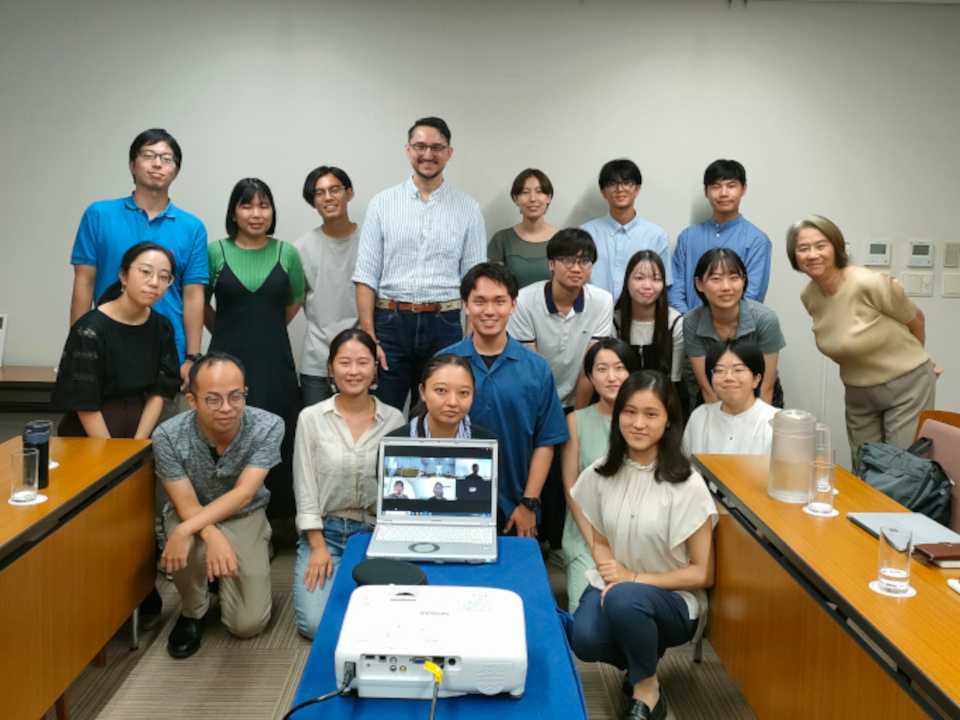
Mr. Hunter McDonald
Mr. Hunter McDonald is Country Manager for Korea and Investment Specialist at Shizen Energy Group, a Japan-based and globally focused renewable energy developer whose investors include CDPQ and Tokyo Gas. He concurrently serves as Interim CEO at TerraWind Renewables, an onshore wind energy platform in Japan and APAC launched in partnership between Stonepeak (a $61bn AUM PE fund) and Shizen Energy. Additionally, he is the Chief Strategy Officer at Japan Interconnector, a Shizen Energy-backed startup developing subsea cable power grid interconnectors in East Asia. Mr. McDonald previously spent 7 years in the energy trading business at Glencore, primarily focusing on infrastructure investments and structured trade origination. Having experienced the 2011 Tohoku earthquake and Fukushima incident aftermath while in Tokyo as an investment banking analyst, Mr. McDonald developed an interest in global energy, sustainability, and geopolitics that he has pursued professionally since 2014. A dual citizen of the US and New Zealand, Mr. McDonald holds an AB from Harvard College in East Asian Studies with a secondary field in Economics, and an MBA and Masters in International Affairs from Columbia University.
August 2024 "Mathematical Models of Infectious Diseases and Pandemics"
Lecturer: Mr. Akira Endo
Dr. Endo graduated from the University of Tokyo Faculty of Medicine in 2017 and obtained his Ph.D. from the London School of Hygiene & Tropical Medicine in 2021. That same year, he joined Nagasaki University’s Graduate School of Tropical Medicine and Global Health as a Project Researcher and was appointed Visiting Professor the following year. In 2022, he became an Associate Professor at the Saw Swee Hock School of Public Health, National University of Singapore, a position he holds to this day. His area of expertise lies in infectious disease epidemiology and mathematical modeling. His research focuses on the epidemiological study of emerging and re-emerging infectious diseases through mathematical modeling. In recognition of his achievements, he was selected as one of the 100 recipients of the 2024 Young Scientists’ Award from the Minister of Education, Culture, Sports, Science and Technology (MEXT), Japan. Dr. Endo joined KIP in 2012, served for several years as committee chair, and participated in training programs in the U.S. and various regions.
Japan managed to control infections and deaths relatively well during the COVID-19 pandemic. However, if a future pandemic with a higher mortality risk occurs, would the same measures suffice? Should we establish legal frameworks to restrict people’s actions?
【Speech and Q&A】
Previously, infectious diseases were often seen as issues in developing countries. However, global threats like MERS, COVID-19, and Ebola remain a persistent concern. The “interdependence” of risk, which means one person’s risk affects others, often requires behavior restrictions on a population level. When responding to pandemics, it’s essential to consider these factors in mathematical models. During the Q&A session, concerns were raised about the uncertainty of human behavior, the influence of economic perspectives on Japan’s COVID-19 response, and the effectiveness of school closures. Japan’s COVID-19 response, for the first time, relied on mathematical models. Despite the country’s relative success, there’s no guarantee that the same approach will work in future pandemics. A key reflection was that politicians sometimes avoided full responsibility, instead placing experts in the spotlight as scapegoats. The discussion also touched on human rights issues, including freedom of mobility, privacy, and racial discrimination during the pandemic. Additionally, there’s a concerning possibility that authoritarian regimes might be better equipped than democracies to control infections, presenting a significant dilemma.
【Group and Ground discussion】
The discussion addressed the need for legal frameworks to restrict actions during high-risk outbreaks. Proponents argued that pre-emptive legal measures and clear accountability are essential, while opponents argued the difficulty in defining and effectively implementing such laws. Overall, the majority favored establishing legal frameworks.
【Personal Opinion】
We had the privilege of hearing from Mr. Endo, who contributed to the government’s COVID- 19 response using mathematical modeling. He shared a profound insight: “No matter how we respond, pandemics will always bring negative consequences. The important question is how society should distribute this burden.” His words left a deep impression on me. I will continue to reflect on how to prepare for the next inevitable pandemic.
Nano Nishimura, Sophia University, Humanities, 2nd year
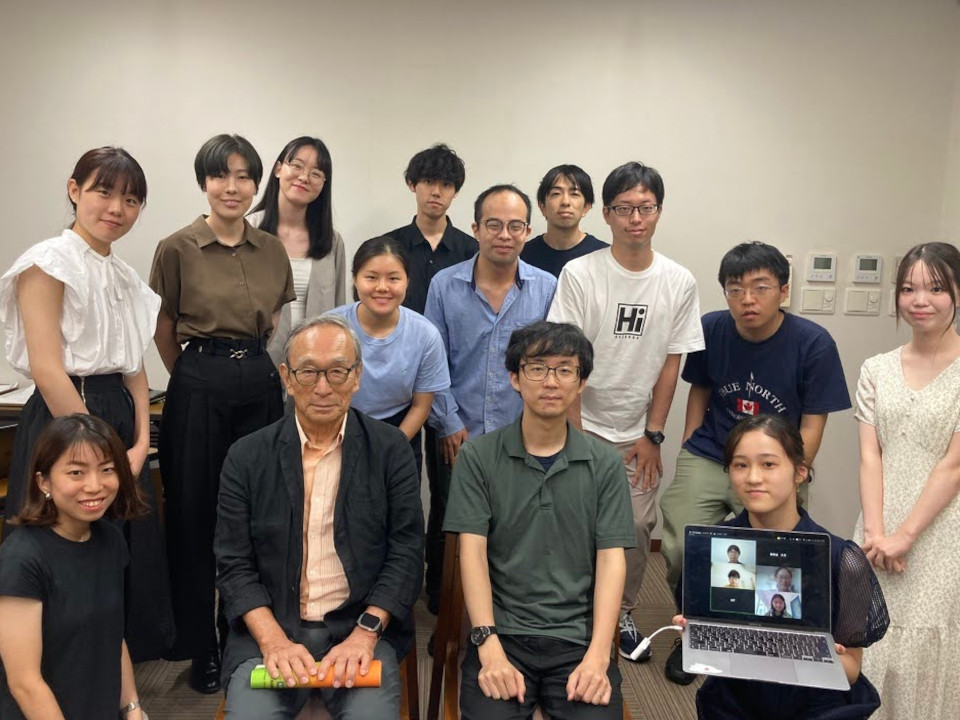
July 2024 "Emergency medical care in real and how the remote medicine should be"
【Speech and Q&A】
The speaker spoke about the difficulties in medical care and the technology development to solve them. The existing medical care is being developed, but many troubles still exist. One of the ways to solve them is the technology development. For example, 8K endoscopes are solving some of the difficulties. When doctors examine patients online, they have trouble with technology and communication. I learned that these troubles must be solved. During the question-and-answer session, we learned that it is important to show the value of remote medical care by starting it in suitable areas and for doctors, engineers, and businesspeople to cooperate in medical technology development.
【Group and Ground discussion】
The discussion concerned, “How should remote medical care be done to reduce the regional disparities in medical treatment, and how can difficulties in remote medical care be solved?” Participants suggested that remote medical care gives elderly people or those in inconvenient areas easy access to medical care or medical specialists. Therefore, participants proposed a system connecting patients with doctors and online daycare for the elderly to reduce the medical regional disparity. However, doctors need to share patients’ medical histories because patients will have easy access to different doctors. To solve this problem, some participants suggested the link of the drug history handbooks to My Number accounts, but some participants wondered whether it is good for the government to manage medical information. We actively discussed the use of remote medical care and considered concrete ideas about it. It was a good discussion giving us a new perspective about the future of medical care.
【Personal Opinion】
Through this forum, I learned about medical technology and medical regional disparity. I started to live in an urban area and forget the regional disparity, but it exists. This forum was a good opportunity to reconsider the medical-regional disparity from a new perspective. In the discussion, I focused on technological difficulties, so it was interesting for other participants to suggest the need to share medical information or the online communicational barrier. Mr. Chiba told us that it is indispensable for engineers, doctors, and businesspeople to cooperate to develop efficient technology. The communicational trouble is one of the troubles which is difficult to solve without doctors. These days, many technologies are being developed. Many patients are saved thanks to them. However, Mr. Chiba said that communication between doctors and patients is getting more and more important because it is becoming common to use computers in medical care. In this discussion, the system to connect doctors and patients is focused on, but I found that it is important for doctors and patients to change their attitude in medical care. I consider this is a common difficulty in this society.
Naoya Arata, The University of Tokyo, Faculty of Liberal Arts, 2nd year
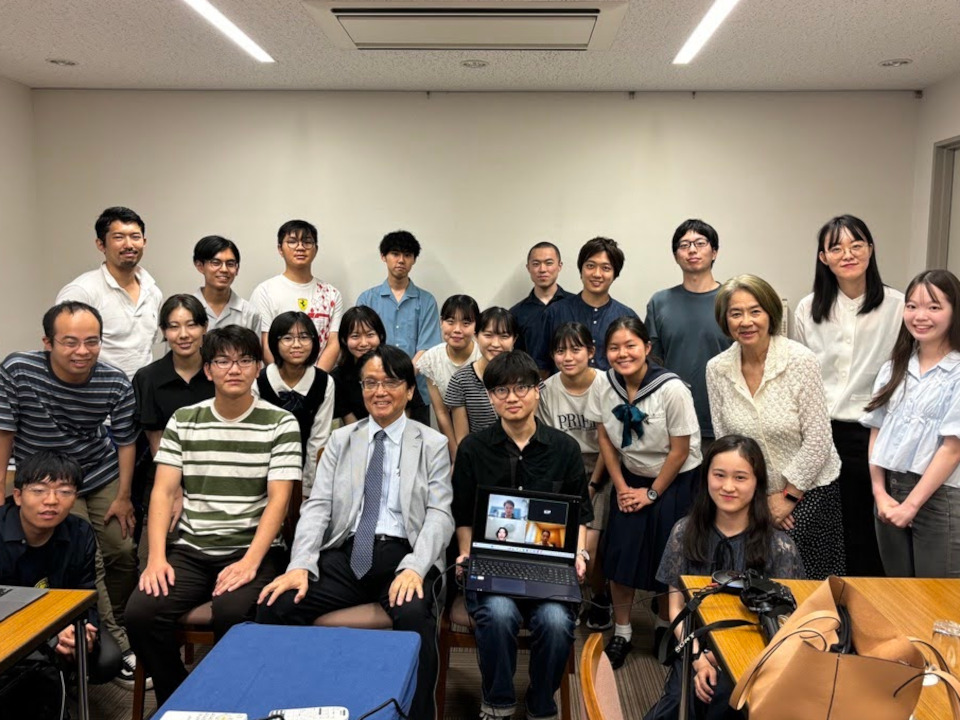
Mr. Toshio Chiba
Dr. Chiba graduated from Tohoku University School of Medicine in 1975 and holds a doctorate in medicine. His specialty is pediatric surgery. In 1986, he became a lecturer in pediatric surgery at the University of Pittsburgh in the United States. In 1997, he was appointed Visiting Associate Professor at the Fetal Treatment Center at the University of California, San Francisco (UCSF). In 1998, he was promoted to Visiting Professor and Senior Researcher at the same center. He returned to Japan in 2001 to become Director of the Department of Special Medical Services at the National Center for Child Health and Development. In 2005, he became a professor at the Graduate School of Information Science and Technology at the University of Tokyo. Due to his experience performing fetoscopic surgeries in the U.S., he began working with NHK Science & Technology Research Laboratories in 2006 on the development of 8K endoscopy. In 2014, he became the first in the world to successfully use 8K endoscopy in human surgery. In 2012, he established the Medical Innovation Consortium (MIC), a general incorporated association, and became its president. In 2015, he was appointed professor at the Research Institute of Science and Technology at Nihon University. In 2016, aiming for the practical application of rigid 8K endoscopy, he founded KAIROS Co., Ltd. and became its Chairman and CEO. In February 2020, his pioneering achievements, including the world’s first commercialization of 8K endoscopy, were recognized with the Grand Prize and Medical Prize of the Albert Schweitzer Award.
June 2024 "Political and Economic Situation in Hong Kong and Asia’ & ‘Working Abroad’ "
【Speech and Q&A】
First, Mr. Yui gave a presentation on the strategy he had in mind when he created his career plan in 2009, when he graduated from university. The core of his strategy was “what to devote your life to”. This determines both the theme of your life and the amount of effort you will put into it, which determines half of your life. Therefore, it is important to think strategically, not to make decisions easily, and to persistently work hard without giving up. That’s what he was focusing on.
Next, we exchanged views on the characteristics of China and Hong Kong as well as the strengths of Japan, which have suddenly become the focus of much attention. During the Q&A session, he explained the changes within Hong Kong due to the attraction of foreign companies, going back to the period under British rule, which deepened my understanding of the Hong Kong economy. I thought I would have comparable knowledge of the global economic situation, but I was overwhelmed by the high level of discussion.
【Ground discussion】
What are your career paths based on the projected social situation in 2040? Each participant spoke briefly about this framework. Some discussed their interests based on their respective specialties, such as media, content industry, agriculture, and robot design. Others talked about their future lives using air delivery and smart home appliances. Some spoke specifically about the changes and difficulties that new technologies will bring, such as the coming era in which expertise will be required in addition to being able to use AI, and the fear of a future decline in the demand for system installations.
After the participants’ comments, Mr. Yui gave his advice, followed by a Q&A session. Questions were raised about whether one should have more than one “mountain” as goals for professional development or just one, and what to do if one misjudges the mountain to climb.
【Personal Opinion】
It will be 2040 when current KIP students will be the same age as Mr. Yui, a first-generation KIP student. The theme of this year’s event was society at that time and our careers up to that point. The moderator’s words, “Be the next role model,” showed the depth of the KIP that transcends generations. It was very interesting because every participant talked about their careers, areas of interest, and social trends they are focusing on. I was impressed by Mr. Yui’s response when I asked him how he balances the need to give all in his work while also having to think about his career plan from a broader perspective. “Opinions change every day, so don’t be afraid to change your mind and don’t jump to conclusions so easily,” he said. This was refreshing for me because I am at a crossroads in my career path, and my worries remain.
Through this forum, I learned the fascinating personality Mr. Yui has. He has three goals: “professional mountaineering, family mountaineering, and mountaineering as a hobby,” and he said, “I learn from each of them, and they all benefit from each other.” I was impressed by Mr. Yui’s strong drive to improve outside work, even though he is a top-notch professional. I was also convinced by his statement that, in addition to expertise as an individual, “It is good to be loved as a Japanese person” as a condition necessary for a person to be on the global stage. On the premise that they should be able to talk about the current social situation in Japan, he said, they should be able to have interesting conversations and be positive people to work with. In the end, attractiveness as a person is appreciated is very convincing to me personally.
Tatsuaki Kato, The University of Tokyo, Graduate School of Science
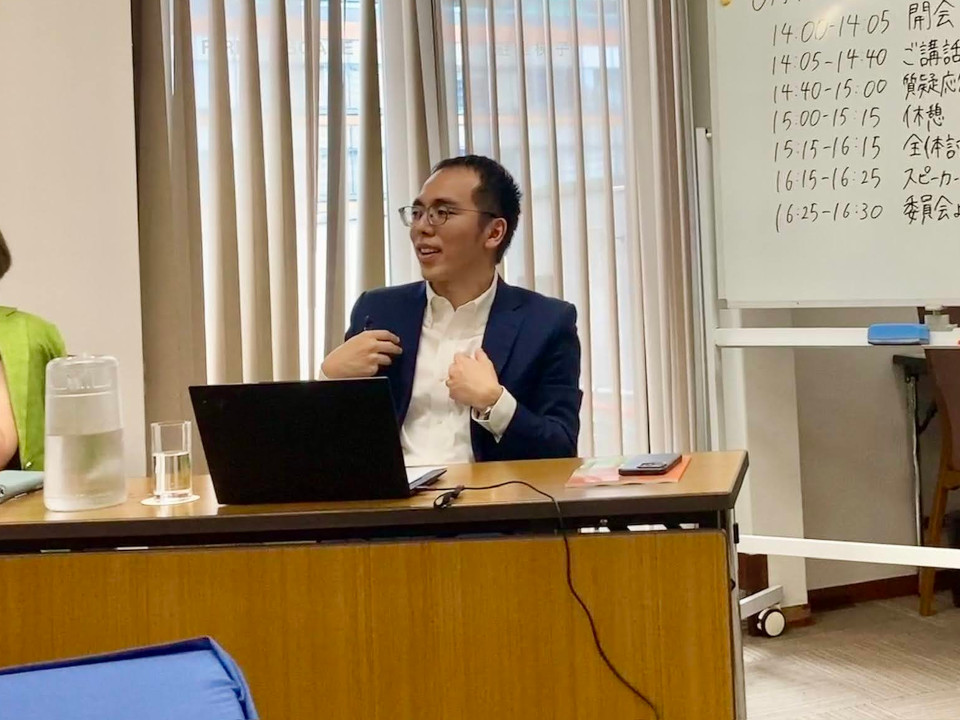
Mr. Hidenori Yui
Hidenori Yui is a portfolio manager specializing in Japanese equities. A first-generation member of KIP, Mr. Yui joined a foreign investment bank after graduating from university. Four years later, he moved to Hong Kong, where he continues to reside. Born in 1986, he graduated from Kaisei High School and the Faculty of Economics at the University of Tokyo. In 2009, he joined Morgan Stanley, working in the Investment Banking Division in Tokyo. After working at a hedge fund in Hong Kong from 2013, he joined the Canada Pension Plan Investment Board (CPPIB) in 2015. Currently, he works in Hong Kong as a portfolio manager for Japanese equities in the Active Equities group. He participated in KIP’s 2008–2009 activities, driven by his dream of working overseas.
May 2024 " Japan's 'Free and Open Indo-Pacific'Policy"
【Speech and Q&A】
The speaker spoke about the specific status of Japan’s foreign and security policy initiatives in the Indo-Pacific region, particularly with regard to its relations with ASEAN member countries. He also spoke about deepening the Japan-U.S. alliance and strengthening economic and academic ties between the two countries.
【Ground discussion】
The theme of the discussion was “What projects would you propose to the Prime Minister in order to realize Japan’s ‘Free and Open Indo-Pacific Policy’? Some were not favorably disposed to the idea of a large increase in the number of foreign workers in Japan, and some suggested sending Japanese nationals to foreign countries to conduct joint research and other technological exchanges, leading frameworks and rule making to promote the use of AI in the Indo-Pacific region and East Asia, and promoting the development of a climate change and public health policy in areas where Japan is competitive. In addition, the participants also expressed their opinions on mutually beneficial technology provision in areas in which Japan has a competitive edge, such as climate change and public health. Regarding AI, some expressed concern about the handling of confidential information in the field of cyber security and other areas related to national security, and wondered if Japan’s digital technology was superior. In response, the security clearance team was asked to provide security clearance services. In response, opinions were exchanged that narrowing down the number of people who can handle information, such as security clearances, and changing Japanese attitudes toward immigrants may be useful for the smooth acceptance of foreign workers. The discussion was lively, as it raised awareness of the problem of resistance to the word “immigrant” among Japanese.
【Personal Opinion】
I learned a great deal from the forum, gaining a wide range of knowledge about Japan’s foreign and security policy, which I had only received piecemeal information from individual news reports. In the discussion, I proposed the ideas of expanding technical cooperation overseas and other initiatives that are already underway, but after hearing the novel opinions of others, I felt the need to think more flexibly. Since this discussion was not on a theme with options such as approval or disapproval, a wide range of opinions based on knowledge in each area of interest were presented, which I found interesting. Finally, I would like to thank the speakers again for taking time out of their busy schedules to share their valuable insights with us.
Kaede Matsumoto, 1st year student, Faculty of Art and Design, Musashino Art University
Mr. Noriyuki Shikata
After graduating from the Faculty of Law at Kyoto University, he joined the Ministry of Foreign Affairs in April 1986. Since then, he has held various key positions, including Director of the Second North America Division in the North American Affairs Bureau, Director of the Economic Treaties Division in the International Legal Affairs Bureau, Deputy Cabinet Secretary for Public Affairs, Minister for Political Affairs at the Embassy of Japan in the United Kingdom, Director of the Personnel Division in the Minister’s Secretariat, Minister Extraordinary and Plenipotentiary at the Embassy of Japan in China, Minister at the Embassy of Japan in the United States, and Director-General of the Economic Affairs Bureau. Since October 2021, he has been serving as the Cabinet Public Affairs Secretary. He holds a Master in Public Policy from the Harvard Kennedy School. Recipient of the Gold Standard Award for Political Communications 2011 from Public Affairs Asia.
April 2024 "Is Japan a barbaric country? Culture and environmental protection"
Ms.Keboshi spoke about the ecology of whales and their relationship with humans, and discussed their economic use in this country.
【Speech and Q&A】
We heard about both the natural scientific aspect of whale ecology and the social scientific aspect of its use. We were reminded that whales are an extremely diversified species in terms of size and habitat. On the other hand, I learnt that there is a widespread ideology that lumps together the diverse characteristics of whales, derisively known as super whale theory. Later, the participants learnt about the various discussions that have taken place at the IWC (International Whaling Commission) regarding whaling, where whaling is broadly categorized into three purposes: survival of indigenous people, commercial and research. During the question and answer session, we learned that these categories can be said to be arbitrary to some extent and that the scientific findings (of whales) submitted by the Scientific Committee have also not been well applied at the IWC.
【Ground discussion】
The discussion concerned the topic Should Japan continue whaling for commercial purposes in the existing way even under international criticism? At first, there was a series of discussions on the economic potential and growth potential of commercial whaling in Japan as an industry. Opposition to the continuation of commercial whaling included the fact that it is not a strong industry and concerns about the impact of continued whaling on research of whale. On the other hand, from a different point of view, some argued that even if criticism is the trend, it is not reasonable to follow a point of view that unilaterally denies culture and causes psychological damage to local people. Others said that if whaling is seen as an industry, the decision to abolish it cannot be taken on simple grounds as long as there are people engaged in it. Some said that there was no good reason to abolish existing whaling because it was unlikely to become a serious diplomatic issue with Japan, as it was mostly criticized by a few countries, even if it was under international criticism. As a result of this multifaceted discussion, in which the pros and cons of each side were compared and the point of compromise was explored, the final majority was in favor of sustaining commercial whaling.
【Personal Opinion】
The title of this forum uses the extremely sensational phrase, Is Japan a barbaric country?. It is the sentiment of those who see whaling as evil that decries Japans continued whaling as barbaric. Whether it is the view of nature that ;whales other living creatures that underlies their ideology, or the values that see whales as the commons of the earth, the result is that their emotive behavior is perpetrated against those who continue whaling, resulting in an exchange of feelings. The trouble with this issue is that, as in the debate, it is easy to confuse the practical arguments for continued whaling with the emotional arguments for harm. We felt that the first step towards solving the problem is to calmly discuss the issue without confusing these arguments. The learning was also significant in more abstract areas. At the root of the whaling issue, various mistakes of ignoring diversification are considered to be at the root of the whaling issue. This includes super whale thinking that ignores the diversity of whales and simplifying the purpose of whaling to survival or commerce. On the other hand, we Japanese must also have a broad perspective on the significance of commercial whaling, including the impact of commercial whaling on research, rather than being obsessed with the idea that it is cultural. Furthermore, when we look at whaling as an industry, we should not simply decide to abolish it as long as there are still a few people engaged in it, even if only a few. This made us think about the difficulty and importance of taking into account the multilayered diversity of the various stakeholders involved in the issue.
Yugo Nagasawa, The University of Tokyo, Faculty of Liberal Arts, 2nd year
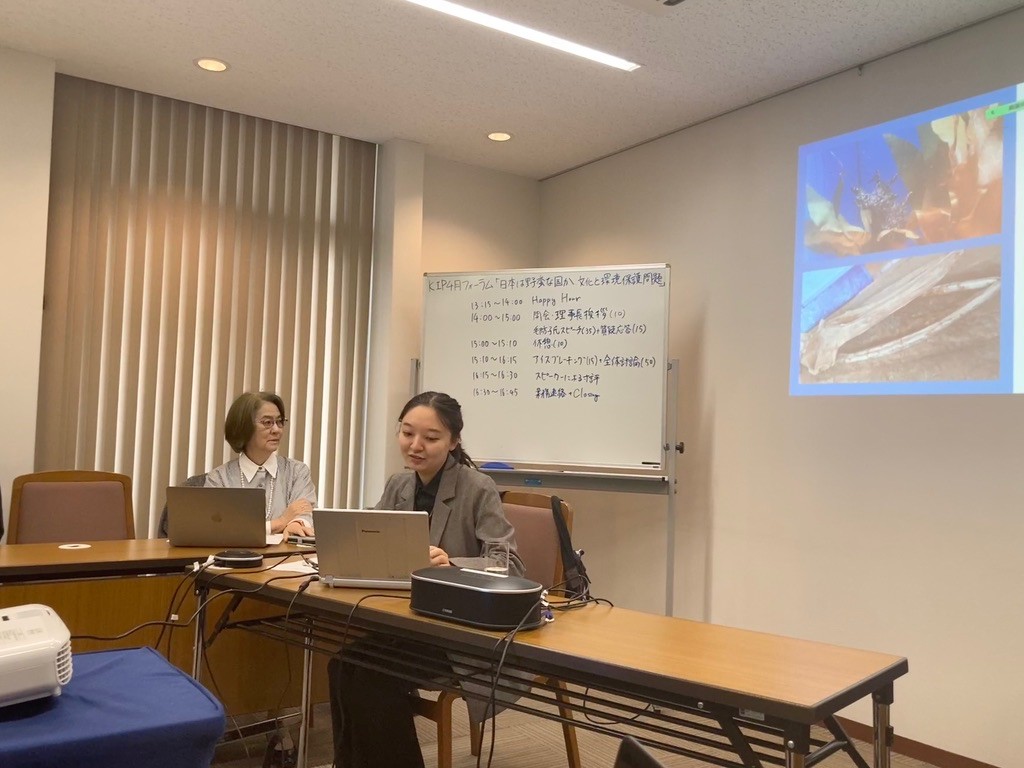
Ms.Rina Keboushi
Rina Keboshi, a fourth-year student specializing in Aquatic Biology at the Faculty of Agriculture, the University of Tokyo. She entered the university in 2021 through the Natural Sciences II. Starting in 2024, she began research related to ancient dolphin genomes and population genetics under Professor Takushi Kishida at the College of Bioresource Sciences, Nihon University. She is also independently exploring the potential of using whale characteristics for deep-sea exploration.