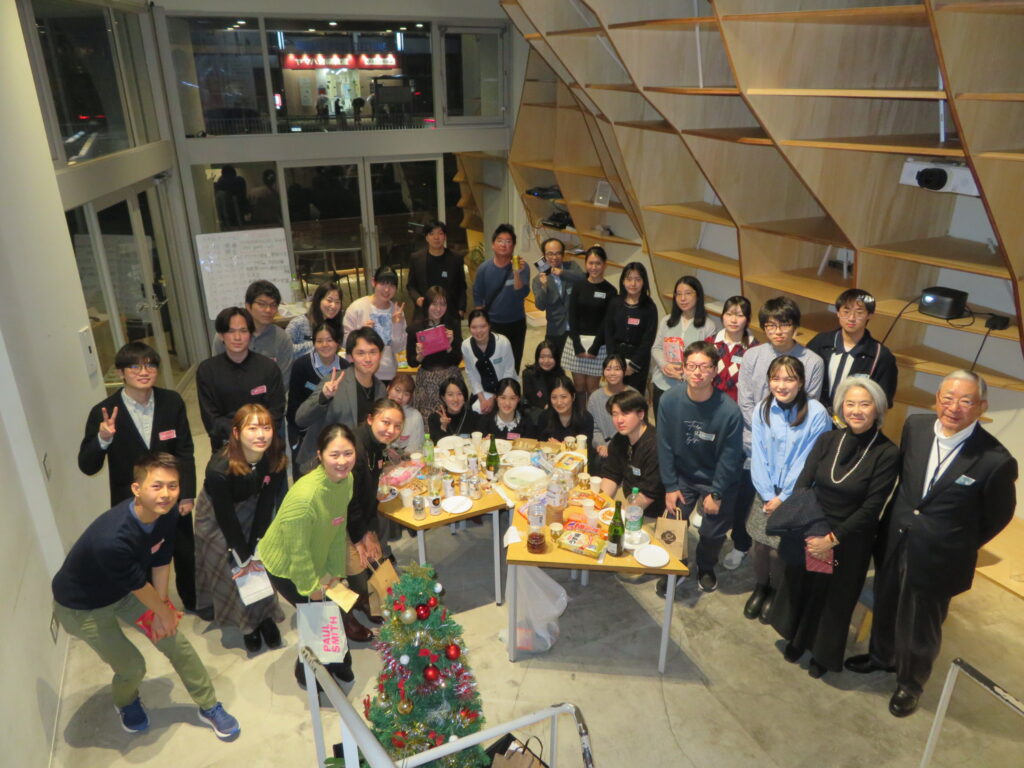



Shiwasukai Conference was held on Saturday, December 20, 2025. In the first half of the event, results from this year’s project (hereafter referred to as “PJ”) survey were presented, followed by a discussion session on related topics. The latter half featured an interactive session with light refreshments, a musical performance, and a book exchange.
1. Background of the 2025 Project
The 2025 project focused on three major themes that have sparked significant discussion in recent years: changes in employment, advances in AI technology, and acceptance of foreign workers. Through literature review, interviews, and surveys, the research made several interesting findings. In terms of employment structures, there is a transition from the traditional “membership-type” to a “job-type” employment system in Japanese companies. Meanwhile, the prevalence of technology—especially generative AI—has also had a impact on Japanese companies; the number of firms reporting that they had “fully implemented AI” has doubled between 2024 and 2025. Furthermore, Japan has seen a increase in foreign workers in specialized and technical fields. Given that Japan has relatively low rate of graduate school enrollment, educating highly skilled professionals is a key challenge for Japan.
2. Interview and Survey Results
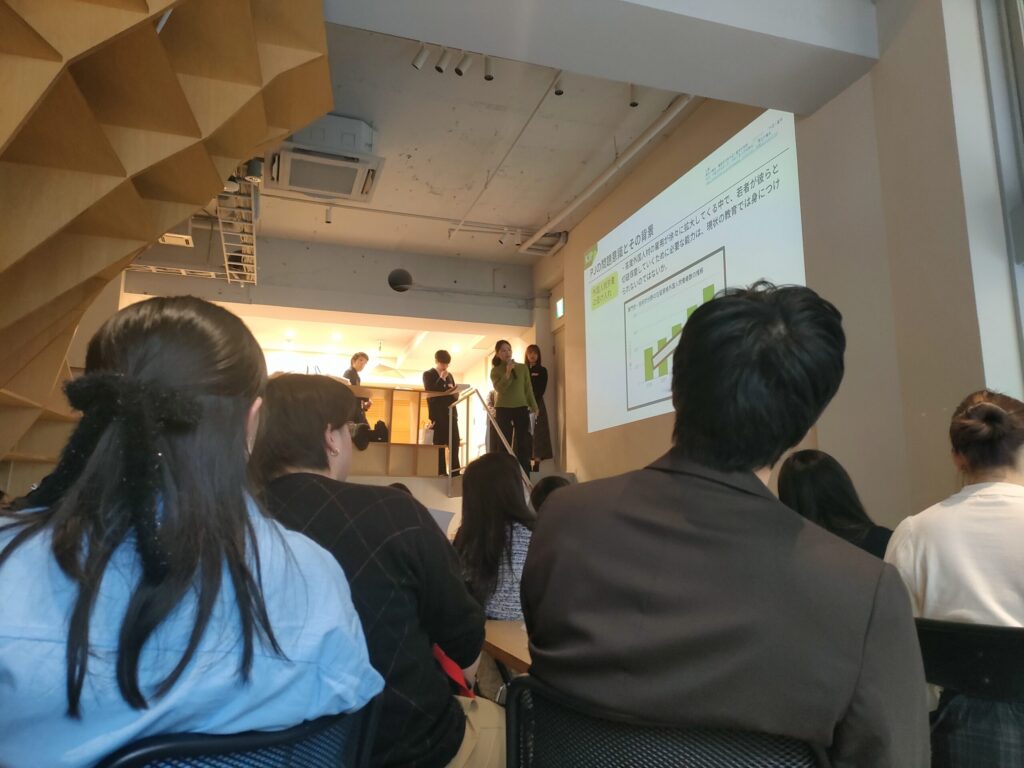
Interviews were conducted with working adults, university students, municipal officers, and young professionals. A survey was conducted among 1,078 young people. Young respondents tended to prefer becoming specialists rather than generalists, and generally held negative views toward traditional, seniority-based promotion systems. Regarding the introduction of AI, respondents with over ten years of professional experience often expressed concern about the “decline of human abilities,” while younger respondents considered AI as a means to improve work efficiency. This reveals a clear generational gap. When asked about working with foreign workers, 73% responded positively. As for higher education, only about half of respondents wished to advance beyond undergraduate studies. The project members emphasized the importance of higher education and fostering the ability to identify problems, ask questions, and find solutions, in an aim to adapt to a rapidly changing society.
3. Q&A Session
During the question-and-answer session, participants asked questions such as: “What factors make young people feel anxious about the changing employment?” “Instead of viewing AI pessimistically, could young people use it as a tool to enhance productivity?” and “Were there noticeable differences in responses between students and working adults, or between humanities and science majors?”
【Presentation of PJ Survey Results】
【Discussion Session】
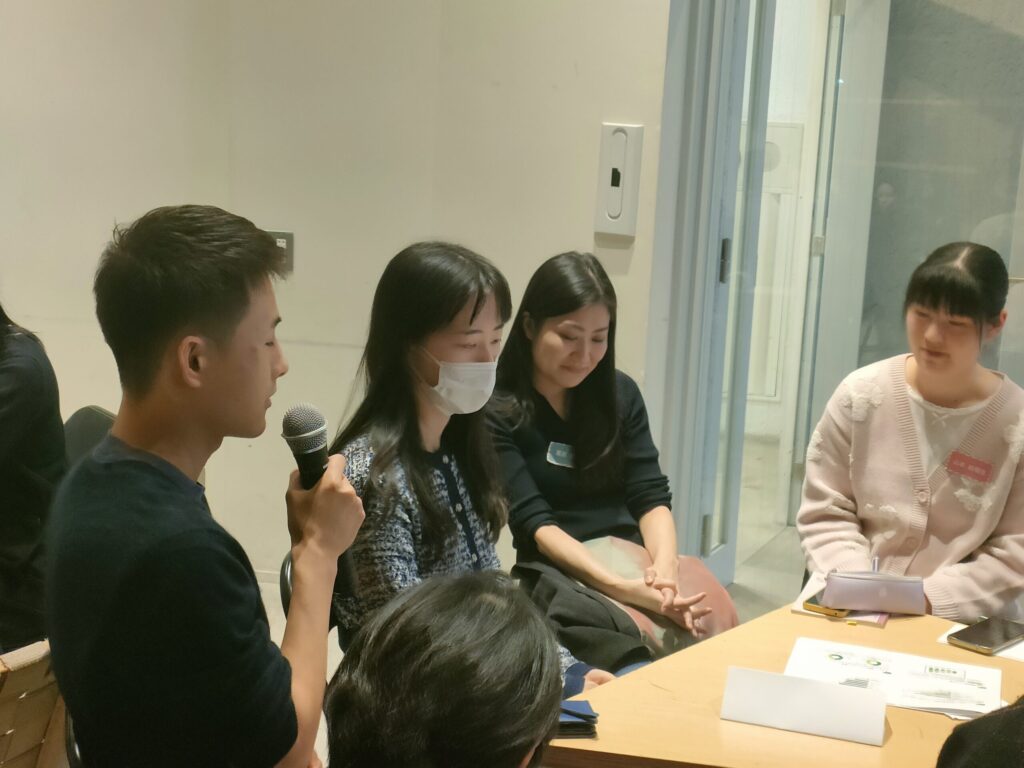
The subsequent discussion centered on the theme “Does AI diminish human abilities?” Participants exchanged a wide range of opinions. Many agreed that AI should be actively utilized as a tool to enhance efficiency. However, concerns were also raised that AI might eventually replace so-called “white-color” jobs. One of the high school members pointed out that reliance on AI in secondary education could hinder students from thinking by themselves and mastering fundamental subjects like physics.
【Personal Impression】
Through the presentations and discussions, I was able to ponder two important questions: “What skills will be needed in the changing society?” and “How should education evolve?” I think it is crucial for the society, companies, and educational institutions to collaborate in educating young people to prepare for Japan’s changing employment patterns, technological advances, and increasing diversity in human resources. The Shiwasukai Conference provided an opportunity to reflect on the skills I need to develop. The gathering also represented the meaning of KIP as a platform where high school students, university students, and working professionals can come together to “ask questions, think independently, and seek solutions,” which will be vital in the years ahead.