


From May 20 to 22, fourteen KIP members and thirteen students from the Nakatani RIES Fellowship (science and engineering students from the United States) visited Semboku City and the surrounding areas in Akita Prefecture. Akita is facing a rapidly aging population and declining birthrates, and the sustainability of agriculture as well as attracting young people and foreign visitors through tourism have become major challenges. In this training program, we held two debate sessions focused on “agriculture” and “tourism,” hearing opinions from people in various positions. We also experienced many sightseeing activities in this region blessed with nature and history.
[Program Schedule]
5/20 (Fri) Visit to Hiraizumi, mochi‐pounding experience
5/21 (Sat) Stroll around Lake Tazawa, joint research presentations and discussion session with students from three universities in Akita and Ohmagari Agricultural High School
5/22 (Sun) Lecture on tourism by a local industry professional and debate session, visit to the samurai residences in Kakunodate
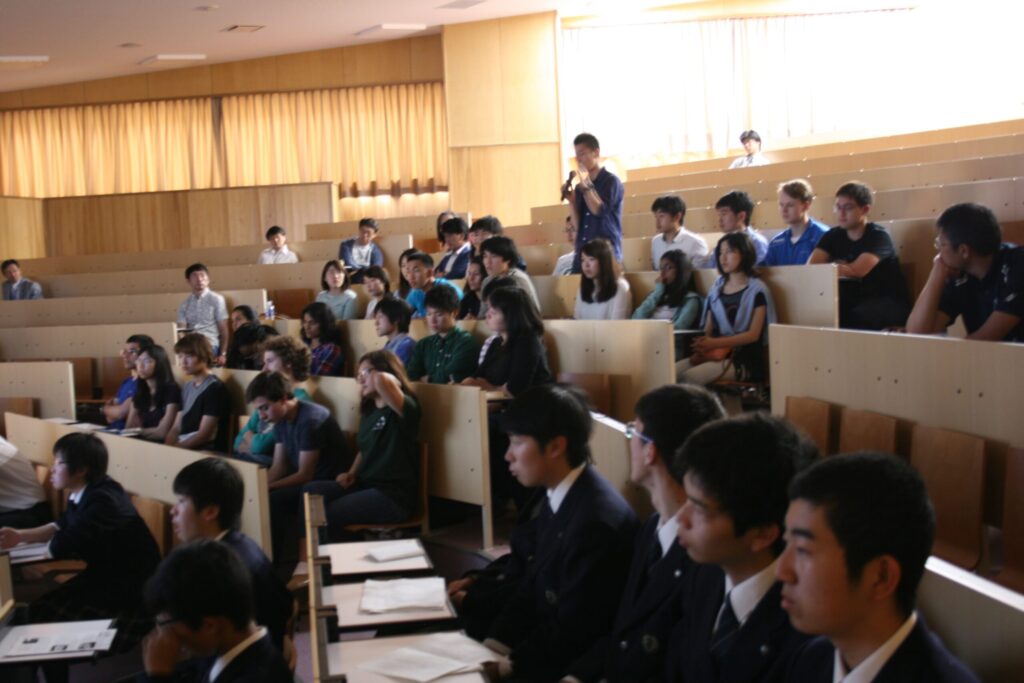
—Presentation by Ohmagari Agricultural High School Students—
We listened to an English presentation on water quality conditions in Lake Tazawa, followed by an active question-and-answer session.
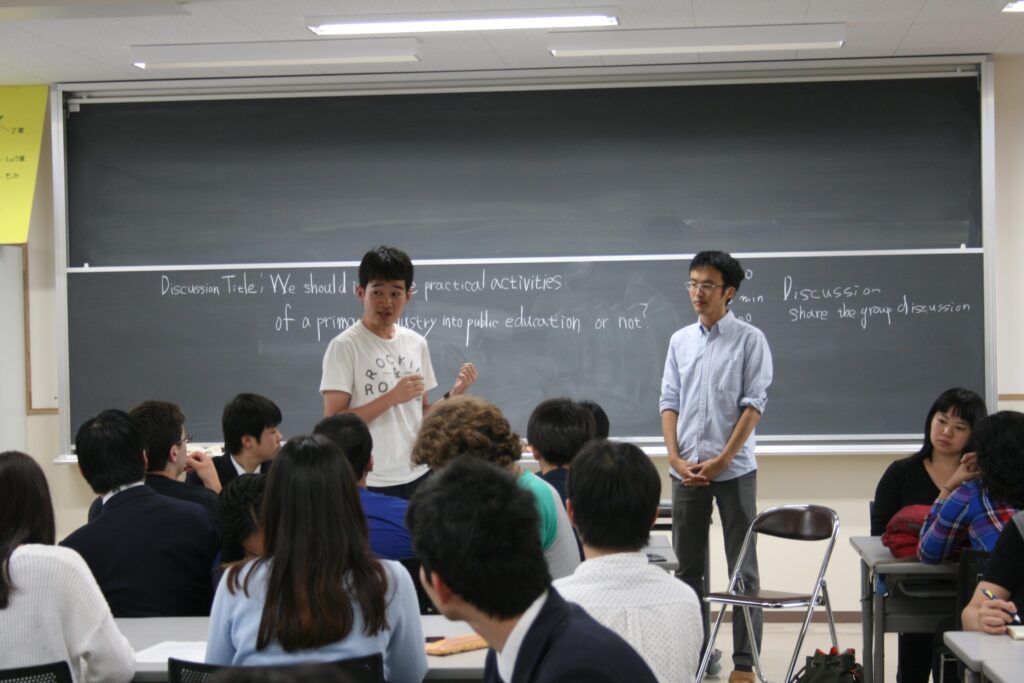
—Debate Session at Ohmagari Agricultural High School—
Four groups—KIP students, Nakatani students, university students from Akita, and high school students majoring in agriculture—gathered to debate whether hands-on experience in primary industries should be mandatory.
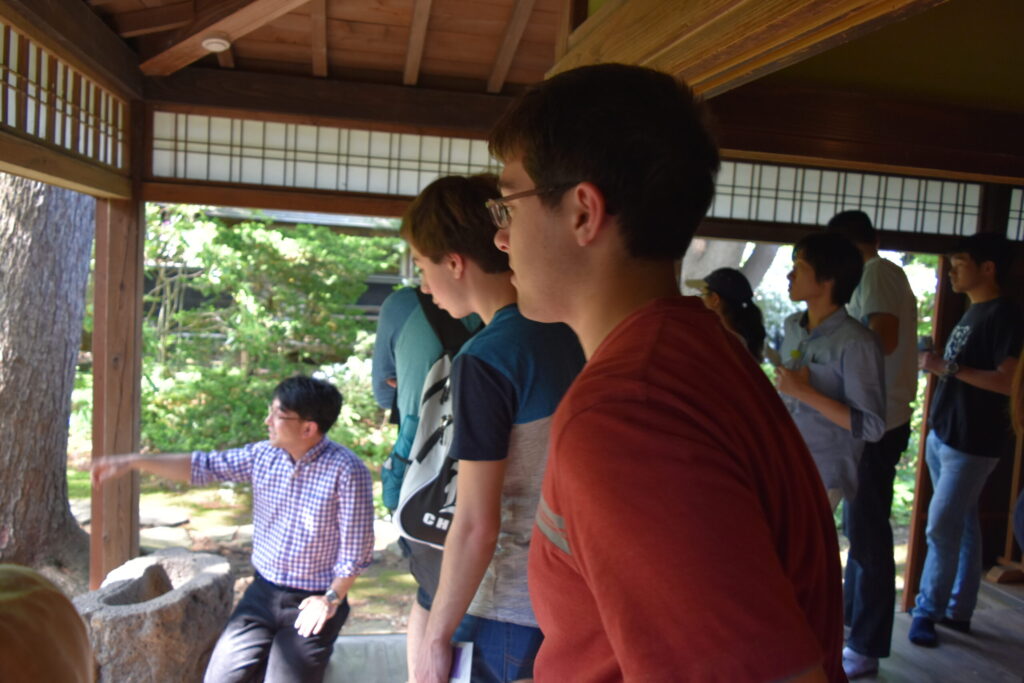
—Visit to the Samurai Residences of Kakunodate—
We visited the Ishiguro and Aoyagi residences, two of the largest samurai houses remaining in this district since the Edo period.
[Impressions]
In recent years, “regional revitalization” has become a major theme in Japan. My home prefecture of Akita is experiencing one of the fastest rates of population aging and depopulation in the country. I love the rich natural environment of my hometown, where I was raised and grew as a person, and have often wondered what I could do to help revitalize it. That is what motivated me to coordinate this training program in Akita.
Semboku City, the area we visited, is one of Akita’s leading sightseeing destinations and has been designated as a National Strategic Special Zone, drawing attention for its initiatives. However, despite being from Akita myself, I had rarely visited Semboku before. Through the preparation process, I learned that Akita has many attractions that I had never known about. The samurai residences of Kakunodate, the hot springs, Lake Tazawa—the deepest lake in Japan—I was aware of their existence even when I lived there, but meeting the people who preserve them, learning about their history, and observing their efforts for regional revitalization allowed me to appreciate their true charm in ways that simple knowledge could never reveal.
I was also impressed to learn that high school students at Ohmagari Agricultural High School are conducting research on improving the water quality of Lake Tazawa. Hearing directly from young farmers about the challenges of agriculture in snowy regions and discussing how to increase young people’s interest in farming, as well as exchanging ideas with students from Akita International University, Akita Prefectural University, and Akita University who are actively engaged in revitalization activities, made me realize that although I once thought Akita was “small,” there were simply many things I had not yet discovered. In reality, countless opportunities and encounters are waiting for those who search for them.
Meeting so many highly motivated young people made me feel that my own feelings toward Akita had only been surface-level up until now. I also came to understand that the “Akita” I knew was just one small fragment of a much broader, richer prefecture full of potential. Going forward, I hope to view “Akita” with a more expansive perspective and continue to uncover its many undiscovered charms.
This regional training program provided invaluable learning opportunities in my life. I would like to express my heartfelt gratitude to everyone who made this experience possible.
(Maho Noritomi)